Commonwealth Games Glasgow News, Scottish Sports Building Image, Architect, Project Design Info
Commonwealth Games Athletes Village, Glasgow
17 June 2026
The Village, Dalmarnock
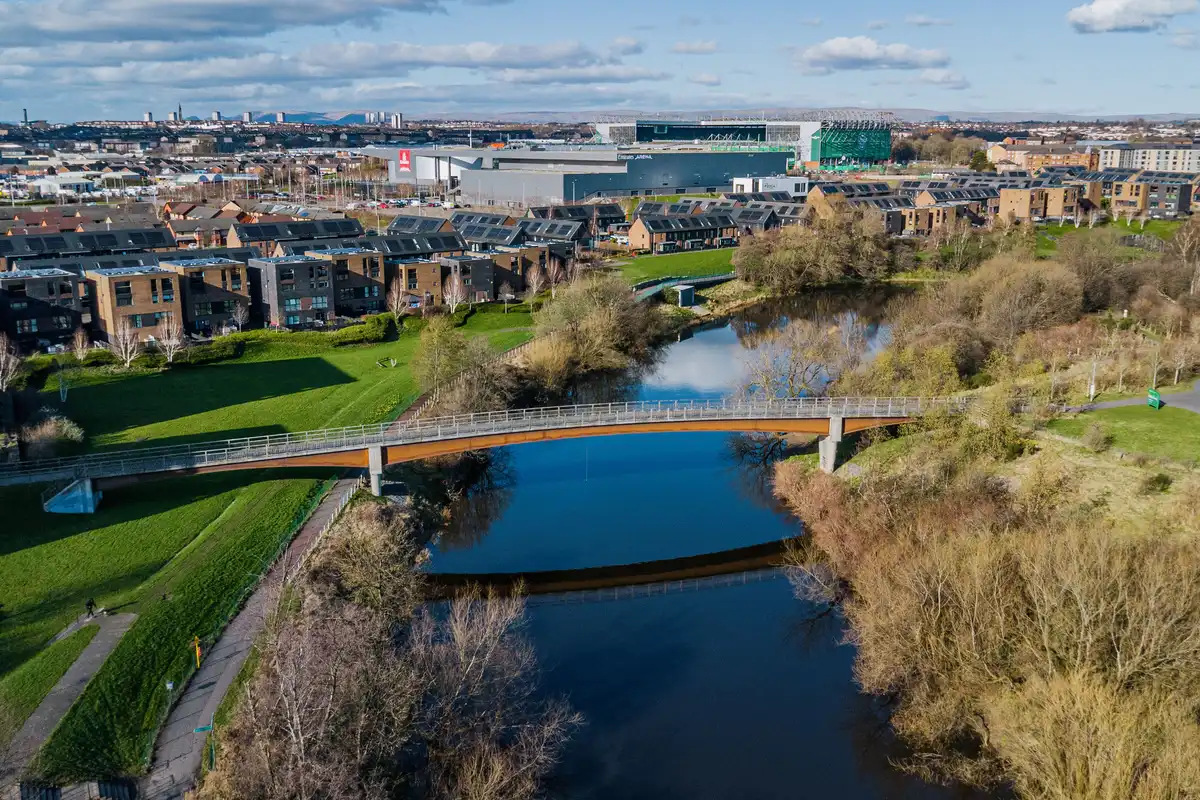
image courtesy of architects practice
The Village, Dalmarnock Cruden homes
Athletes village for the 2014 Commonwealth Games in Glasgow, Scotland
11 Aug 2012
Warm welcome at Athletes’ Villageto celebrate Two Years to Go milestone for Glasgow 2014
23 July marked exactly ‘Two Years to Go’ until the Opening Ceremony of the Glasgow 2014 Commonwealth Games.
Commonwealth Games Athletes Village
To celebrate the milestone, the Glasgow 2014 Organising Committee welcomed three Scottish athletes to the site of the Athletes’ Village in Glasgow’s East End. Visiting the Village allowed all three to get a first glimpse of what the 6,500 athletes and officials coming to Scotland in two years’ time will be calling home.
2014 Commonwealth Games Athletes Village in Dalmarnock:

picture from architect
Designed with input from athletes, the Village will be right on the doorstep of Celtic Park, venue for the Opening Ceremony in two years’ time, the new Commonwealth Arena and the spectacular Sir Chris Hoy Velodrome, which will both be open later this year.
The location and proximity to key venues further demonstrates Glasgow 2014′s commitment to making this a truly athlete centred and sport focused Games, the site in Dalmarnock will bring a legacy of 700 new homes and 620 jobs to the city.
Former Scottish hockey player Rhona Simpson, who has stayed in the Athletes’ Village at three Commonwealth Games and two Olympic Games, was invited to the East End site to see how the Village was taking shape. Rhona was joined by two young athletes who aim to experience the atmosphere of an Athletes’ Village for the first time in 2014, swimmer Ross Muir and long-jumper Jade Nimmo.
Rhona, who is the athlete representative on the Glasgow 2014 Board, was impressed with how far the Village has progressed since the start of construction last year.
Rhona Simpson, Scotland’s most-capped hockey player, said:
“With the eyes of the sporting world firmly on London 2012, I’m incredibly proud to be marking this particular milestone at Glasgow 2014’s Athletes’ Village. The excitement being generated by the Olympic Games will only increase the anticipation and desire the people of Glasgow and Scotland have to welcome the athletes of the Commonwealth back to the UK in two years’ time.
“The focus at the Organising Committee is to ensure the Athletes’ Village provides the comfort and convenience needed by today’s performance athletes. The development is still in construction but with ‘Two Years to Go’ until the Games, it’s fantastic to witness how well the Village is progressing and to learn more about the venue that will be home to the athletes in 2014.”
On Wednesday 23 July 2014, people from around the globe will be celebrating the Opening Ceremony of the Games and the start of 11 days of world-class sporting competition between 71 Commonwealth nations and territories.
As momentum gathers towards Scotland’s biggest multi-sports showcase, the Glasgow 2014 Organising Committee and Games Partners are making positive progress towards the Games across a wealth of areas. Progression at the Athletes’ Village and other venues across the city are a clear indicator that planning towards the Games remains on track and on budget.
Lord Smith, Glasgow 2014 Chair said:
“Athletes are at the heart of the Glasgow 2014 Commonwealth Games and our commitment to delivering an athlete centred and sports focused Games is springing to life as we mark the ‘Two Years to Go’ milestone. It’s great to see the living accommodation for 6,500 athletes and officials starting to take shape and to see the world-class venues that are starting to emerge from building sites across Glasgow and Scotland.
“Across the country thousands of people of all ages are starting to engage with the Games in so many different ways. The pace is quickening and we look forward to sharing the next stage of a journey towards delivering an outstanding Games of which Glasgow and Scotland can be proud.”
Michael Cavanagh, Chairman Commonwealth Games Scotland, said:
“The Athletes’ Village is the heartbeat of the games and it is important that it provides a home from home for the athletes from all 71 Commonwealth nations, regions and territories. Team Scotland has had considerable input into the planning of the Village and the facilities it will have, to ensure this goal is achieved.
“It is fantastic to see that the development work is now well underway and remains on schedule. This will give great reassurance to all the Commonwealth Games Associations around the world and enable them to plan with confidence for the Games. Our athletes and team staff are really excited about the prospect of Team Scotland being here in the Village in exactly two years’ time ready to perform with distinction and make their country proud.”
Shona Robison, Minister for Commonwealth Games and Sport, said:
“This is an important milestone in the countdown to Glasgow 2014. With only days to go until the start of the Olympics, and Glasgow hosting Olympic football at Hampden later this week, excitement is building.
“I hope that we can maintain this momentum and inspire communities across the country to get involved in the Games and to celebrate the fact that this amazing event is happening right here in Scotland. Construction at the Athletes’ Village is progressing well and is another reminder that these Games are on time, on budget and on track to be a great success.”
Councillor Gordon Matheson, Leader of Glasgow City Council said:
“The Athletes’ Village will provide a wonderful home for the thousands of competitors from across the Commonwealth in 2014 and it’s fantastic to see the tremendous progress that has already been made in its delivery as we reach two years to go before the Games.
“I am sure that the Athletes’ Village will prove to be an ideal base for everyone competing at the Glasgow 2014 Commonwealth Games and equally sure that once the last athlete has gone, the site will become a fantastic new neighbourhood for the city.“
Ed Monaghan, spokesperson for the City Legacy Consortium said:
“With Two Years to Go, work is on schedule in creating the Athletes’ Village. Not only are we creating new jobs for people in the local area, after the Games, the Athletes’ Village will provide a vibrant new community with amenities, public spaces and housing, most with riverside views and only 3 miles from Glasgow’s city centre.”
The Athletes’ Village is at the heart of one of the UK’s largest regeneration areas, bringing a legacy of new homes and new jobs to Glasgow’s East End.
The site is being developed by the City Legacy Consortium which includes CCG, Cruden, Mactaggart & Mickel and WH Malcolm each of whom have decades of experience of creating jobs in Glasgow.
After the Glasgow 2014 Commonwealth Games, the Athletes’ Village will transform into an exciting new residential community with houses and apartments for social and private housing. The private housing will be offered at affordable levels.
9 Sep 2010
Commonwealth Games Athletes Village Design
Council Gives City Legacy Green Light To Build First Phase Of Athletes’ Village For The Glasgow 2014 Commonwealth Games
Glasgow City Council today (Thursday 9th September) approved the City Legacy Consortium’s planning application for the first phase of the Glasgow 2014 Commonwealth Games Athletes’ Village.
A meeting of the council passed plans to build 700 homes which will be used by athletes during the Games before being turned into a new residential neighbourhood in the city’s east end.
Councillor Archie Graham, Deputy Leader of Glasgow City Council and Executive Member for the Commonwealth Games, said: “The Athletes’ Village is going to be a huge development that will help transform the east end of the city.
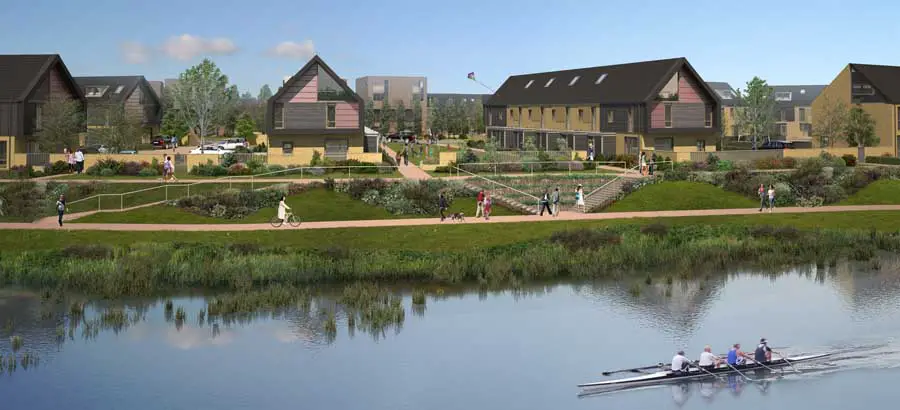
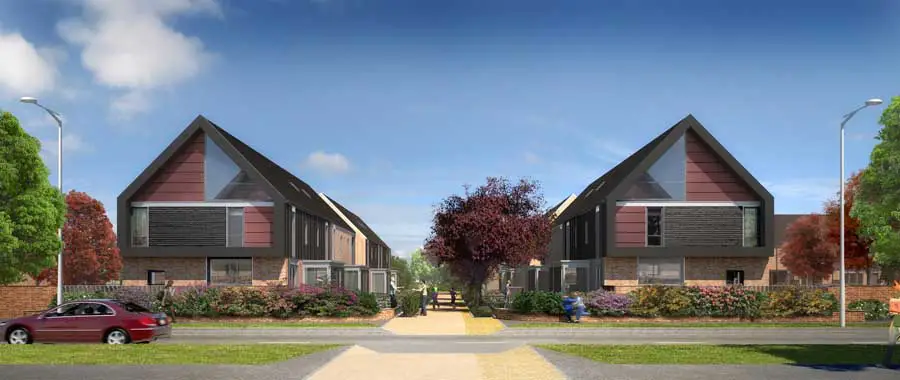
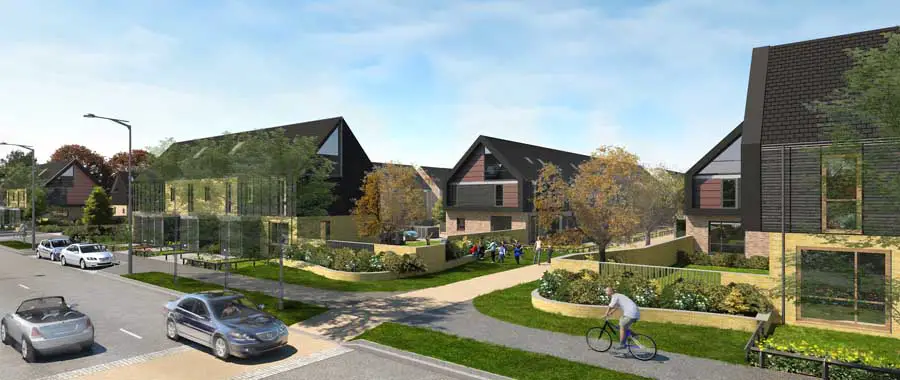
2014 Commonwealth Games Athletes Village pictures from architect
“It will be one of the most important elements of the Glasgow 2014 Commonwealth Games – and one of the most recognisable aspects of the legacy.
“The plans passed today are for a development which will become a stunning new neighbourhood in the East End of Glasgow.
“The construction of this phase, and eventually, the rest of the Athletes’ Village will show the world what Glasgow can do.”
The City Legacy Consortium is made up of several companies which have a strong track record of residential development and job creation in Glasgow, including contractors CCG, Mactaggart & Mickel, Cruden and W H Malcolm.
Ed Monaghan, spokesperson for the City Legacy consortium said: “City Legacy is committed to working with Glasgow City Council to realise the vision for a memorable Glasgow 2014 Commonwealth Games and deliver a lasting regeneration legacy for Dalmarnock. We are focussed on transforming the area to become a much sought-after riverside residential location and showcasing the Athletes’ Village as the best in contemporary and sustainable design.”
John Scott, Chief Executive of the Glasgow 2014 Organising Committee, said:
“This agreement is another example that the overall planning for the Games is on track. It marks a key milestone for the partners of Glasgow 2014 that we are achieving our objectives.
“Glasgow 2014 aspires to deliver outstanding, athlete centred Games and the development of a high quality Athletes’ Village forms an integral part of that ambition.”
The successful development of the 32.5 hectares site in Dalmarnock is a key component in the delivery of the Games. The Athletes’ Village will provide accommodation and facilities for 6,500 competitors and officials during the Games.
After the 2014 Commonwealth Games the Athletes’ Village will become a desirable new residential community including 304 private homes, 400 homes for rent and a new 120 bed care home for the elderly. The removal of the temporary facilities within the Athletes’ Village after the Games will release additional land for further residential development.
The planned mix of homes incorporates a diverse range of sizes and types of properties that will be important in creating a balanced community and will aid sales of the homes.
The plan submitted by City Legacy will deliver a minimum 60% reduction in carbon emissions from the new homes to be constructed – a first in Scotland for a development of this scale.
The development of the Athletes’ Village will bring significant community benefits to the city by generating employment and training opportunities and creating opportunities for small to medium sized enterprises and social enterprises.
One example of this is the number of new jobs – 93 – that will be created as part of an overall direct workforce of 620. 60 of these will be apprentices. The partnering agreements with sub-contractors and suppliers will see 36 new jobs being created there, 24 of which will be apprentices. The indirect workforce will be around 200.
Celtic Park, the National Indoor Sports Arena and the Sir Chris Hoy Velodrome are adjacent to the site. The East End Regeneration Route – scheduled for completion in 2011 – linking to the M74 Completion at Polmadie will run to within 350 metres of the Village.
Post-Games, the site will incorporate 300 social rented units, around 1100 private homes and a 120 bed Social Work care home for the elderly – all with a BRE EcoHomes excellent rating or equivalent.
Construction on this part of the Athletes’ Village is scheduled to begin later this year.
The Games-time elements of the Athletes’ Village will be subject to a separate planning application in due course.
Previously:
Commonwealth Games Village
RMJM to design Athletes’ Village for 2014 Games
UK-based international architecture practice RMJM has secured the contract to design the Athletes’ Village for the 2014 Commonwealth Games in Glasgow, UK. As the masterplanner and design champion for the winning City Legacy Consortium, RMJM will create 700 homes and related accommodation for up to 8,000 athletes and officials with a further 765 homes planned after the games, transforming the deprived East End of Glasgow into a much sought-after riverside residential area.
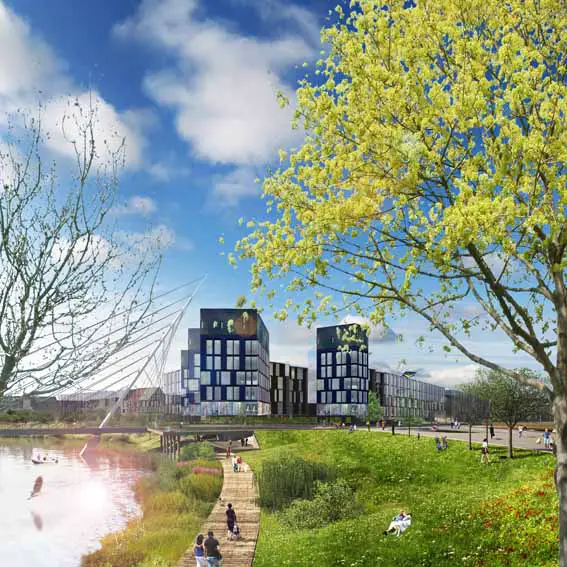


2014 Commonwealth Games Athletes Village pictures from architect
The proposals for the Games phase of the project will regenerate a 38 hectare waterfront site and have been prepared in discussion with the Organising Committee of the 2014 Commonwealth Games. The unique design of the accommodation is highly flexible and allows for relatively simple post-Games retrofit for the legacy housing phase, which will eventually see a total of nearly 1,500 homes built. The project will employ 620 people and work is set to start next year, completing some six months before the Games start in 2014. RMJM’s landscape architecture division, Strata, has also been involved in the proposals.
Paul Stallan, European Design Director of RMJM said: “RMJM has designed a beautiful and inspired urban village for the East End of Glasgow, a village that will accommodate visiting athletes in the first instance, but most importantly post the 2014 Games will provide a wonderful environment for a new family focused community to grow and regenerate.”
RMJM, which has 16 offices in Asia, Middle East, North America and Europe, recently announced that it had also been awarded a key contract at the 2010 Delhi Commonwealth Games to be the expert planning consultants for six key venues, including the Delhi Athletes’ Village, Media Centre and International Airport. The firm was awarded this role following the success of its work at the Beijing Olympic Games where it designed the Convention Centre, pistol-shooting and fencing venues, international media centre and broadcast centre, as well as the masterplanning for a site to accommodate hotels and other commercial and retail buildings.
To build on the firm’s success in the sporting arena, RMJM recently established a specialist studio – RMJM Sport – headed up by John Pauline, one of the world’s most experienced designers of sporting venues who has worked on projects at four Olympic Games, including the design of the world-famous ‘Watercube’ at the Beijing Olympics.
Peter Morrison, Group Chief Executive of RMJM said: “We are thrilled to have been chosen to design the athletes’ village for the Commonwealth Games in Glasgow and to be playing a key role in transforming the city’s East End. It’s an immense privilege to be involved in world-renowned sporting events such as the Commonwealth Games and it is vital to ensure that any development created for a host city leaves a lasting legacy for local communities and residents for years to come.”
City Legacy Consortium
The City Legacy consortium was formed by several companies who have a strong track record of residential development and job creation in Glasgow. Members of the consortium bring a range of skills to the 2014 Commonwealth Games and have worked closely with Glasgow City Council in a participative dialogue process since October 2008. The Consortium includes:
– Developers and contractors, CCG, Cruden, Mactaggart & Mickel, and W H Malcolm
– Bid Management, Project Management and Cost Management, Davis Langdon LLP
– Masterplanners and Design Champions, RMJM
– Engineers, WSP Group plc
– Community Benefit and Town Planning advice, Turley Associates
– Legal advisors, Burness LLP
– Utilities infrastructure and sustainability, Scottish and Southern Energy
– Property Development advice, JLL
2014 Commonwealth Games Athletes Village – Shortlisted Entry
Ian Simpson, gm+ad, Elder and Cannon, Reiach and Hall and NORD
Each practice had a different section of the masterplan:
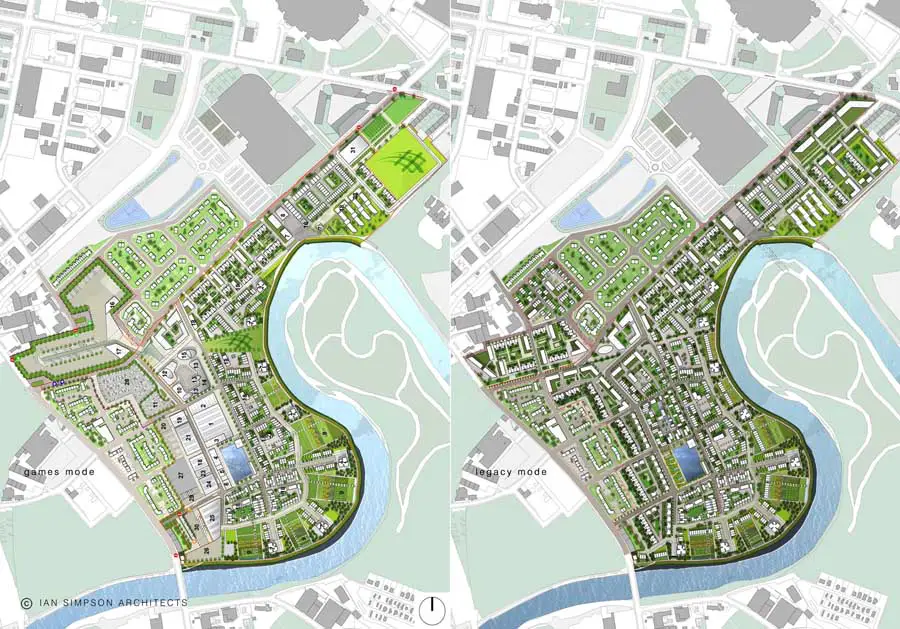
2014 Commonwealth Games Athletes Village image © ian simpson architects
NORD’s ideas for the rivers edge, a fundamental part of the proposal (rotated to make easier to view, so North is to the right):
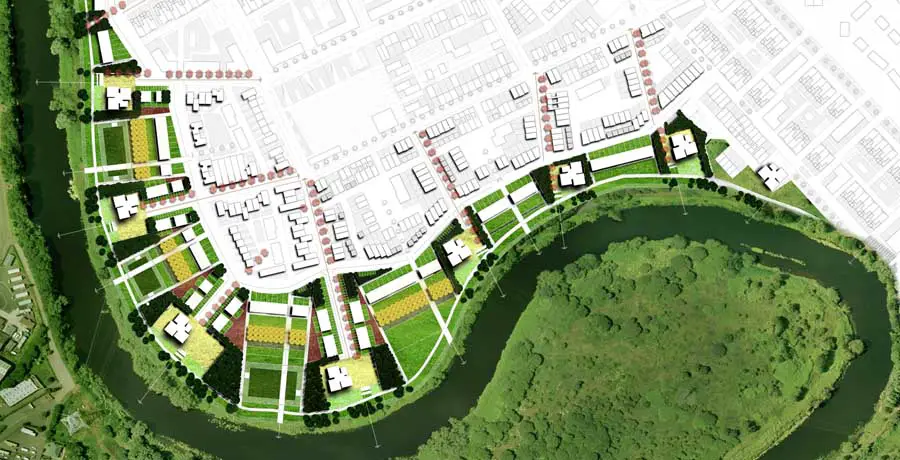
2014 Commonwealth Games Athletes Village picture from the architect
2014 Commonwealth Games images kindly provided by gm+ad architects 30 Jun 2009
Glasgow 2014 Commonwealth Games Athletes Village Winner
2014 Commonwealth Games
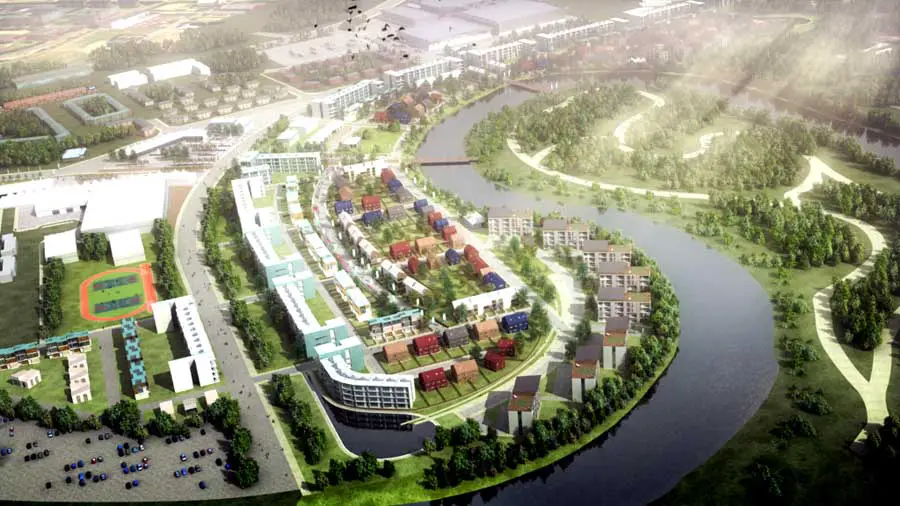
2014 Commonwealth Games picture from architect
Commonwealth Games Athletes Village : archive information on initial stages
Commonwealth Games athletes village design : RMJM Architects
Scottish National Indoor Arena : Velodrome, part of Scottish National Indoor Arena
Commonwealth Games Arena : Arena images
Glasgow Building Designs
Contemporary Glasgow Property Designs – recent Strathclyde architectural selection below:
image courtesy of Rangers FC
Blue Sky Lounge at Ibrox Stadium
photo courtesy of UoG
University of Glasgow Advanced Research Centre
Comments / photos for the Commonwealth Games Glasgow – 2014 Athletes Village page welcome.