NVA Glasgow, Lighting Projects Scotland, Photos, Scottish designers
NVA, Glasgow, Scotland : Lighting + Art Projects
Scottish Lighting Projects : Tidal Weir, Glen Lyon, Skye
22 Jan 2018
NVA Glasgow news
8 Oct 2013
NVA News
NVA in Germany
Design: NVA, Glasgow, with choreographer Pipo Tafel
photo © McAteer
The Speed of Light Project
This project reimagined urban and rural landscapes with the creative Scottish team collaborating with German choreographer Pipo Tafel.
11 Nov 2010
Venice Biennale + Cardross Seminary
NVA ORGANISATION: partnership with Scottish Arts Council National Lottery Fund, Glasgow City Council
NVA to represent Scotland at International Architecture Exhibition
Public arts organisation NVA has been invited by the Scottish Government, in partnership with Creative Scotland and the British Council Scotland, to curate a distinctive Scottish presence at La Biennale di Venezia’s 2010 International Architecture Exhibition.
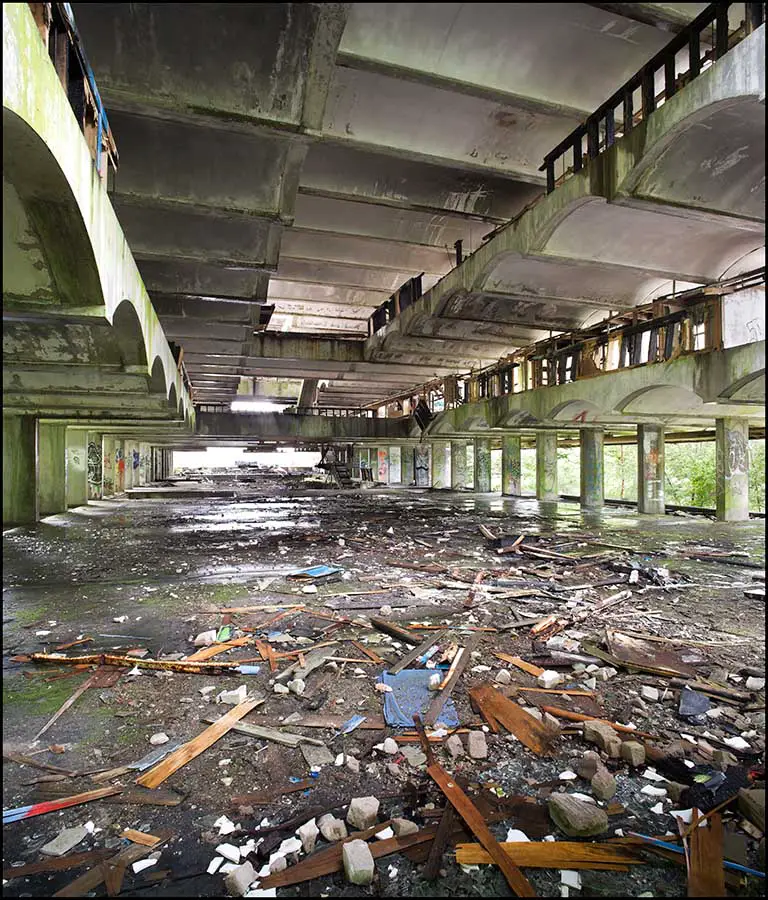
photo © Neale Smith
The Glasgow-based organisation will present public events responding to the themes of restoration and reuse of our built heritage, particularly on the potential restoration of St Peter’s Seminary near Cardross.
For the past two years NVA has been working with patrons, local groups and national partners to develop a new vision for St Peter’s Seminary – the post-war Modernist masterpiece designed by Gillespie, Kidd and Coia.
Venice Biennale
NVA Projects – Selection
Old Man of Storr, Skye
Festival – Aug/Sep 2005
College of Building & Printing, Glasgow
Alan McAteer’s images profiling nva’s Glasgow Lighting Projects:
NVA ORGANISATION in partnership with Scottish Arts Council National Lottery Fund, Glasgow City Council and Glasgow College of Building and Printing.
LAUNCH OF NEW LIGHTING SCHEMES FOR GLASGOW PR
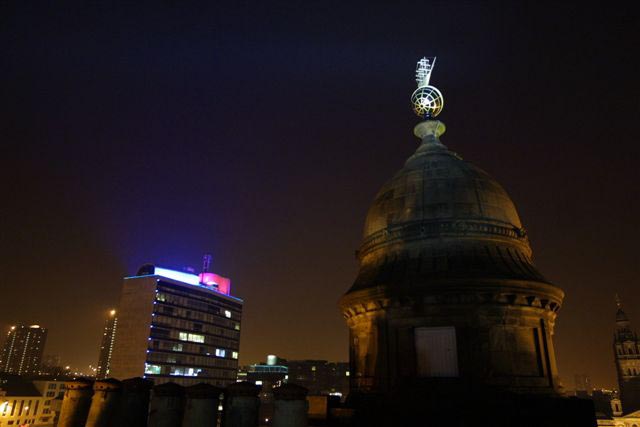
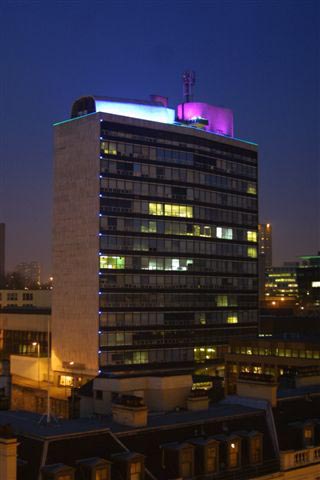

In March 2003 nva organisation, one of the UK’s most successful and innovative independent arts charities, will unveil two major outdoor lighting schemes: Glasgow College of Building & Printing and the Glasgow Tidal Weir. Both these schemes have been designed by David Bryant, of Spirit Design UK, and are part of Glasgow City Council’s Lighting Strategy for the City.
nva organisation began to develop artist-led designs for buildings through a grant of £95,000 from the SAC Capital Lottery Fund in 1999. A number of keynote buildings, structures and architectural details were chosen for transformation throughout the city. Partnership funding was brought in through the City Council £2.4 million new lighting strategy and building owners. The two schemes being launched this Spring are the most ambitious and will set a benchmark for urban lighting design in terms of scale and execution.
“It was during the development of Grand Central, an event on the seventh floor of the Central Hotel in 1999, that we became aware of just how dark the city centre looks at night and how a wealth of architectural detail is being misswd by the general public. Through the use of innovative lighting schemes, the nightscape is supporting a vibrant new image for the city ”.
Katie Nicoll, Events Director, nva organisation
Glasgow College of Building & Printing – by Wylie Shanks Architects
Launch Mar 2003
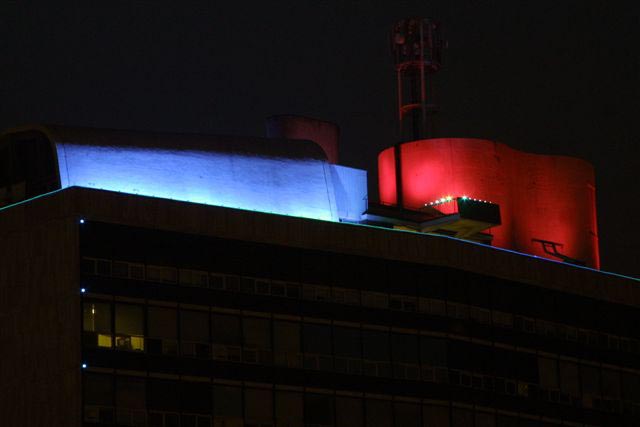
The location of Glasgow College of Building & Printing provided nva organisation with a dramatic landmark feature – floating high in the sky and visible from a great number of vantage points around the city. David Bryant responded to the building by designing a scheme to transform the ‘Le Corbusier’ influenced rooftop. The new design punctuates the lively shipping references on the roof level, articulating the funnel and deck shapes with gently contrasting colours.
Technical developments within the entertainment lighting industry have now filtered through to the manufacturers of architectural lighting fixtures and the range of colours, beam angles and focusable instruments available has brought architectural lighting into a new era. The scheme incorporates state of the art technology enabling shifts in colour and theme using LED technology, ranging from CFL colour changers to the use of 100 Diodes. With the colour changers, the opportunity now exists for areas on the roof to change to a different palate of colours every other night. A side-emitting fibre-optic will follow the horizontal edge of the building to give the impression of water on which the ship elements float. The diodes are positioned down the front elevation to give the impression of depth but will also act as a visual link between the ground and the roof.
This has been achieved through the financial support of the Scottish Arts Council, Glasgow City Council and the Glasgow College of Building and Printing.
Tidal Weir
NVA ORGANISATION
Glasgow Tidal Weir
Launched Mar 2003
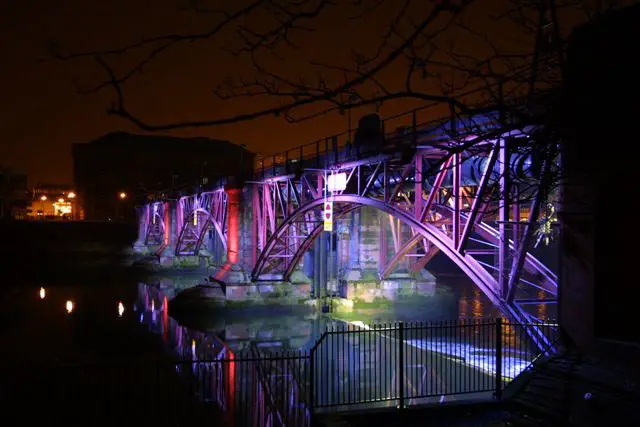

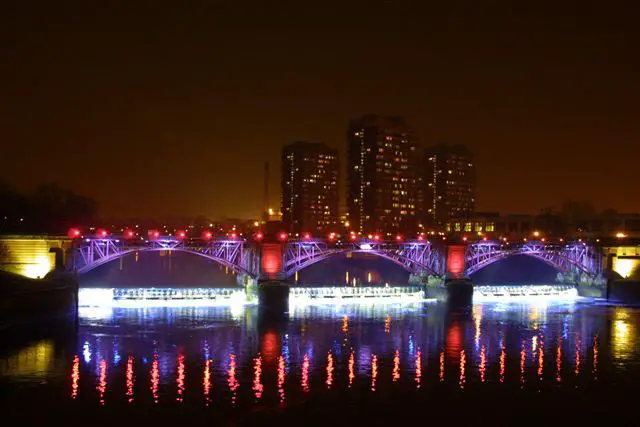
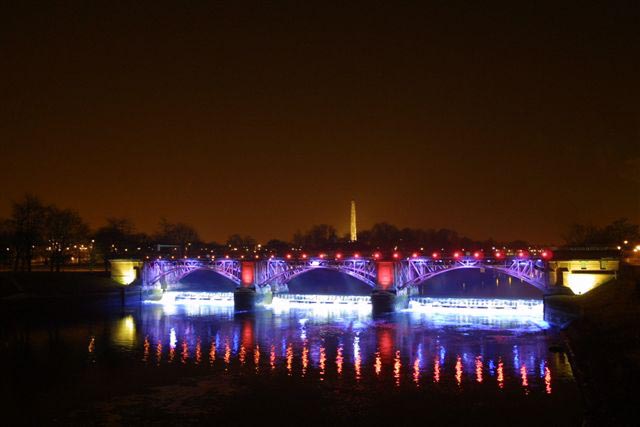
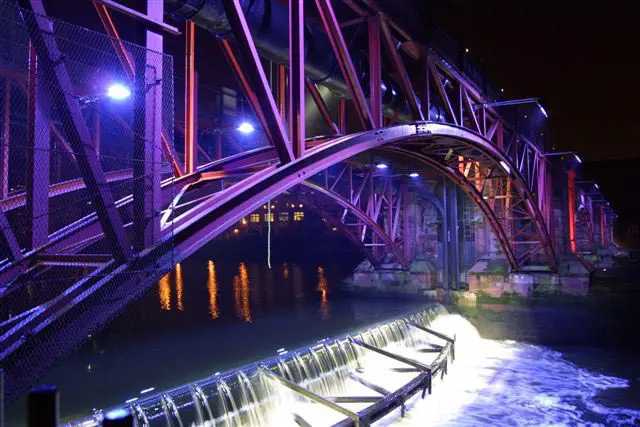
The Glasgow Tidal Weir is over 100 years old but continues to function effectively ensuring safe water levels are maintained on the River Clyde. nva organisation has elevated the structure’s prominence within the city landscape. David Bryant has designed a simple but bold illumination of the bridge fascia, piers and support structures, lifting the bridge out of the surrounding landscape. Additional drama is added with the use of lights focused onto the water maximising reflections from the water spume. An array of miniature beacons has been added to the handrail of the bridge and within the engineering mechanics to add an energy and clarity to the top section of the bridge.
Again the use of new LED technology has been used within this scheme. The benefits of these fittings are the low power consumption and minimal maintenance requirements, without loss of quality or visual impact. Custom-made fixtures have been created so that tamgem lights can be clamped to the structure, ensuring minimal impact on a historically significant industrial landmark.
The lighting scheme for the Weir will enhance the regeneration programme for the area and add to the existing work currently taking place as part of the River Clyde redevelopment.
Glasgow Lighting Project:
Tramway Theatre Chimney, Glasgow
launched Jun 2003
nva organisation, in association with Speirs and Major Associates, will be launching a new lighting scheme in June 2003. The scheme is to highlight the chimney, a B-listed structure that once functioned as part of the original tramworks on the southside of the city. The chimney sits on the site of the Hidden Gardens, a new sanctuary garden to be launched in June 2003, with the design encapsulating the capillary action inn a plant stem using animated projections and architectural light fittings.
Glasgow Lighting Project:
The Merchants House of Glasgow
Dec 2001
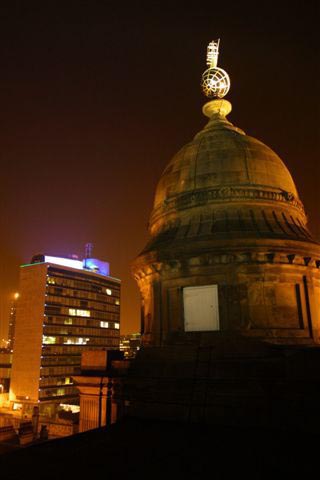
nva organisation in association with lighting designer, Ross Gerry, highlighted a wonderful detail on the roof of the Merchants House of Glasgow, overlooking George Square. The weathervane on this building is a ship floating on top of a globe, an image that is replicated on internal stained glass within the building. This detail can be caught at various points within the city centre against the night sky highlighting Glasgow’s shipbuilding history.
NVA information, 19 Jun 2003
RIAS Convention 2003:
Angus Farquhar, nva lighting

Creative Director, nva organisation
Next up was Angus Farquhar talking about nva organisation projects in Scotland. The first two projects etched themselves in my mind, especially the streams of lights ‘pouring’ down Highland valleys like molten lava in ‘The Path’, Glen Lyon.
The two Glasgow projects were essentially atmospheric rather than theoretical. The final project, the ‘Hidden Gardens’, in a multi-cultural area of Glasgow, a peace garden with an ‘aspiration to…celebrate richness of human culture around us’. Angus seemed politically passionate, very rooted in history and influenced by especially by Asian theology and practice.
NVA Glasgow Lighting + Art Projects images / information from NVA
image © Foster + Partners
Comments / photos for the NVA Lighting Glasgow Architecture page welcome