
GRI Queen Elizabeth building, Royal Infirmary Glasgow design, NHS Scotland Intensive Care Unit facility, Concourse architect
Glasgow Royal Infirmary Building
GRI Property Development – Glasgow Royal Infirmary Building design by various architects.
post updated 8 April 2025
Glasgow Royal Infirmary Intensive Care Unit Phase 2
Address: Glasgow Royal Infirmary, 84 Castle St, Glasgow, Scotland, UK.
Phone: 0141 211 4000
Design: Reiach and Hall Architects, Edinburgh
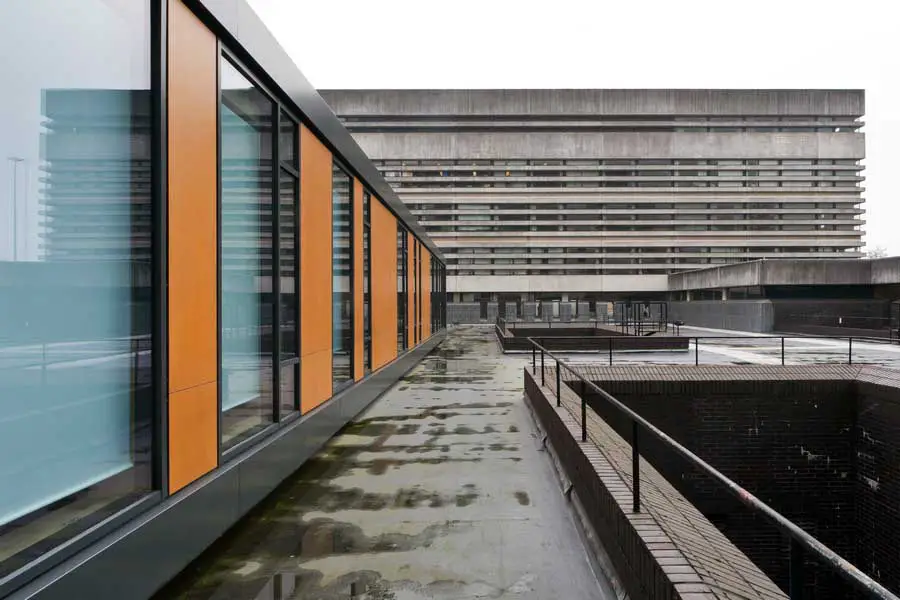
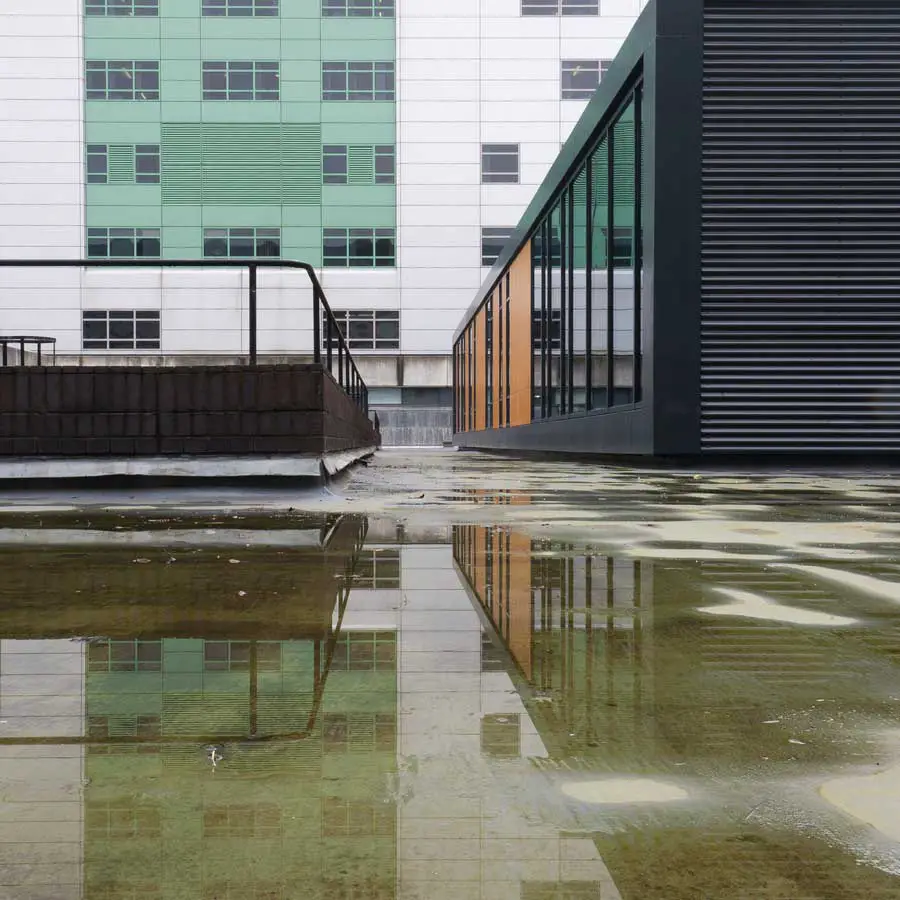
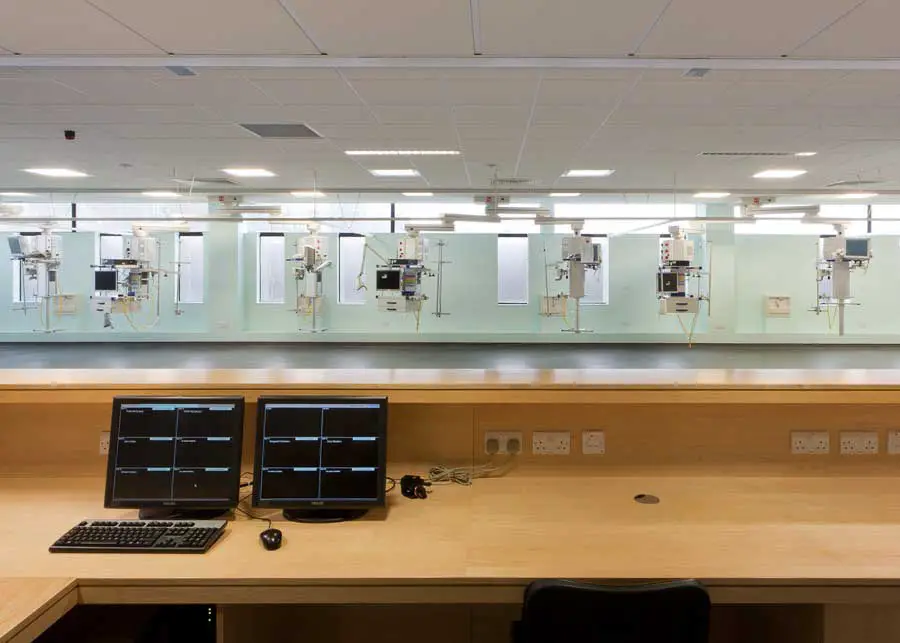
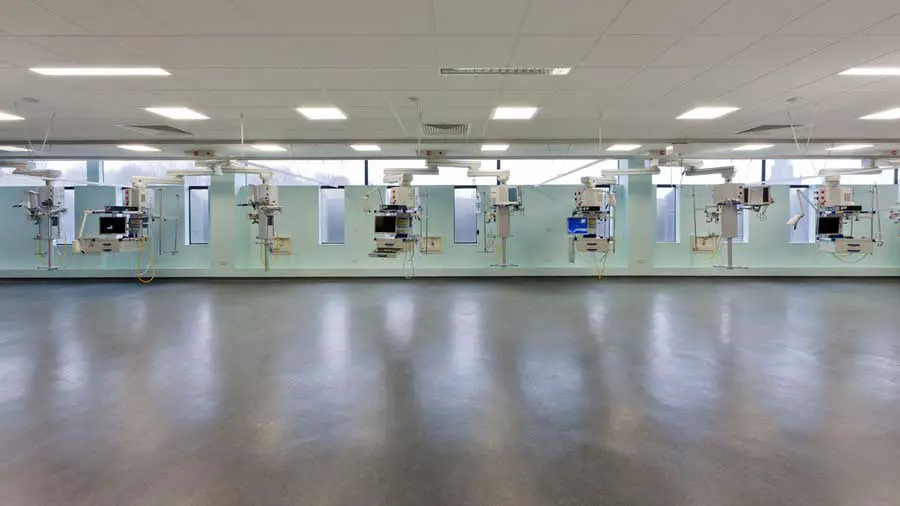
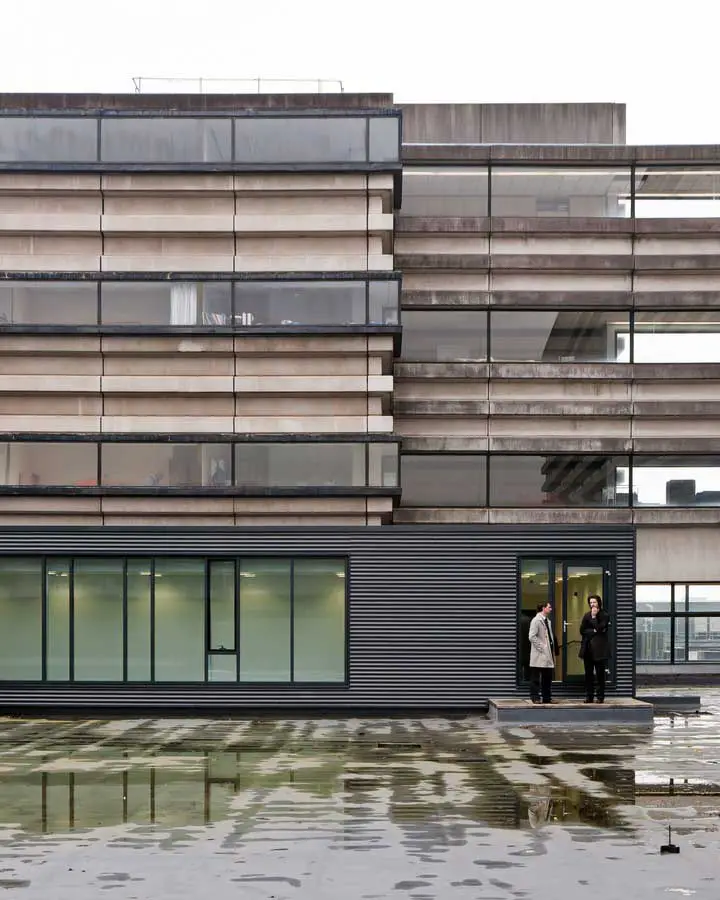
NHS Scotland Intensive Care Unit facility photos courtesy of Reiach and Hall Architects
Intensive Care Unit facility developed and built for NHS Greater Glasgow and Clyde.
Glasgow Royal Infirmary ICU
Refurbishment of existing ward to create new 10 bed unit and construction of new roof top pavilion containing ancillary staff and visitor accommodation.
Reiach and Hall : Roses Design Awards Healthcare Building of the Year 2011 Bronze.
Glasgow Royal Infirmary Concourse
Location: North Glasgow University
Address: Queen Elizabeth Building, GRI, Alexandra Parade, Glasgow G31 2GA, United Kingdom.
Glasgow Royal Infirmary Concourse Transformed by £1.5m Refurbishment
The veil will be lifted this week (18 Sep 2003) on the £1.5m refurbishment of the Queen Elizabeth Building concourse and health records department at one of Glasgow’s most prominent medical landmarks, The Glasgow Royal Infirmary (GRI). The works were designed by Glasgow based architectural and interior design practice Armitage Associates.
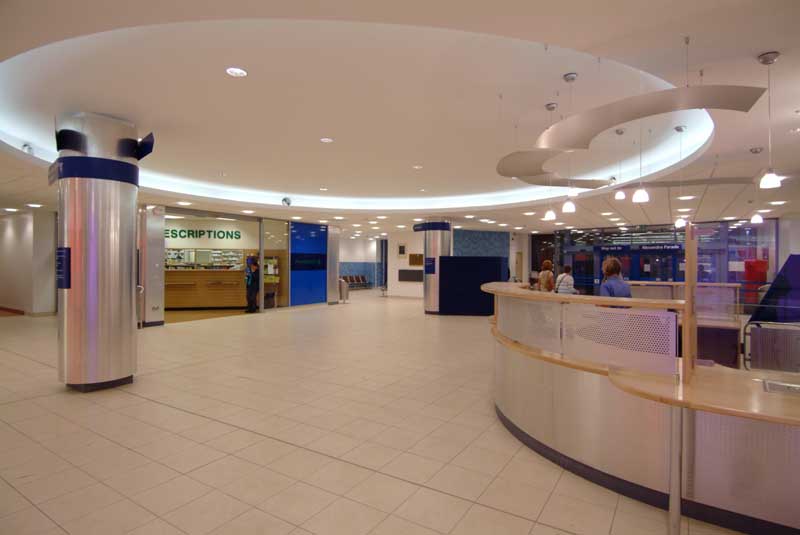
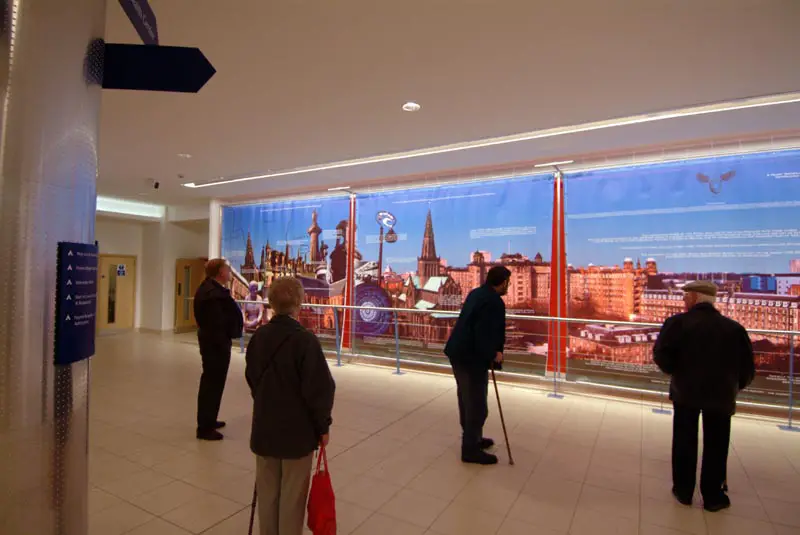

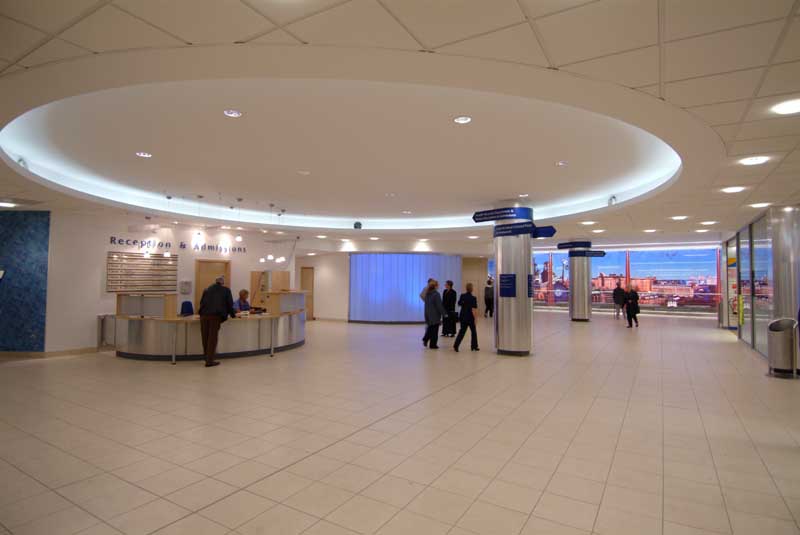
GRI interior – NHS Scotland Intensive Care Unit facility images from Armitage Associates
Through time the original Royal Infirmary concourse, built in the 1970’s, had become dated and the effects of more than thirty years of wear and tear were evident thus North Glasgow University Hospitals NHS Trust commissioned the refurbishment.
Armitage Associates were appointed in May 2002 to design accommodation for the Health Records Department and to completely refurbish the concourse from its dated appearance to a light, airy and welcoming environment. The brief also required retail units, a comfortable and inviting seating area as well as a reception desk.
The original Glasgow Royal Infirmary building was demolished in 1907 as Glasgow’s demand outgrew the hospital’s capability. The present hospital building was custom designed by architect James Miller and opened in 1914 by King George V. It was Britain’s biggest public building at that time.
The refurbished GRI concourse is located beneath the new maternity unit at the Alexandra Parade entrance to the hospital. This main entrance services several important routes to the rest of the hospital and is therefore one of the busiest areas for patients, visitors and hospital personnel.
Lena Armitage of Armitage Associates commented:
“We were delighted to be given the opportunity to work on this project in conjunction with the health trust. The specification of the project meant that the concourse would be completely revamped.”
The health records department is now a collection of bright airy offices despite the limited daylight available. Colours, floor patterns and modulation of the ceiling plane all add interest and purpose designed, built in desk units create an ordered environment for the processing of a multitude of paperwork.
The Glasgow Royal Infirmary Concourse occupies a 50 x 50 m floor plate with a floor to ceiling height of 3.5 m. Included in the concourse are the main reception desk, the newsagent and the pharmacy.
The design of the concourse began with a rectangular space from which areas were carved out and added to accommodateretail units and the health records department. The limited scope for varying the ceiling level was exploited to the maximum with concealed lighting and significant areas of flat white ceiling. The ubiquitous suspended ceiling tiles (necessary for access to the services above) were pushed to the edges – made possible by the careful design of the services.
A large welcoming ash veneered reception desk sits prominently in the space, open and inviting and designed to be secure for the staff but approachable by visitors and patients. Dimpled aluminium covers the front of the desk. Perforated aluminium on stainless steel posts holds up a shelf and acts as a screen to offer some privacy to the staff. Floating above the desk is an aluminium halo with pendant lights strung in a semi circle.
A virtue is made of a fire stair with curved glass plank elliptical segments back lit with colour change LED’s creating a soothing light filled atmosphere with a framed recess for a valued bust of hospital benefactor Marjory Shanks Schaw. The staircase leading to the Princess Royal Maternity is given prominence by a sweeping curved wall clad with picture vinyl floor tiles of bubbles in a beautiful azure blue.
An enormous 18m x 3m photographic mural has been hung on the wall at the end of the GRI concourse, opposite the main entrance, replacing the original dark brown brick wall. The banner and its lighting create the illusion of a view out of the concourse and of light spilling in. The mural is detailed in the same way as scaffolding advertising hoardings and is protected with a stainless steel wire balustrade: creating an illusion of an outside beyond, not just a wall at the end of the concourse.
The bespoke mural was created for the GRI by Glasgow artist Nichol Weatley who explained:
“The idea and sole inspiration was to produce an artwork that would have a positive benefit to all, patients, staff and visitors of the hospital and to enhance and complement the overall ambience of the space created by Armitage Associates.
“The space is a welcoming and calming entrance to the hospital. Working closely with the architects we were able to strengthen and harmonise art with architecture, acting as a window to the world outside. The mural entitled “East End Tale” represents the unique history of the area, arguably the most historic in Glasgow, and its people.“
Glasgow Royal Infirmary Building images / information 17 Sep 2003 from Armitage Associates
GRI Building Development
The GRI has around 1000 beds and provides a broad range of services. The Hospitals NHS Trust has recently completed a £60m development at the GRI.
The GRI now has a new Plastic Surgery & Burns Unit and an Emergency Receiving Centre, following closure of Canniesburn Hospital.
Old Glasgow Royal Infirmary
The Old Glasgow Royal Infirmary was originally designed by Robert Adam, completed in 1794 by James Adam. The GRI was erected on the site of the old Bishop’s Castle. The GRI was extended many times during the 19th century before it was demolished and then rebuilt 1907-1914.
GRI Multi-Storey Car Park, Glasgow design by Young & Gault Architects
A 1,000 space multi-storey car park designed within the Glasgow Royal Infirmary Complex in Glasgow. Two masonry ‘book ends’ to the two public facades are linked at below with a masonry base; floor levels are expressed by aerofoil fins between bookends.
GRI building:
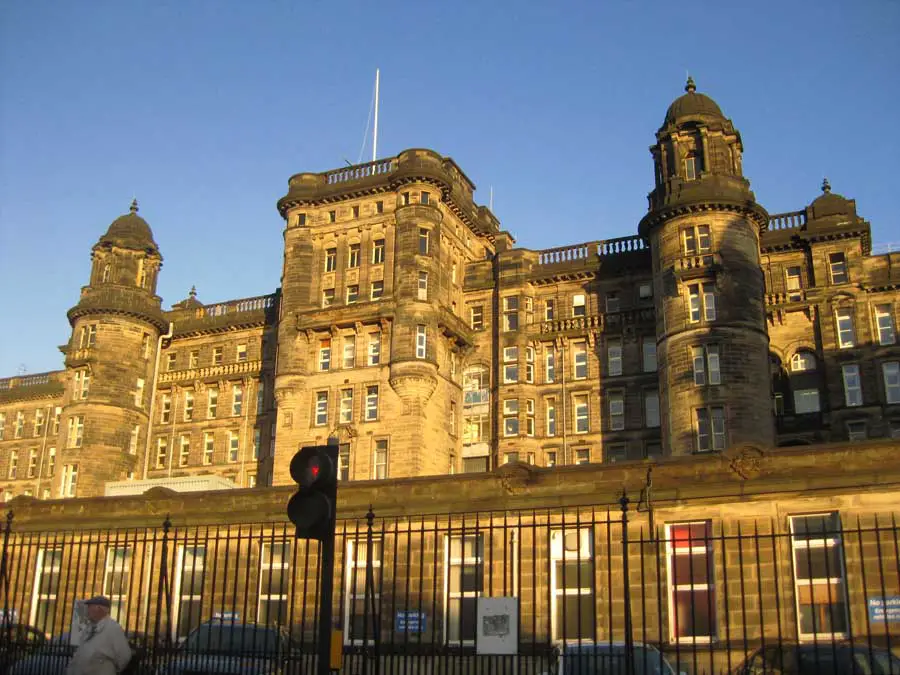
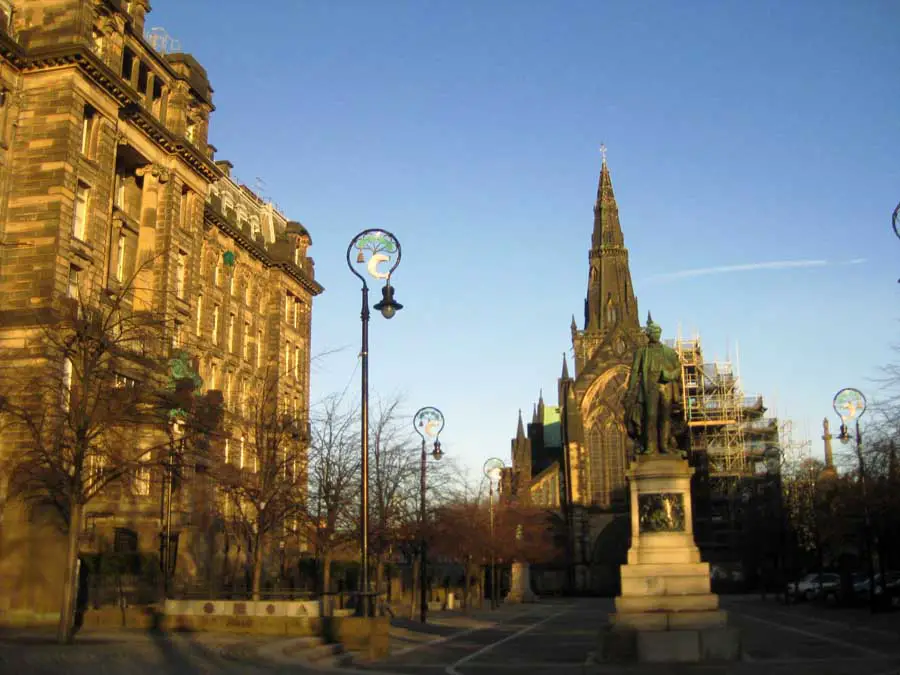
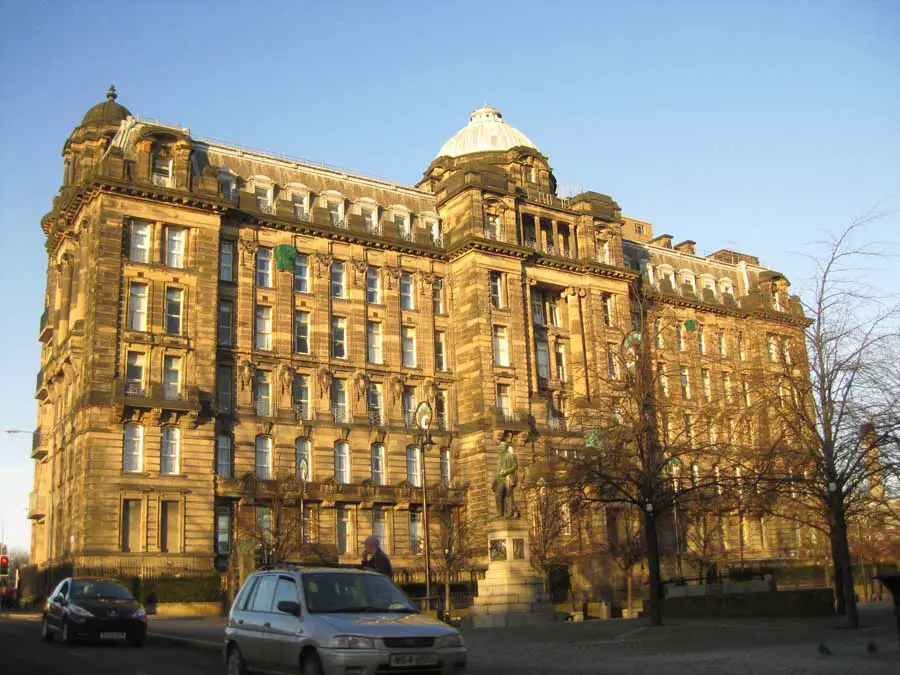

GRI NHS Scotland Intensive Care Unit facility building photos © Adrian Welch
Glasgow Infirmary building design by Sir Basil Spence, Glover & Ferguson Architects, UK, in 1981.
Location: 84 Castle Street, Glasgow, Strathclyde, southwest Scotland, UK
Scottish Hospitals
Children’s Hospital – Loch Lomond
James Miller also worked on Central Station Glasgow around 1901-6
Equity Release by Key Later Life can Help You
Dumfries & Galloway Royal Infirmary – find it on the e-architect website
Edinburgh Royal Infirmary – find it on the Edinburgh Architecture website
Glasgow Royal Infirmary : 0141 211 4000
Glasgow Royal Infirmary Architect : Robert Adam
Glasgow Building Designs
Contemporary Glasgow Property Designs – recent Strathclyde architectural selection below:
University of Glasgow Advanced Research Centre
Solasta Riverside Building Buchanan Wharf
Comments / photos for the Glasgow Royal Infirmary Building Intensive Care Unit Phase 2 design by Reiach and Hall Architects page welcome.