Burrell Collection reopening, Museum refurbishment photos, Architect, Location, Architecture design award
Burrell Museum Building
Renewal of Modern Building in Glasgow, Scotland – original design by Barry Gasson, Brit Andersson.
post updated 3 May 2025
Redevelopment design: John McAslan + Partners, London
24 May 2023
Art Fund Museum Of The Year 2023
This building has been shortlisted for a £120,000 prize, set to be announced on 12 July 2023.
photos © Janie Airey Art Fund 2023
Art Fund, the UK’s national charity for art, today announced the five museums selected as finalists for Art Fund Museum of the Year 2023, the world’s largest museum prize:
Art Fund Museum of Year 2023 Winners
post updated 18 February 2023
Burrell Collection Visit
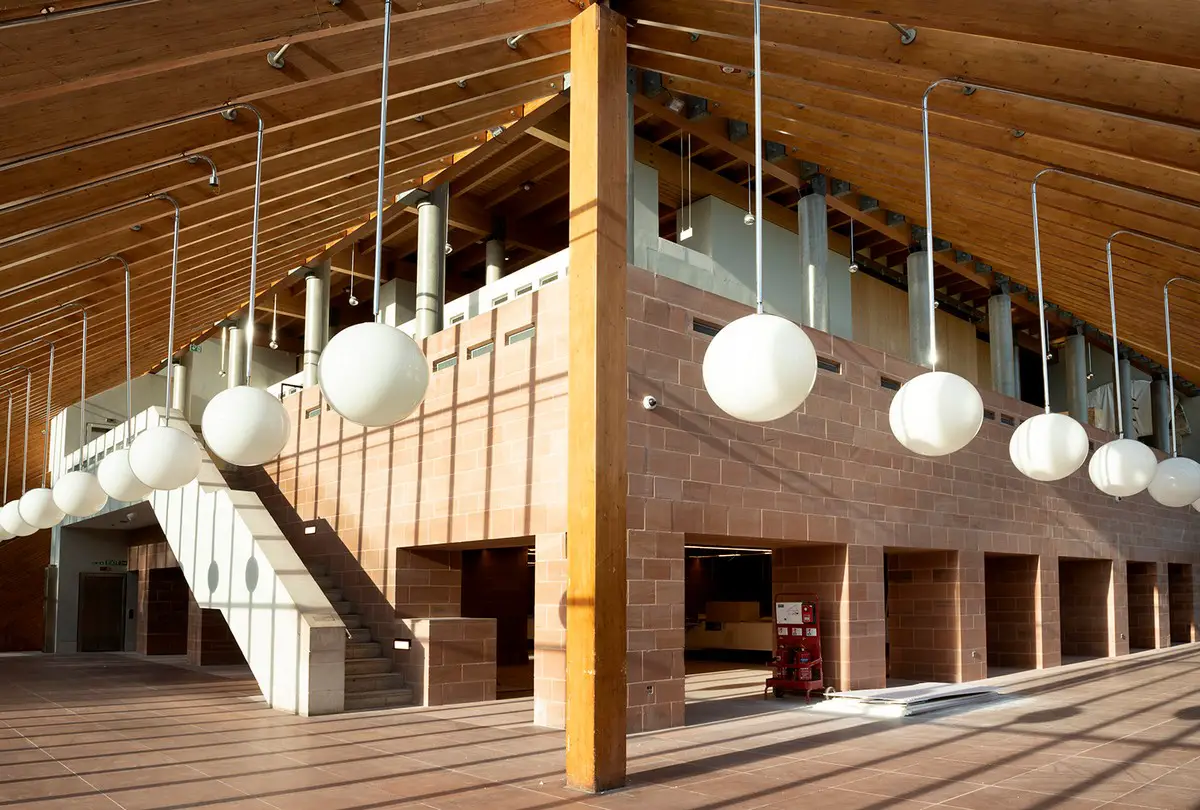
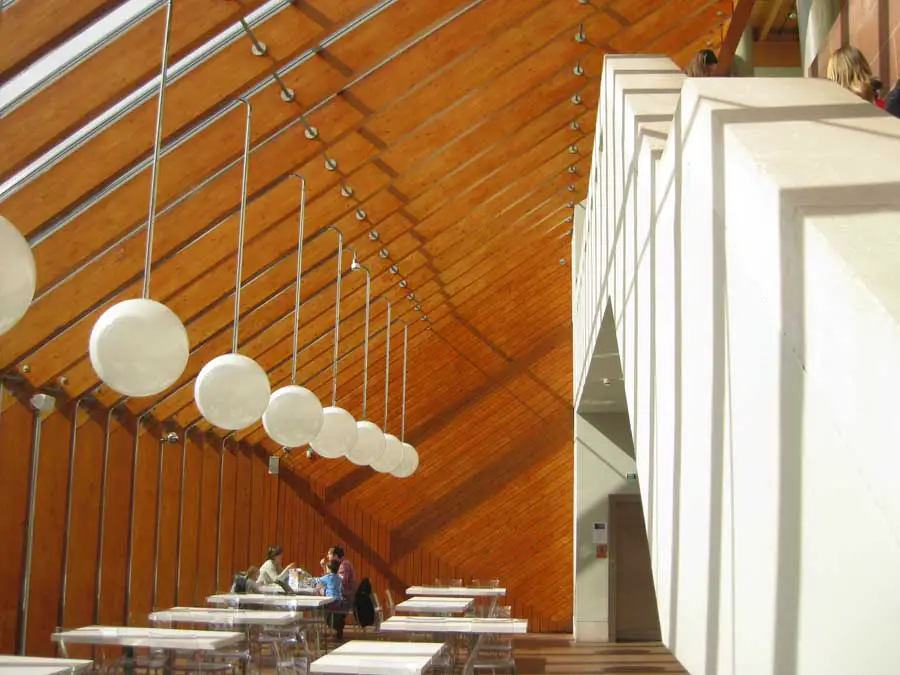
Isabelle and Adrian enjoyed a tour around the new Burrell Museum building today, here are some photos of the renewed interior:
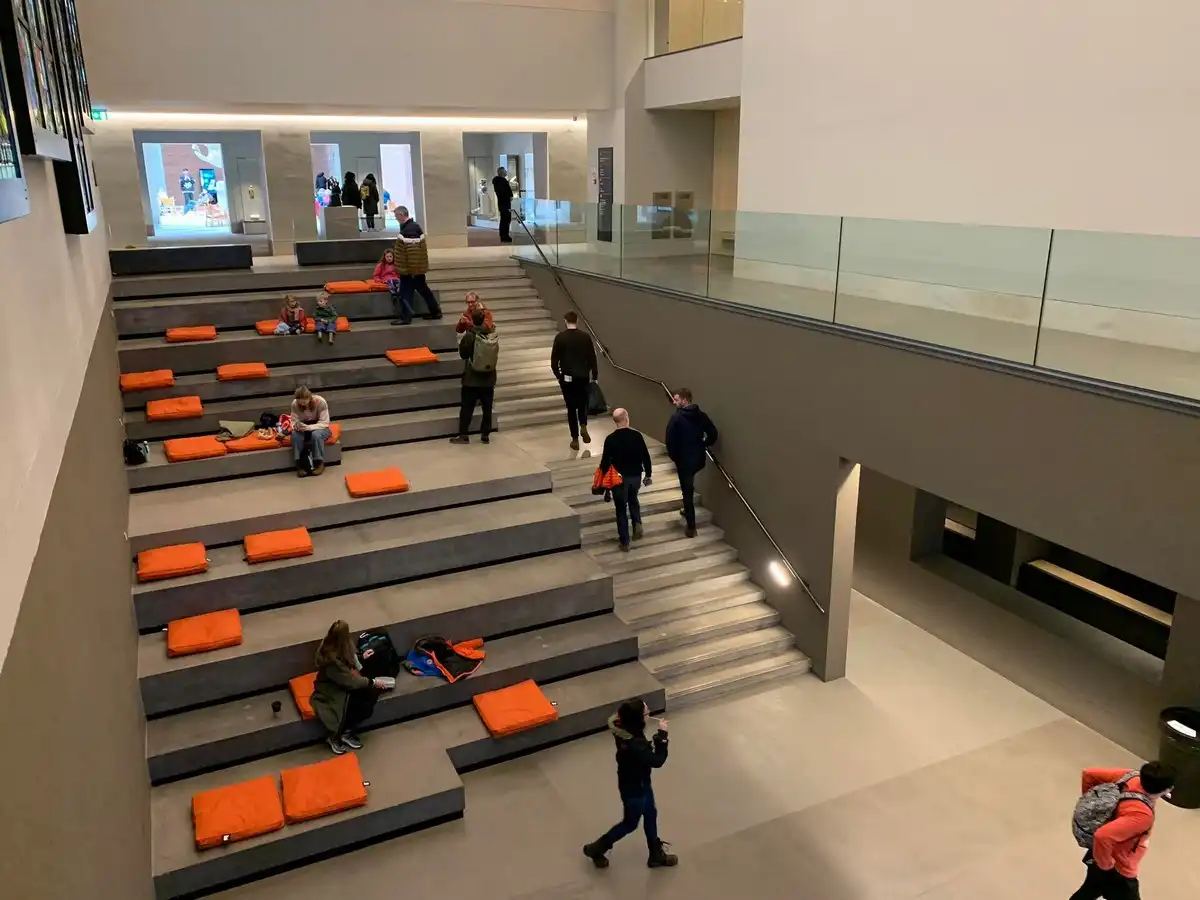
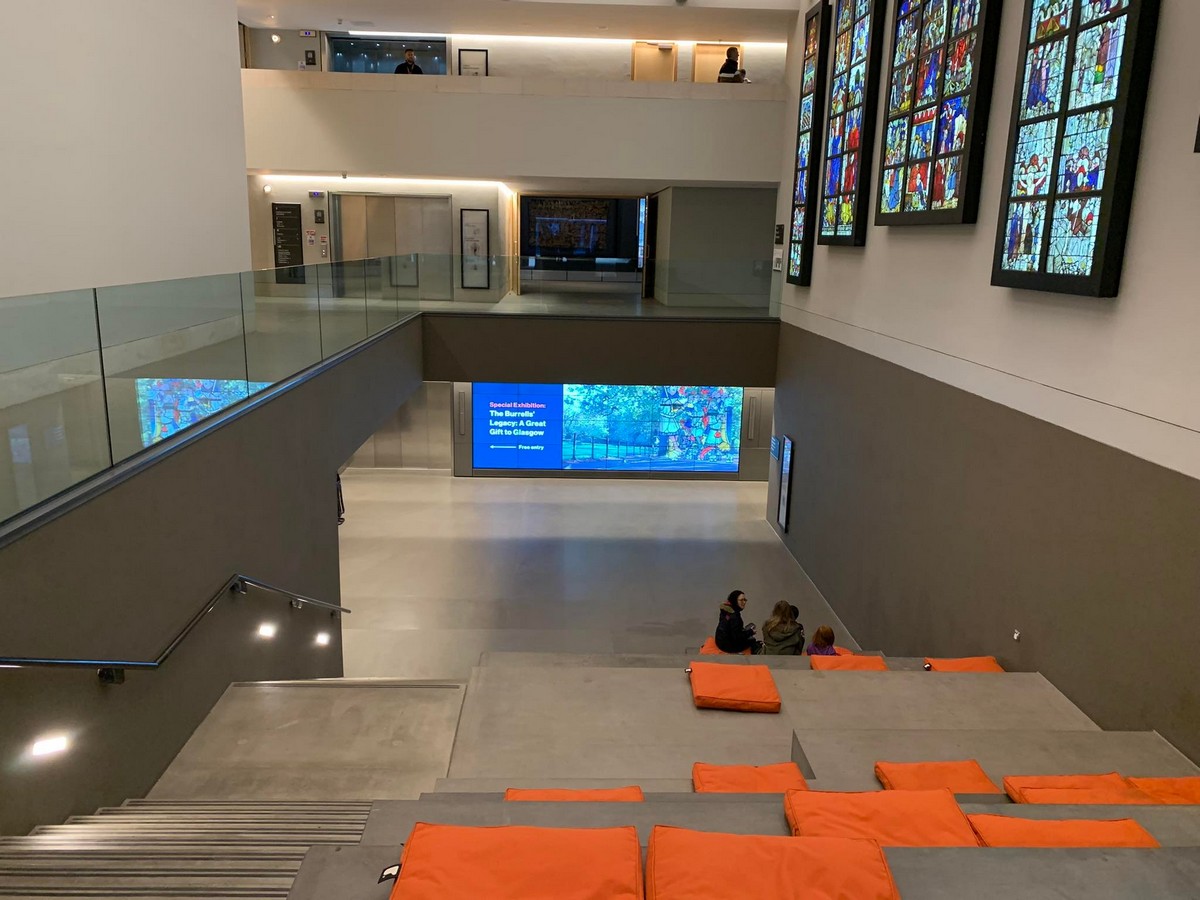
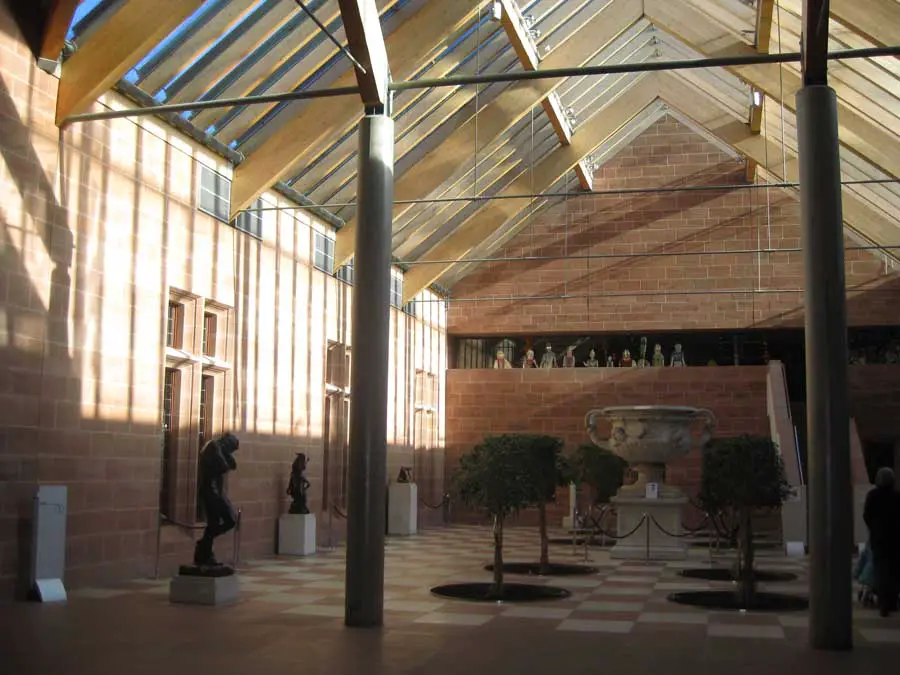
The central new space, our late friend Joel Solkoff campaigned hard against these trendy new spaces – that he could not reach in his wheelchair. How can these have become so popular in a wide range of new museums, universities, schools, etc. around the world? A focal space that you cannot reach if you are in a wheelchair or mobility scooter is not appropriate in the 21st Century:
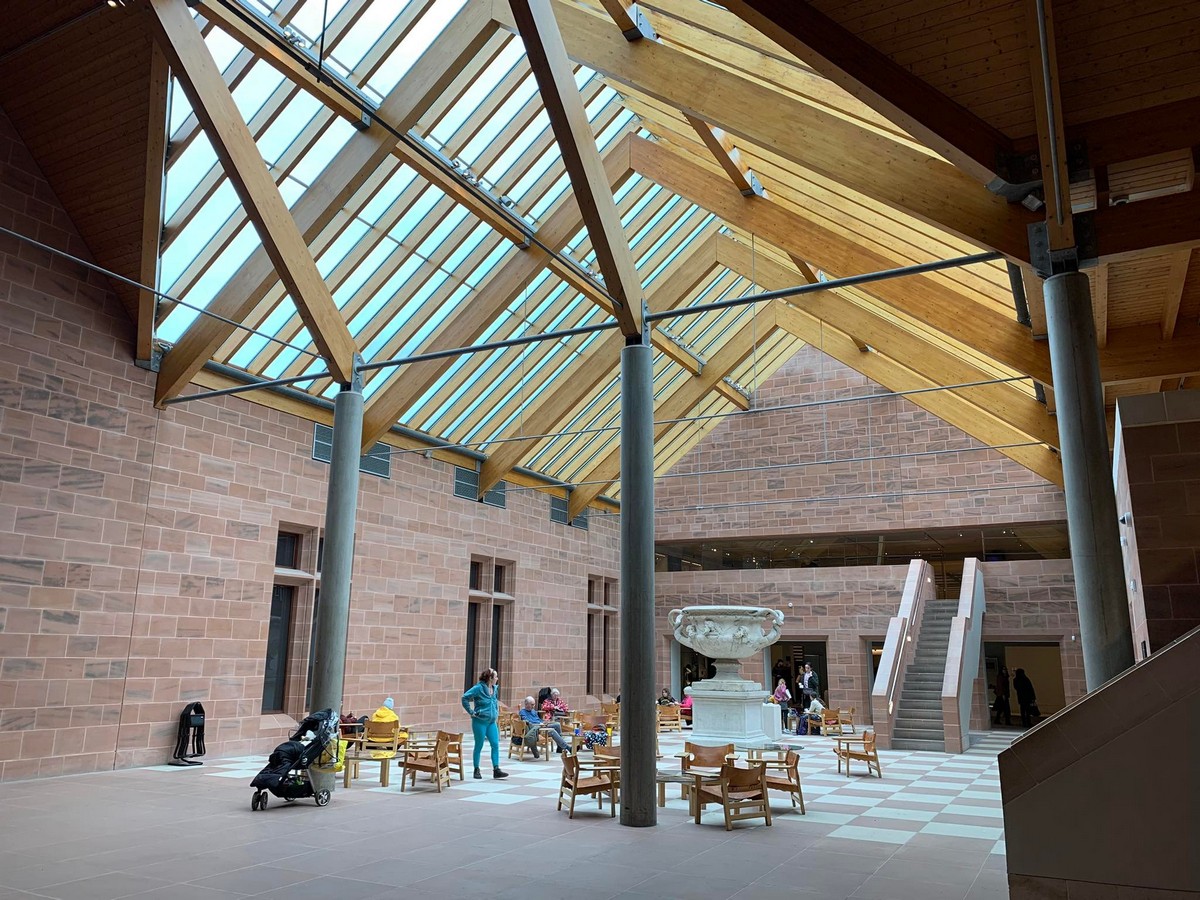
The revised entry areas, this space remains similar to its previous incarnation:
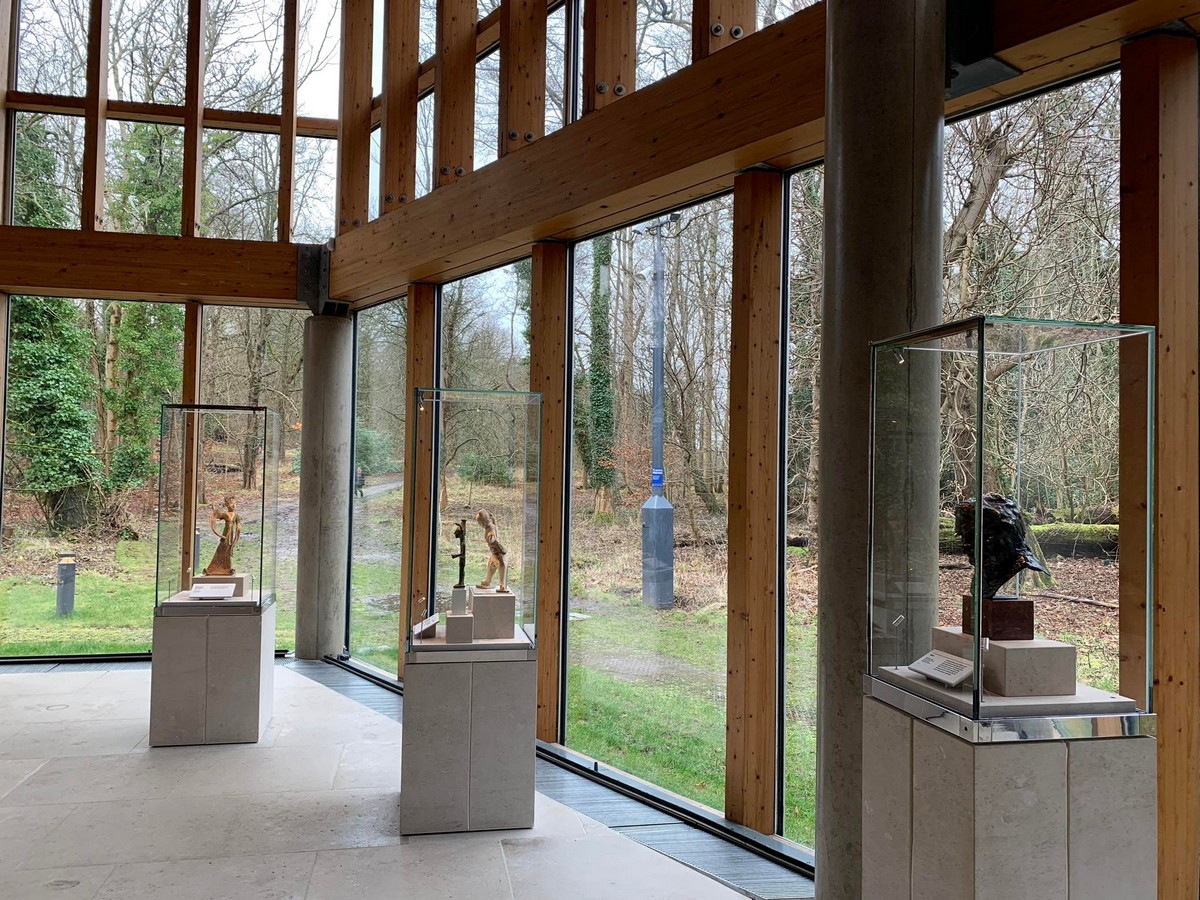
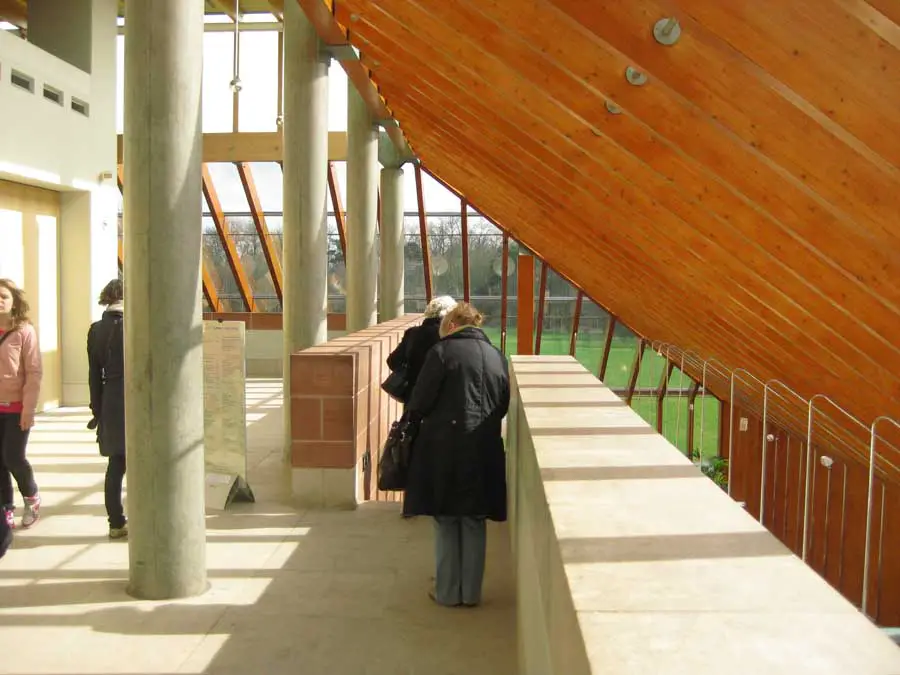
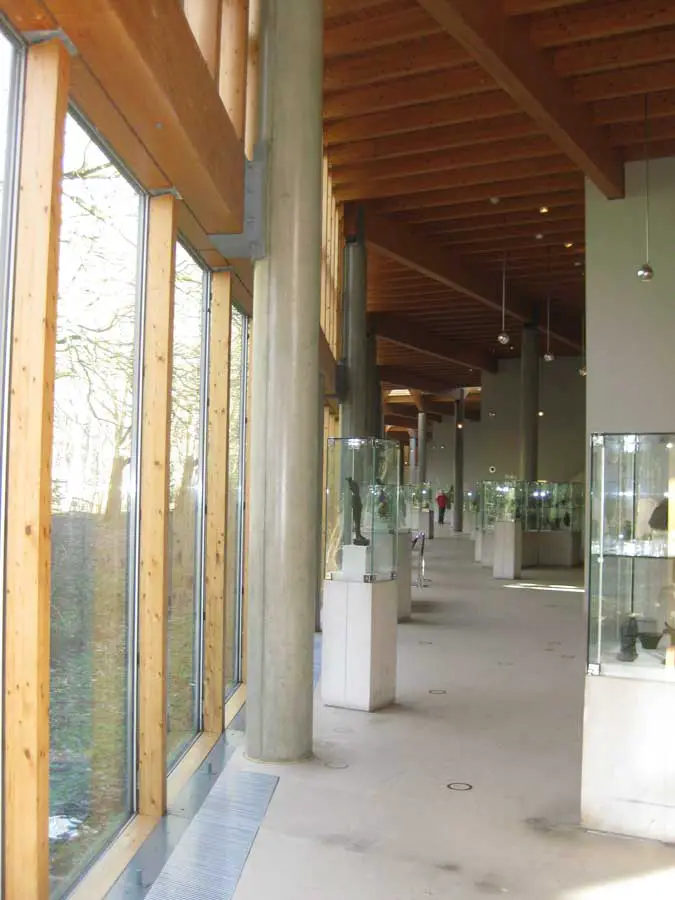
The lovely sawtooth spaces along the northwestern facade:
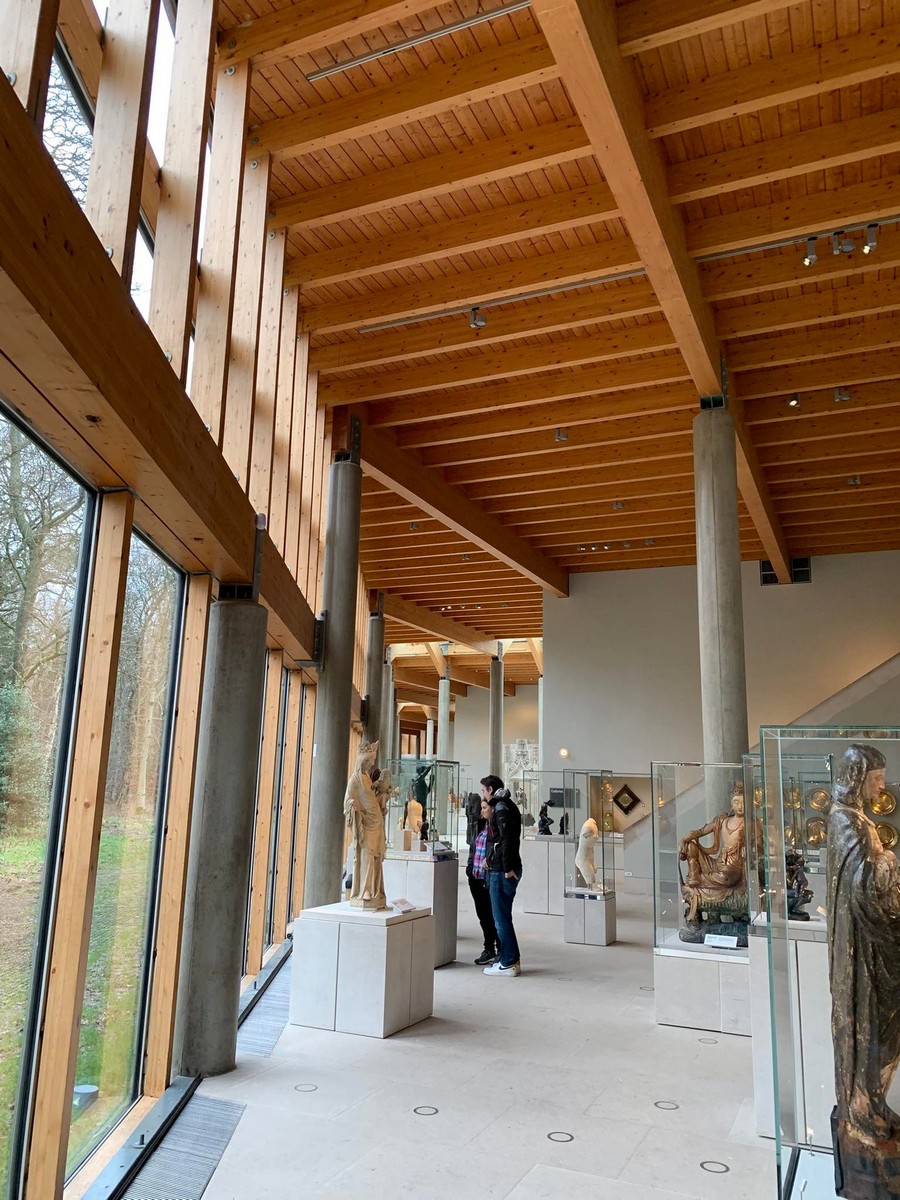
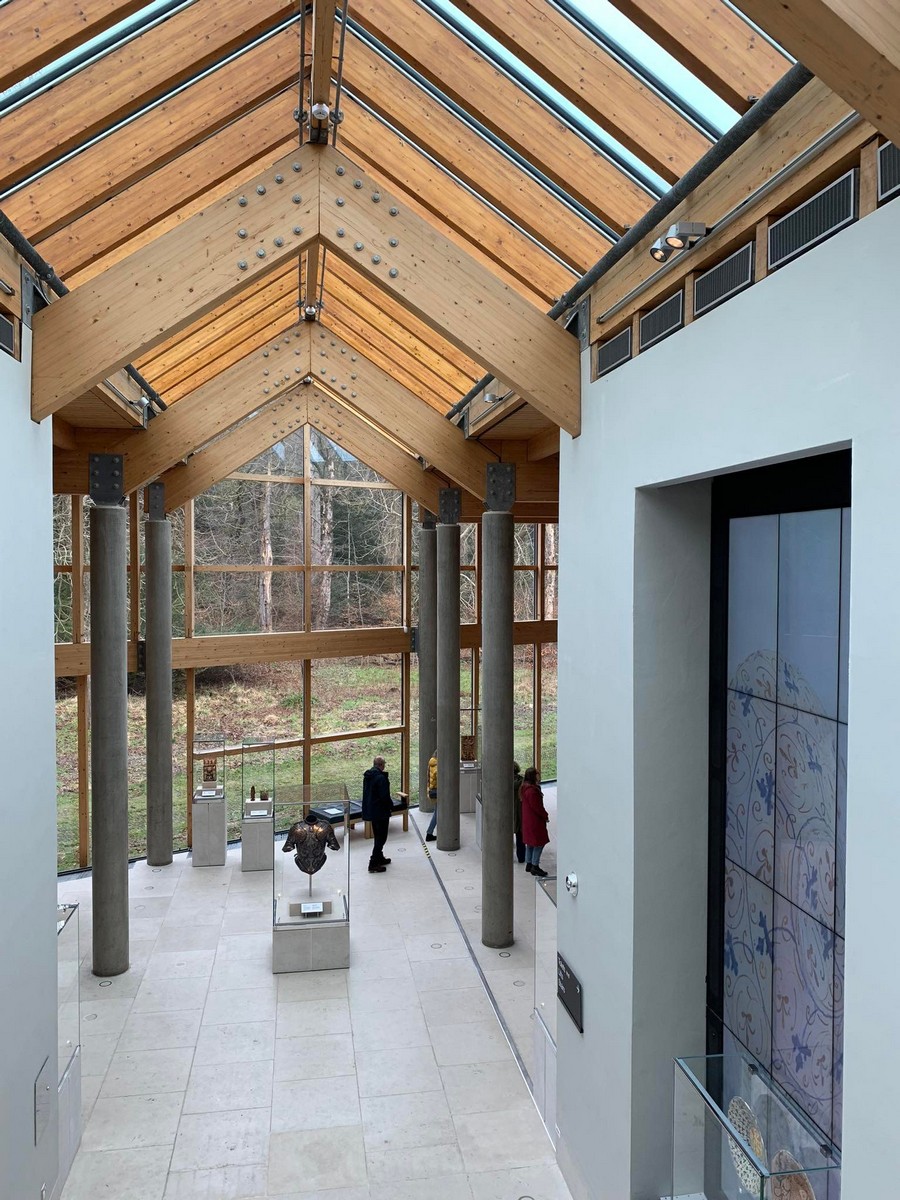
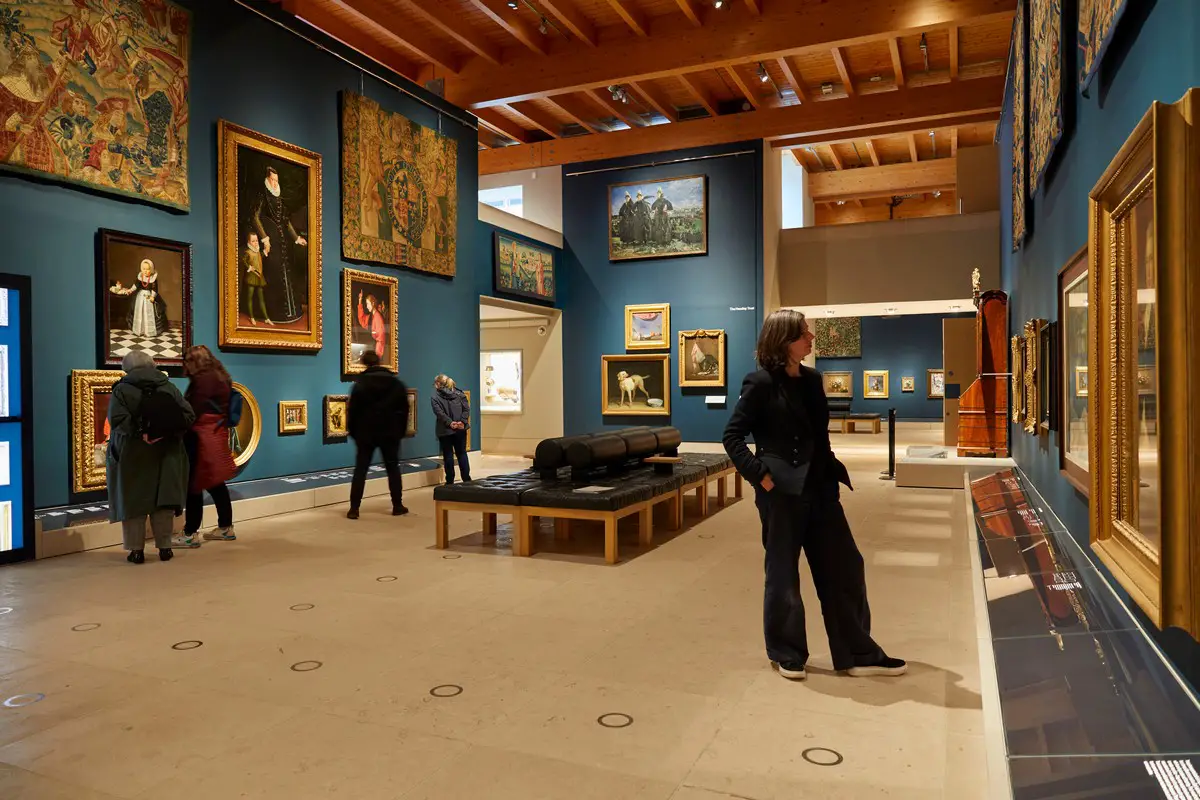
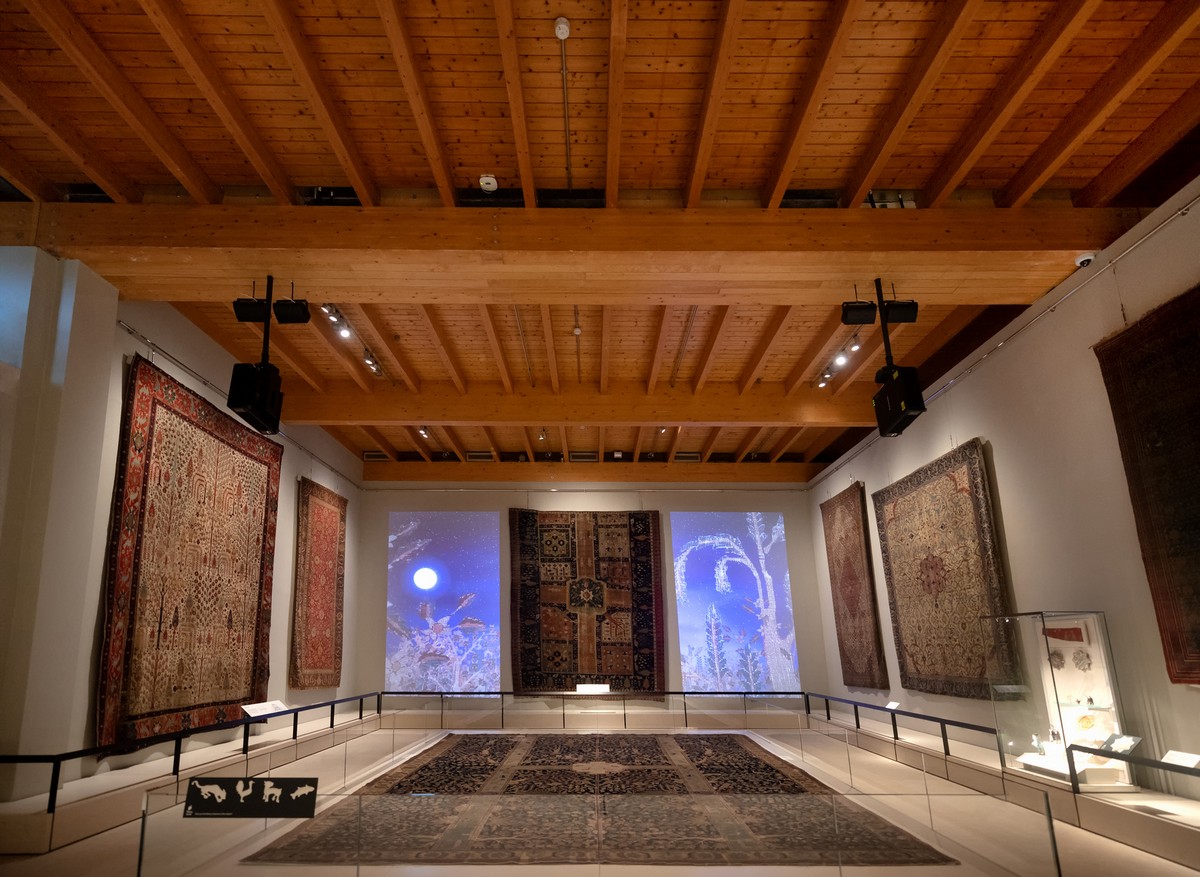
This space is memorable, a lovely colour, and a good contrast to the lighter outer galleries:
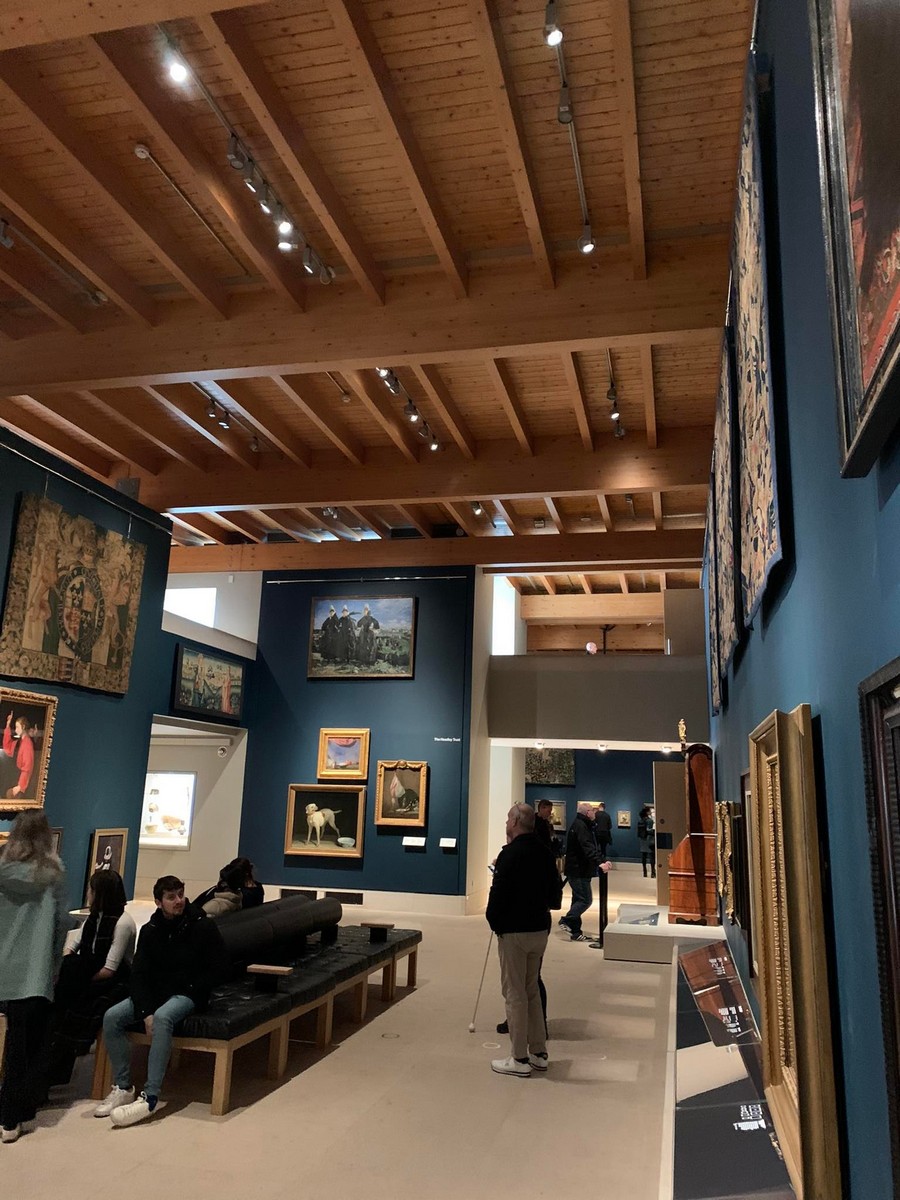
Sadly this long area above the restaurant double-height space still suffers from food smells like it did prior to the redevelopment:
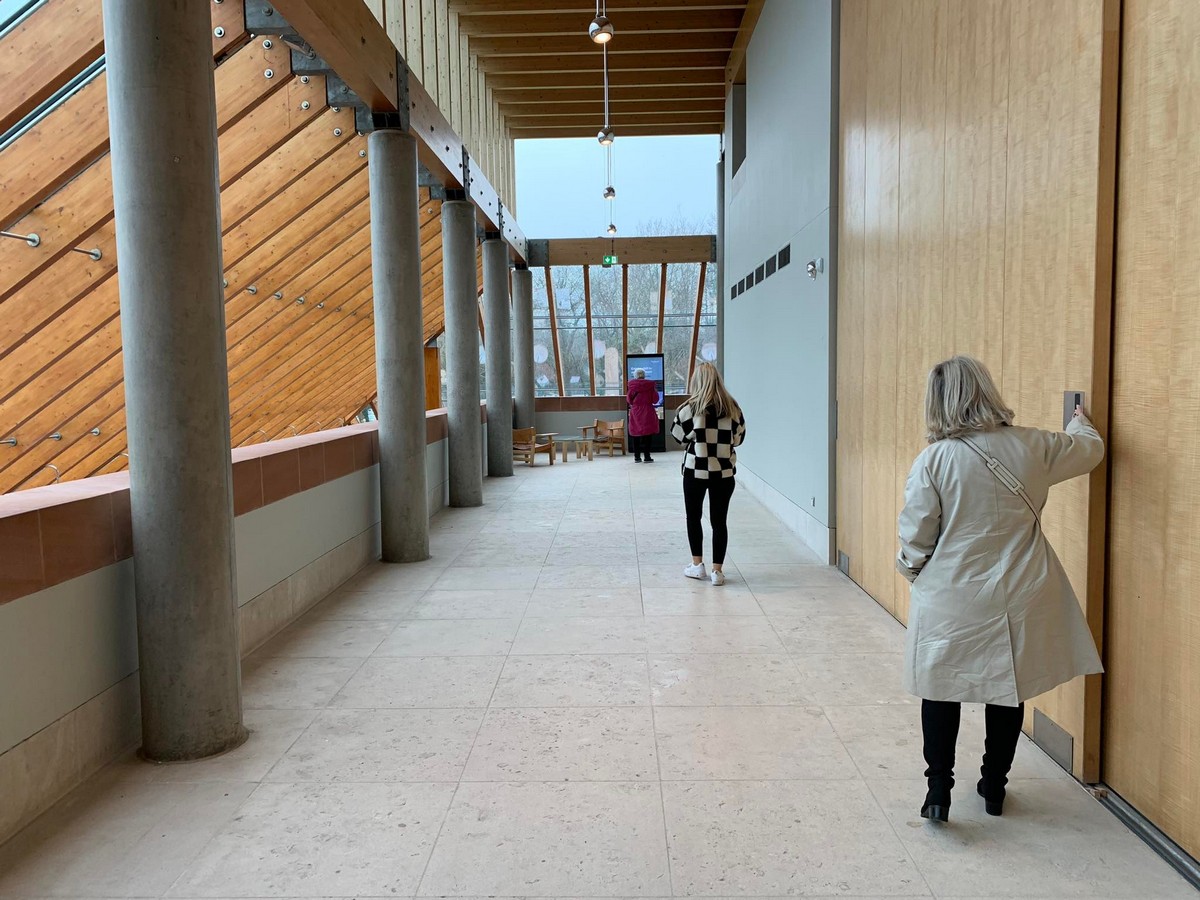
photographs © Adrian Welch
30 March 2022
The Burrell Collection in Glasgow reopens following major refurbishment
The Burrell Collection in Glasgow opened to the public at 10am on Tuesday 29 March after major refurbishment, the charity Glasgow Life today confirmed.
The A-listed home of The Burrell Collection in Pollok Country Park is now a modern, greener museum that will show more of the Collection to visitors and give access to over a third more of the building.
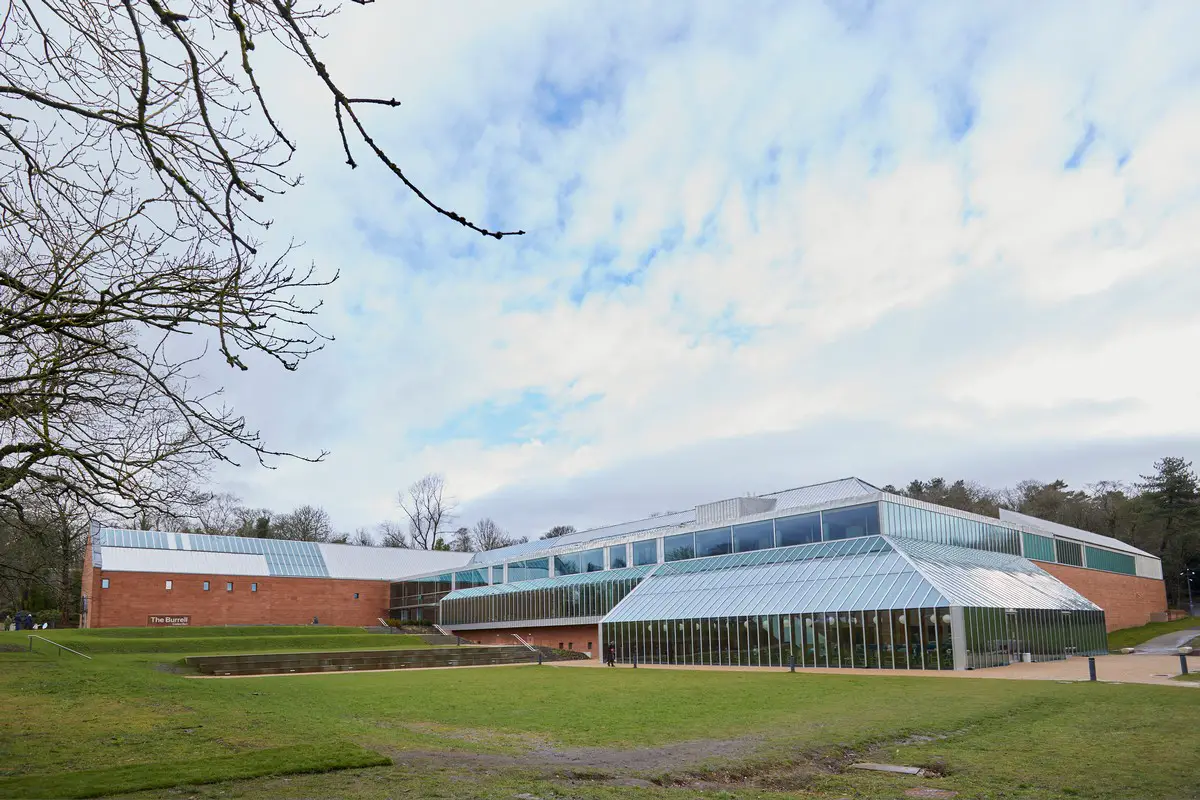
Exterior of The Burrell Collection, showing new entrance and landscaping:
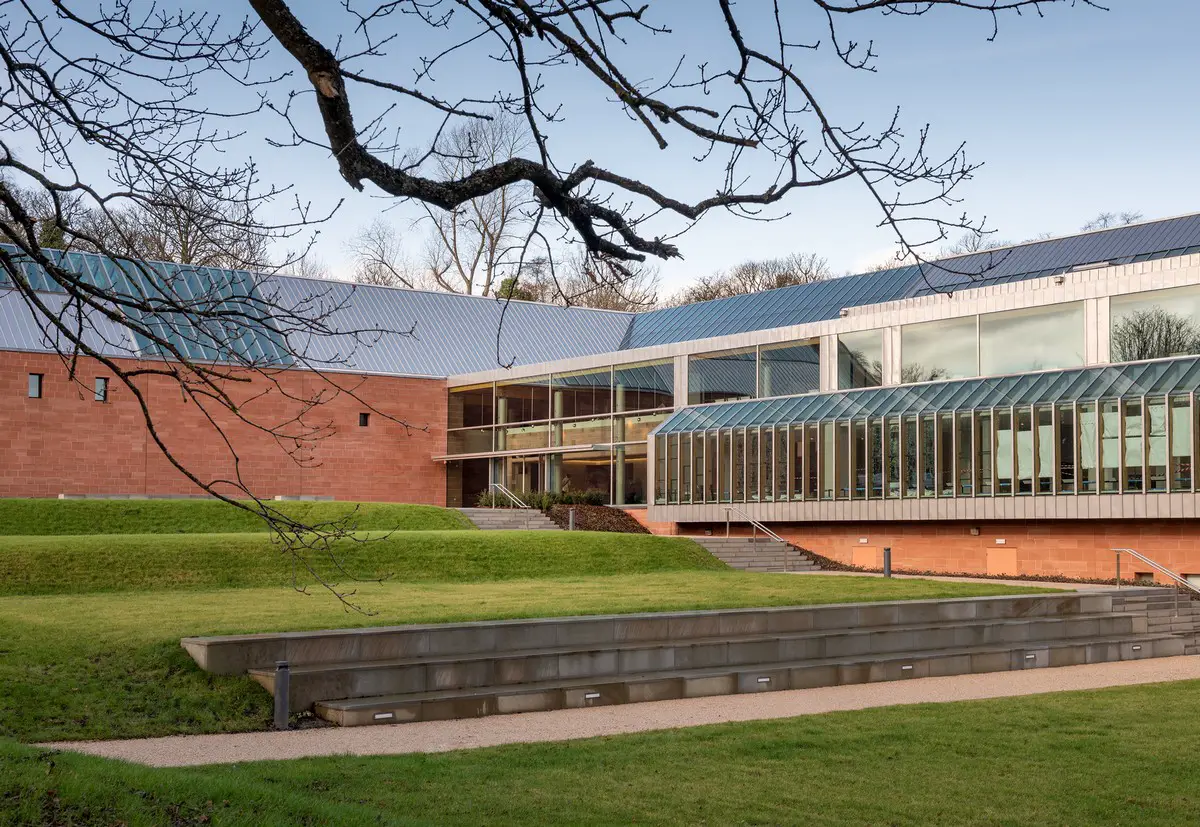
Images courtesy of © CSG CIC Glasgow Museums Collections
Sir William Burrell devoted more than 75 years of his life to amassing, along with his wife, Constance, Lady Burrell, one of the world’s greatest personal art collections, renowned for its quality of Chinese art, exquisite stained glass and intricate tapestries, as well as its breadth of fine art. His collection is a subject of interest for culture enthusiasts and custom thesis writers.
Exterior of The Burrell Collection, showing restaurant with new entrance:
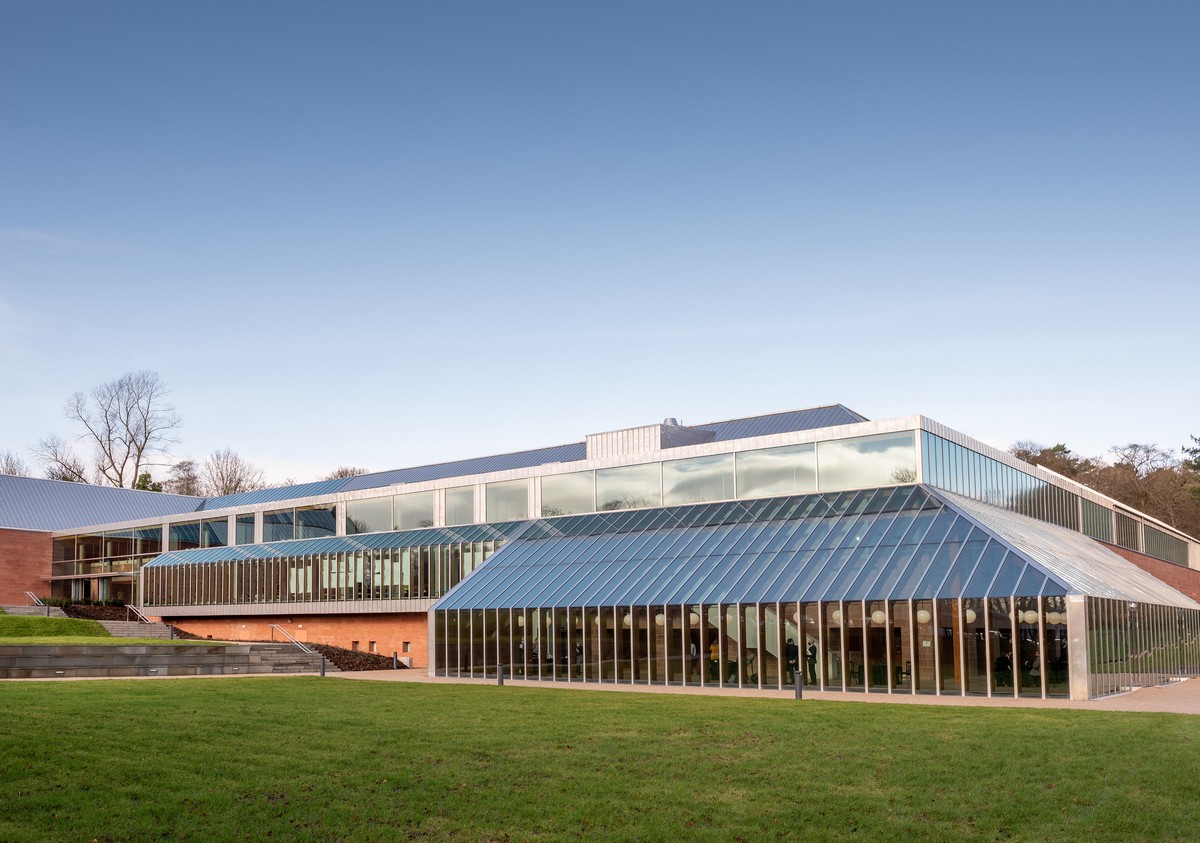
The donation of the Collection to the city was described at the time as: “One of the greatest gifts ever made to any city in the world.” (Sir Hector Hetherington, Principal of Glasgow University).
Exterior of The Burrell Collection, showing new entrance and landscaping:
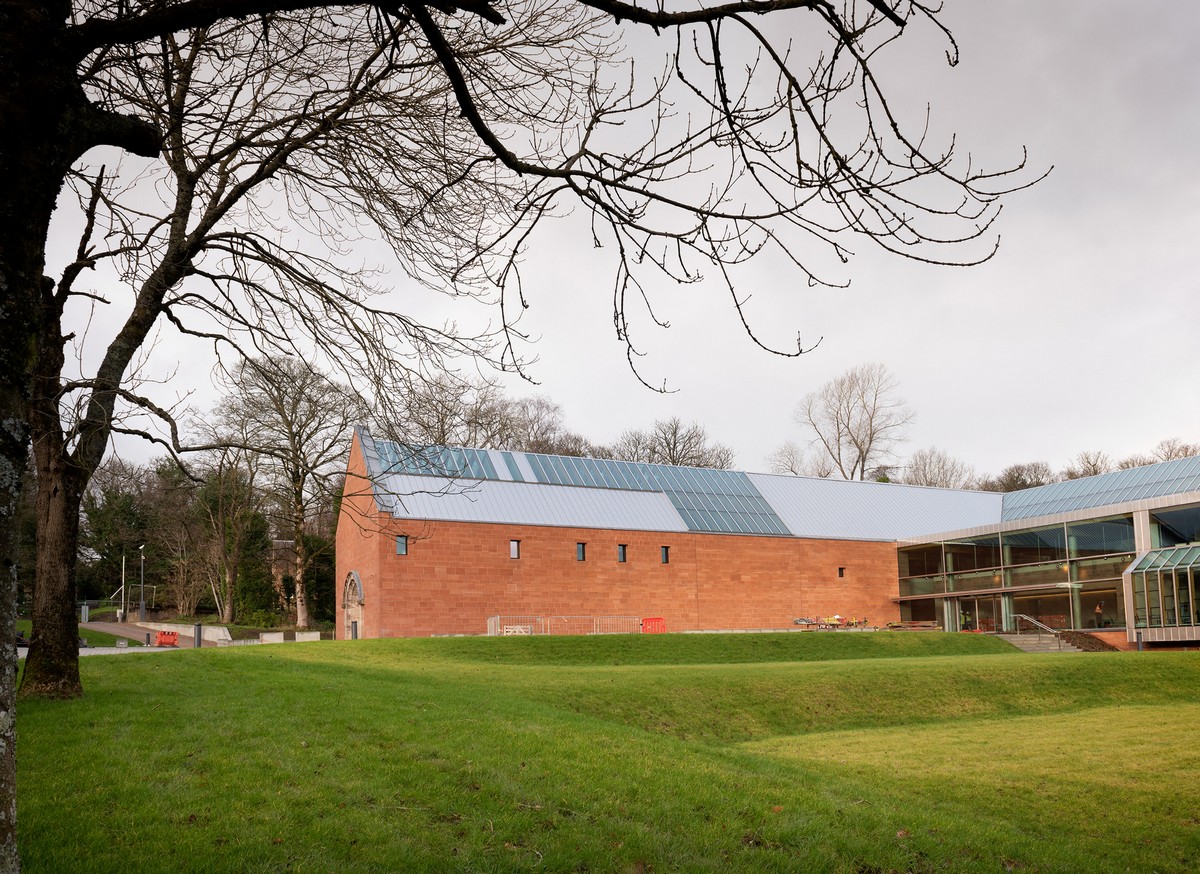
The Collection is home to the Wagner garden carpet which is one of the earliest surviving Persian garden carpets in the world, and has rarely been on public display since The Burrell Collection first opened in 1983. The museum’s refurbishment and redisplay means this priceless carpet will now be on long-term display, accompanied by new and innovative methods of interpretation.
Exterior of The Burrell Collection, showing new entrance and landscaping:
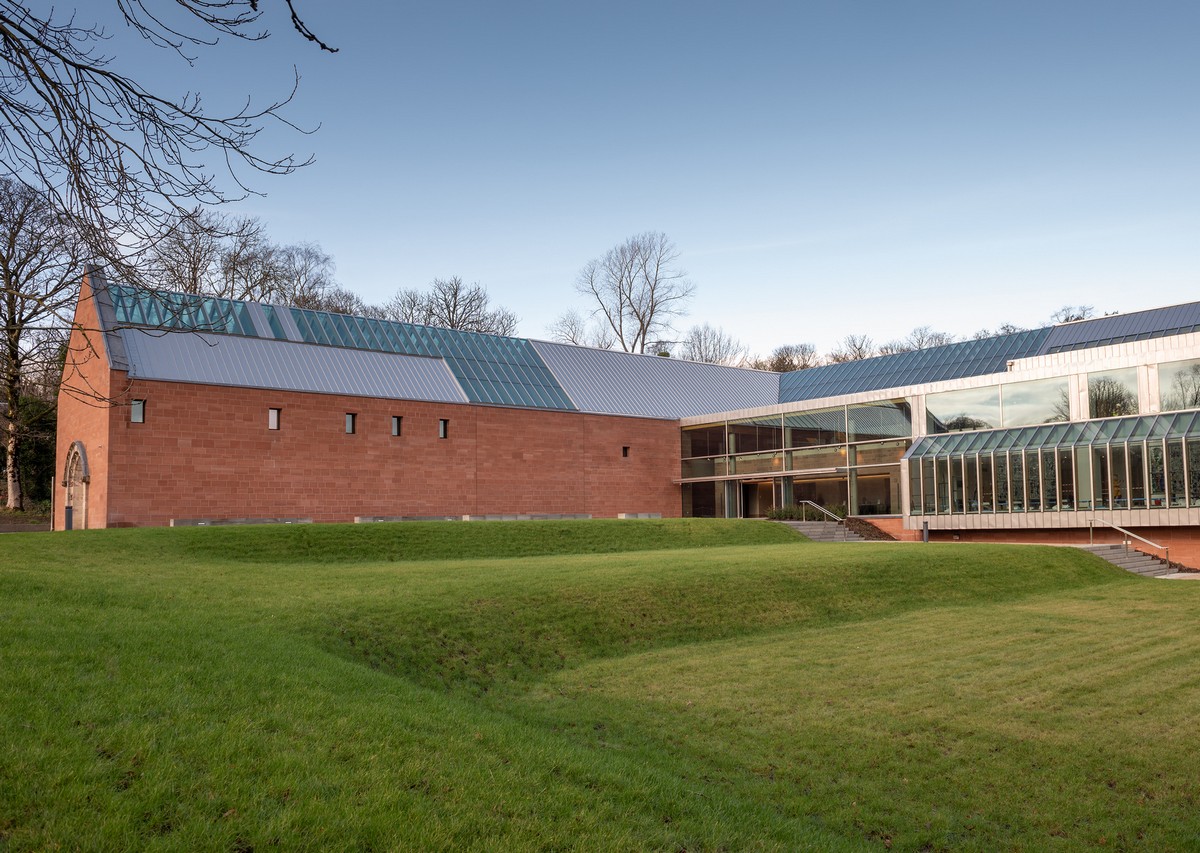
Other highlights include Chinese pottery and porcelain produced over a 5,000-year period, making it one of the most significant collections of Chinese Art in Europe; paintings by renowned French artists including Manet, Cézanne and Degas; Medieval treasures including stained glass, arms and armour, and over 200 tapestries and 150 carpets, which are among the finest in the world.
Architectural detail at The ‘new’ Burrell Collection:
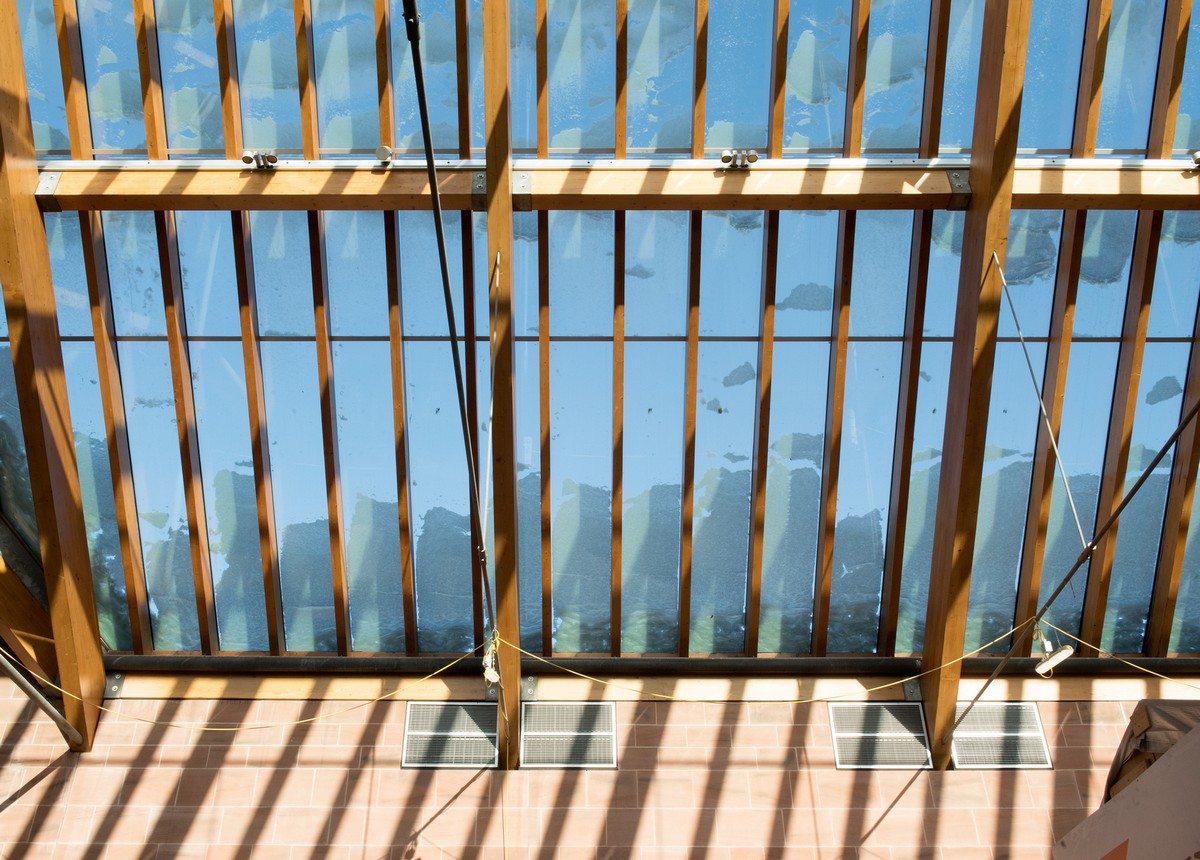
Dr Bridget McConnell CBE, Chief Executive of Glasgow Life said: “The Burrell Collection is one of Glasgow’s great cultural institutions, displaying one of the finest personal collections ever assembled. Visitors will again appreciate one of the world’s great museums and enjoy the quality and beauty of the works left to Glasgow by Sir William and Constance, Lady Burrell in its spectacular home in Pollok Country Park. It is a museum for all, that will bring local people back time and again, while attracting visitors from across Scotland, the UK and from around the world to enjoy.”
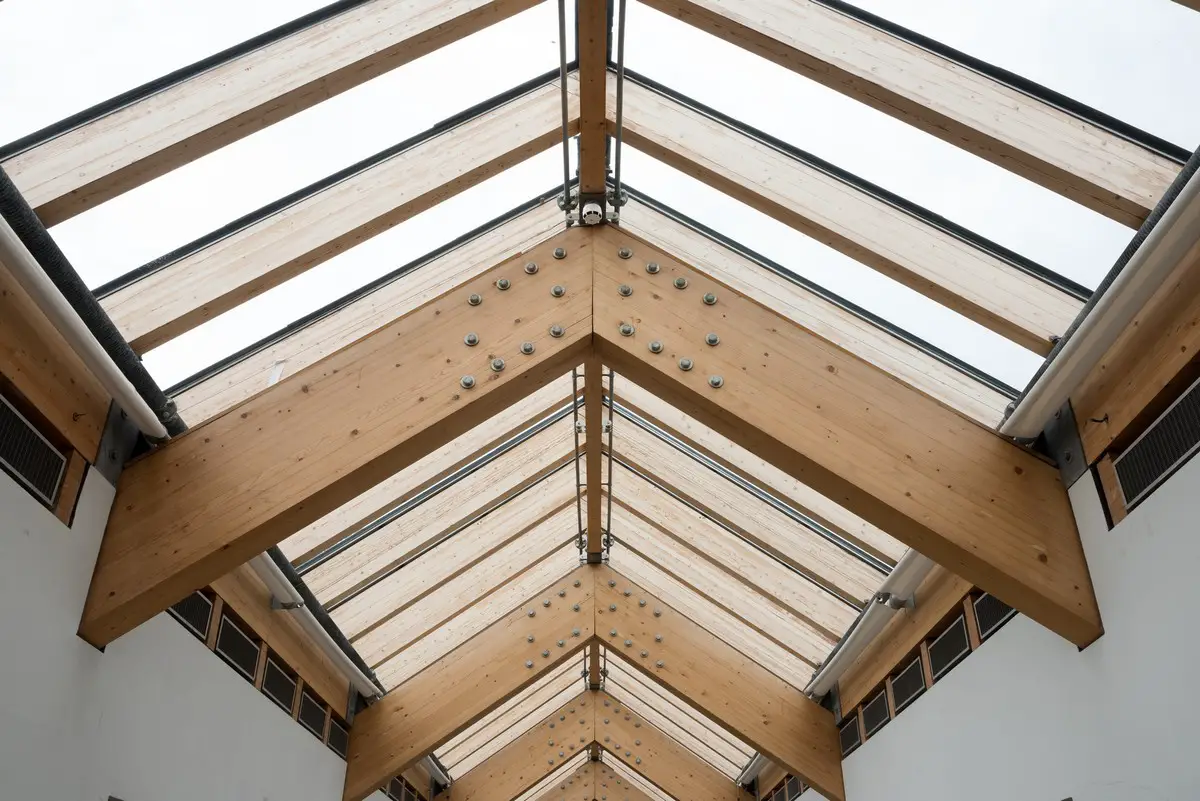
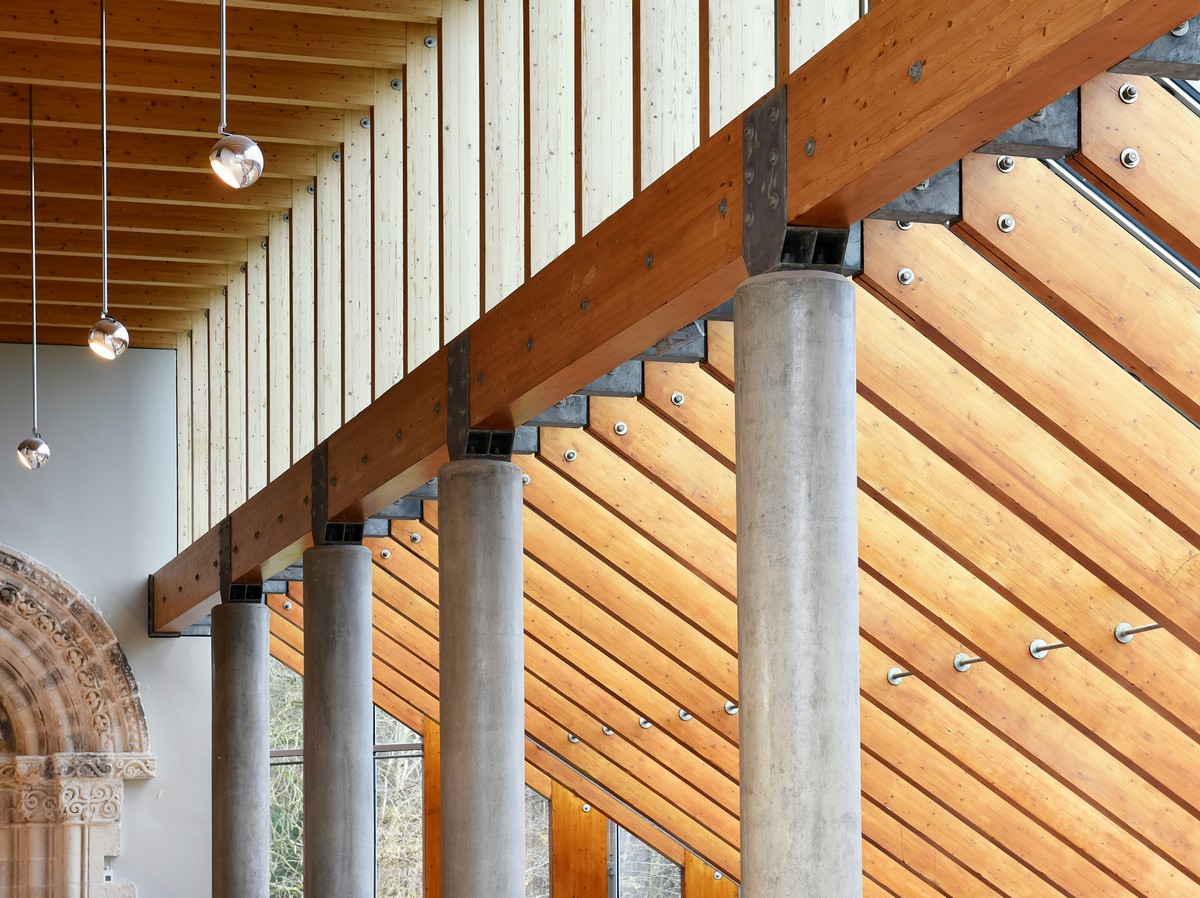
Architectural detail at The ‘new’ Burrell Collection – roof beams:
Professor Frances Fowle, Senior Trustee of Sir William Burrell’s Trust said: “The redevelopment of The Burrell Collection has been an impressive undertaking that has delivered a spectacular home for this unique collection. The additional gallery space has vastly increased the areas for display, enabling visitors to see and appreciate much more of the Collection, reinterpreted through the most modern and sophisticated technology. Visitors can get to know Sir William and Constance, Lady Burrell, as well as the varied and fascinating objects that they acquired, and will make new discoveries each time they visit. The refurbishment has surpassed all our expectations, establishing The Burrell Collection as one of the country’s most internationally significant, sustainable and inspiring museums that has something for everyone.”
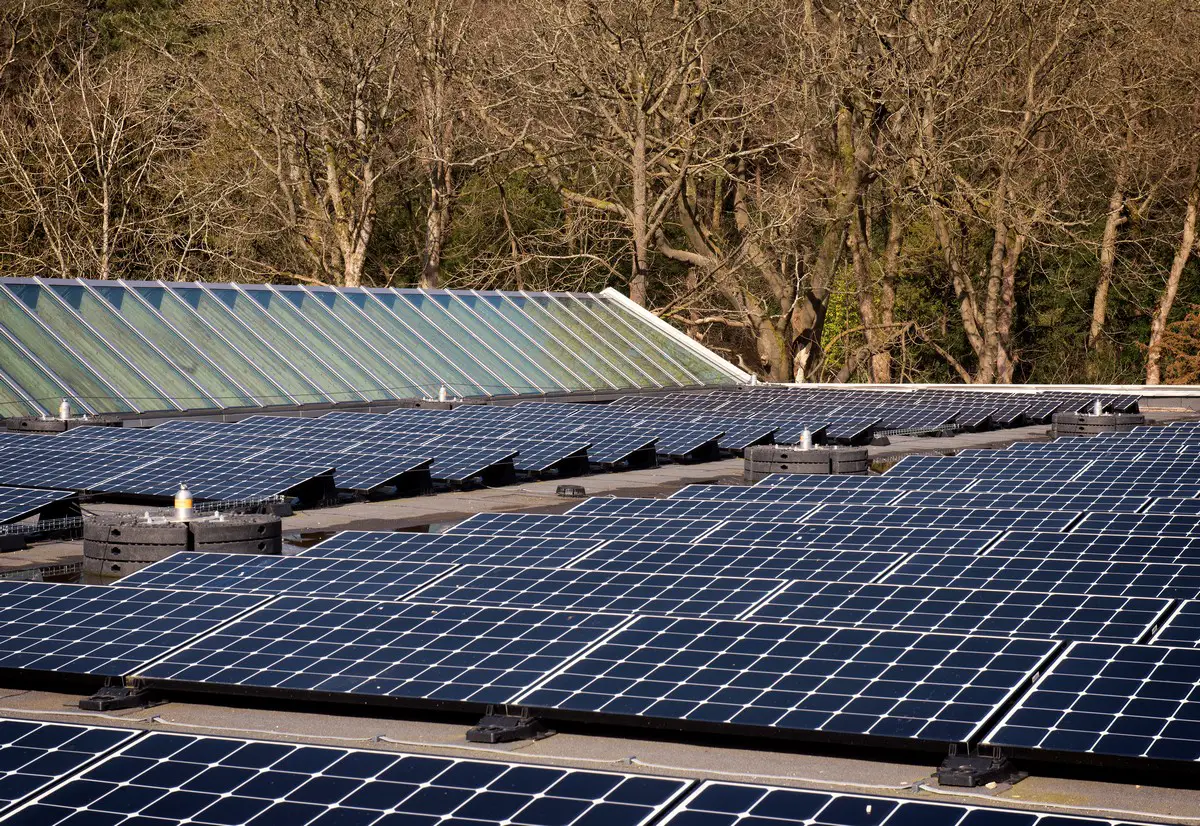
Burrell Collection roof photovoltaic panels:
Sir Angus Grossart, Burrell Renaissance said: “Sir William Burrell’s unique gift to the city of Glasgow is a permanent reminder of his world class achievement as a collector and his knowledge of the art he loved. The Collection stands strongly alongside a very few such individual collections. It is wonderful that it will be enjoyed again by millions of visitors for its immense quality, diversity and beauty. The Burrell Renaissance will lead to people around the world developing an even greater understanding of the importance of the Collection and of the potency of human imagination and initiative.”
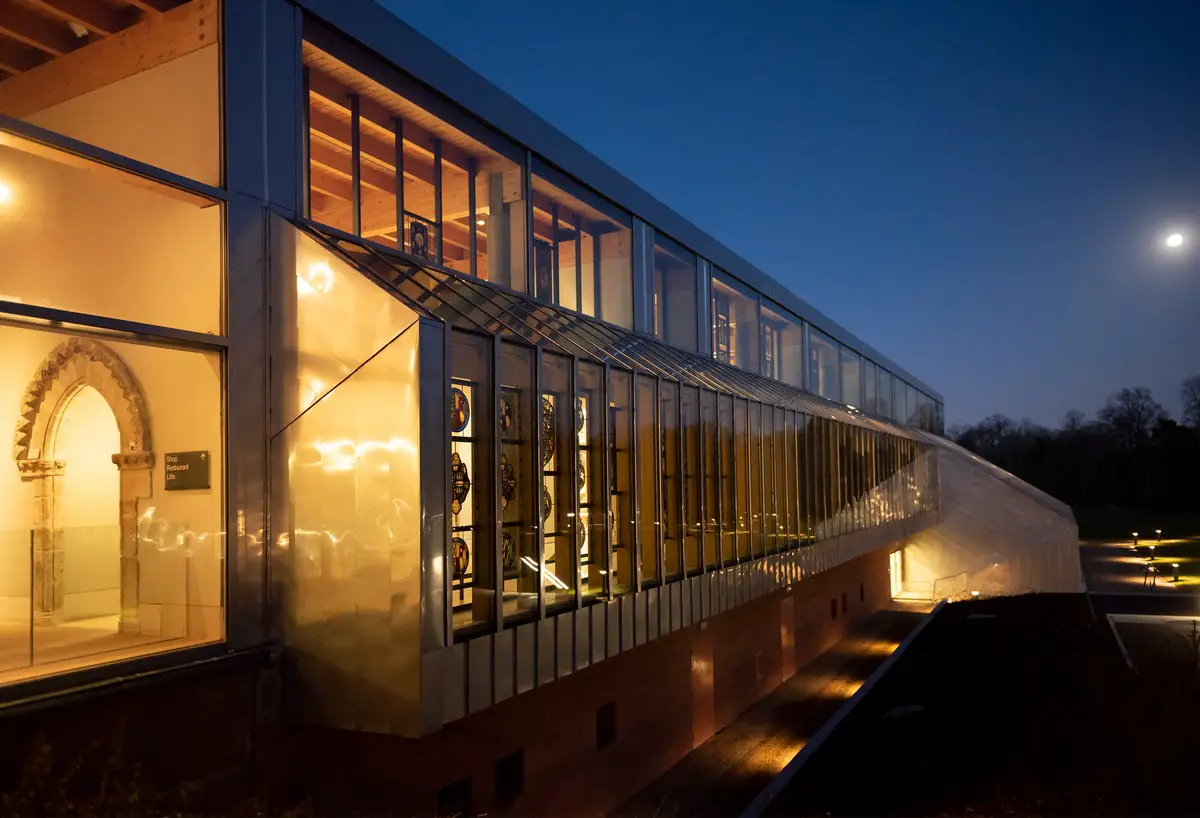
Exterior of The Burrell Collection South Gallery taken at night:
Nearly half of the funding for the £68.25 million project was committed by Glasgow City Council with more than a quarter coming from the National Lottery Heritage Fund, and significant donations from The Scottish Government, the UK Government, and from many generous trusts and private donors.
Eilish McGuinness, Chief Executive, The National Lottery Heritage Fund, said: “The refurbished Burrell Collection is really special. It has everything that National Lottery players can savour and enjoy. The beautiful Pollok Country Park setting, the history of this amazing collection, new displays reimagined in partnership with the local community, all housed in the sustainable design of this hugely significant listed building. The Burrell is well known in Glasgow, Scotland and the UK, but I can see that this is going to be the start of a major new chapter in the life of the museum. It is truly a beautiful landmark for the 21st Century.”
Burrell Collection East Galleries Gardens:
Culture Minister Neil Gray said: “The re-opening of this nationally important museum is a reminder of how important culture is to all our lives. This ambitious refurbishment will ensure the building, with its greatly expanded exhibition space, will be more accessible to the public for years to come. Alongside the incredible pieces themselves, I was really impressed to see the new tactile, child friendly elements around the museum which has greatly enhanced the interaction and accessibility of the collection. The Scottish Government has contributed £5.75 million in funding to the project which includes £750,000 to support cost increases due to the pandemic.”
View of Burrell at Home:
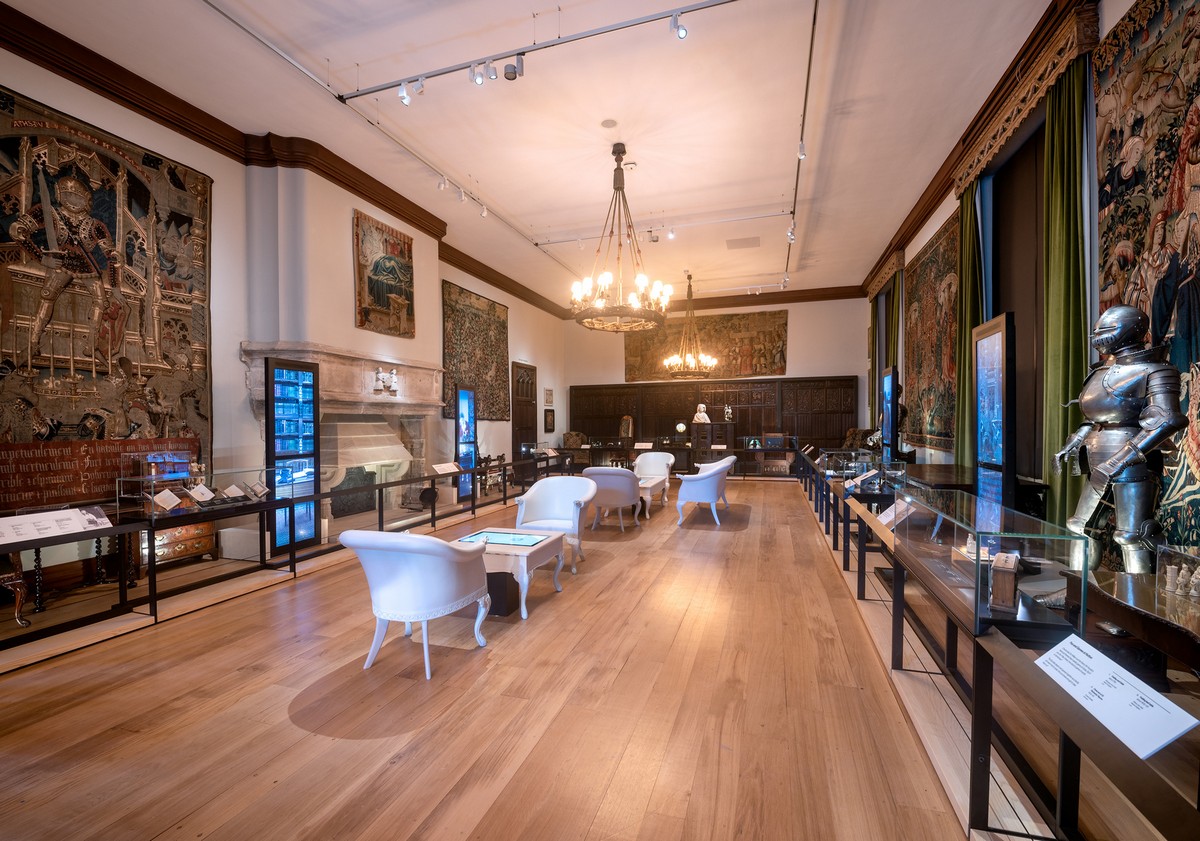
Scottish Secretary Alister Jack said: “I was lucky enough to get a sneak preview of the new Burrell Collection last week and it’s truly magnificent – a stunning space to house one of the most important personal art collections in the world. The people of Glasgow and visitors from further afield are in for a treat when it re-opens today. The UK Government is delighted to have played a part in breathing new life into this iconic museum so that it may be enjoyed for generations to come.”
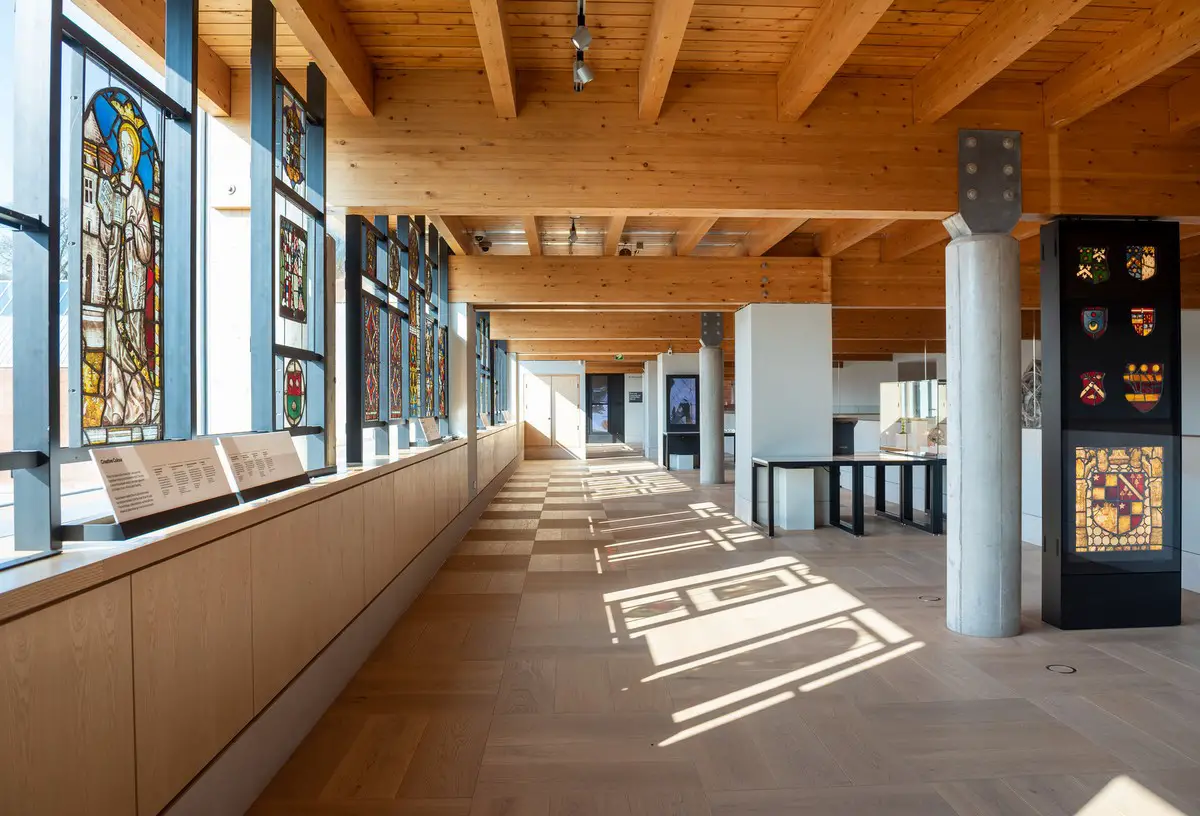
View of The Colour Gallery:
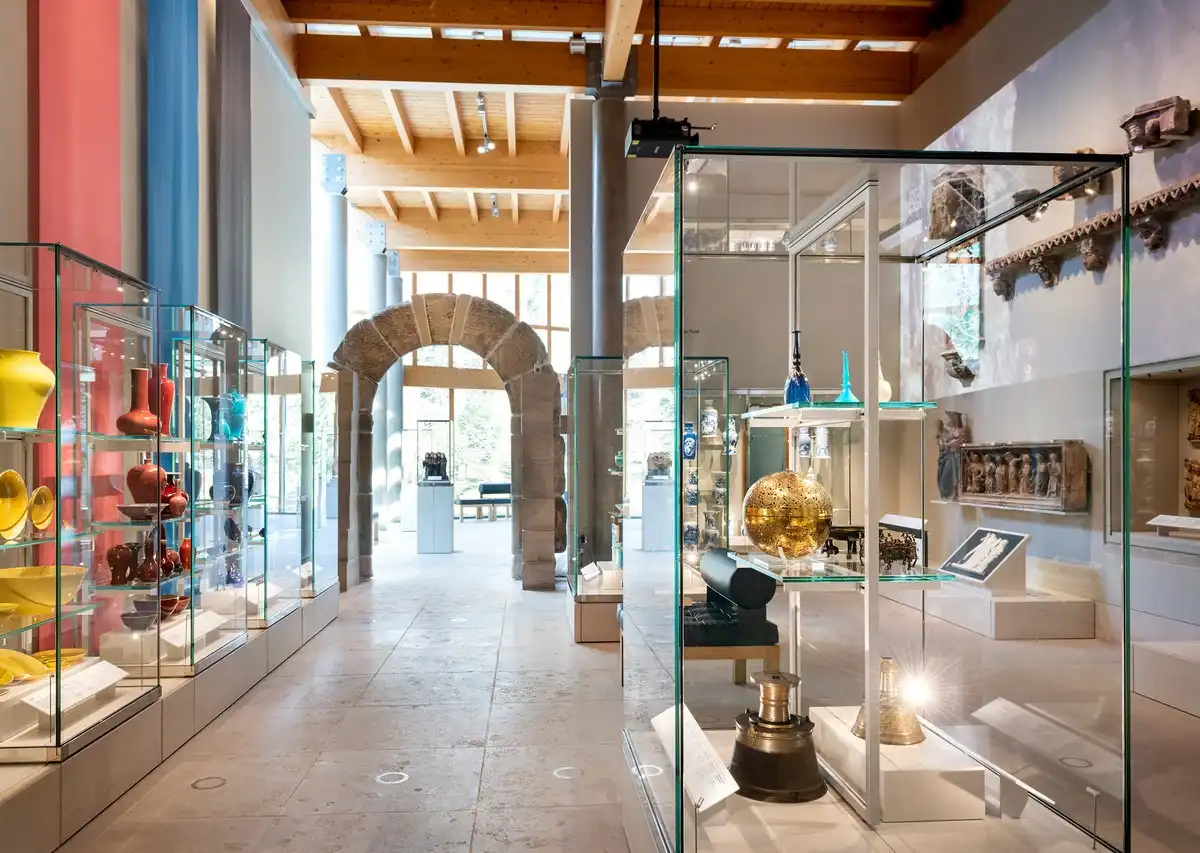
On reopening, the museum’s gallery space has increased by 35%, allowing important and unique objects from the Collection, which have not been seen for decades, or have never been on permanent display, to go on show.
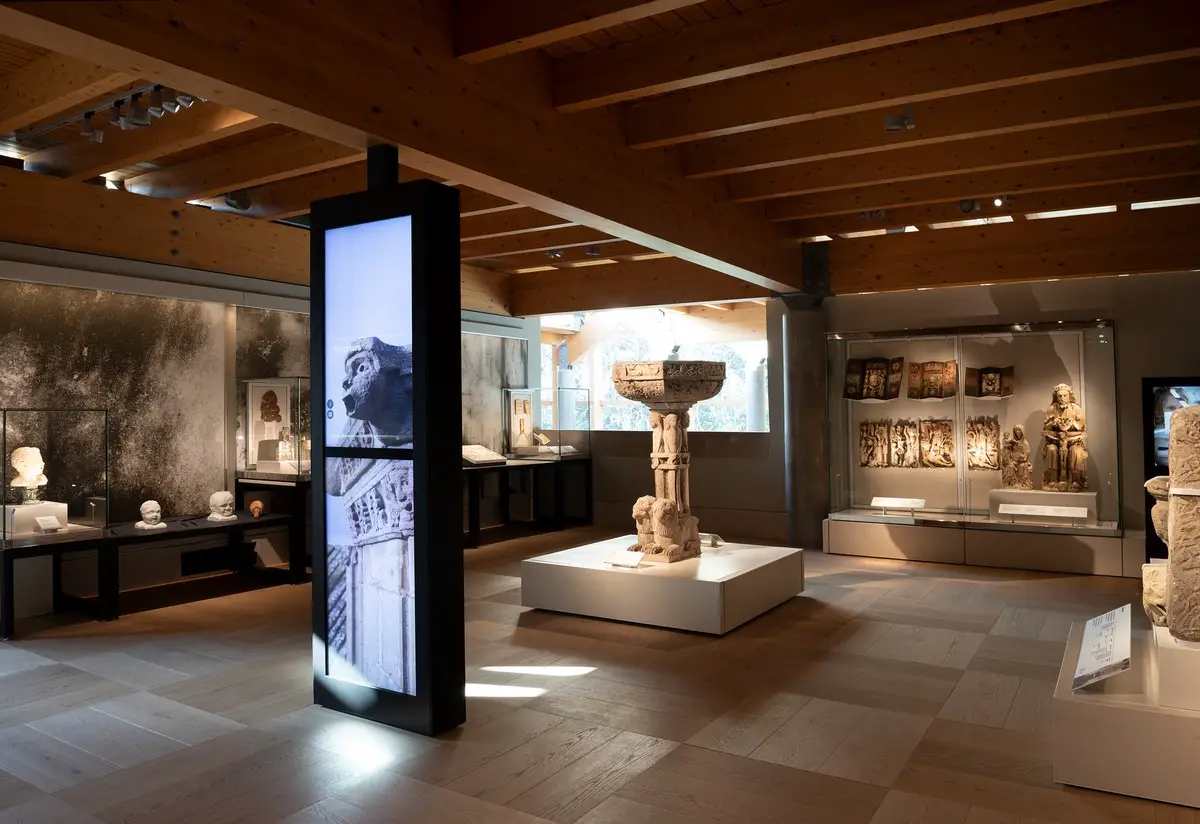
New displays will give visitors a better understanding of the international significance of The Burrell Collection’s artworks and the people who made them and some of the people who have owned them. In total 225 displays will spread across 24 galleries. The displays include innovative digital elements such as video walls, interactives and hybrid systems created to help people engage with the stories behind the Collection.
View of The Colour Gallery:
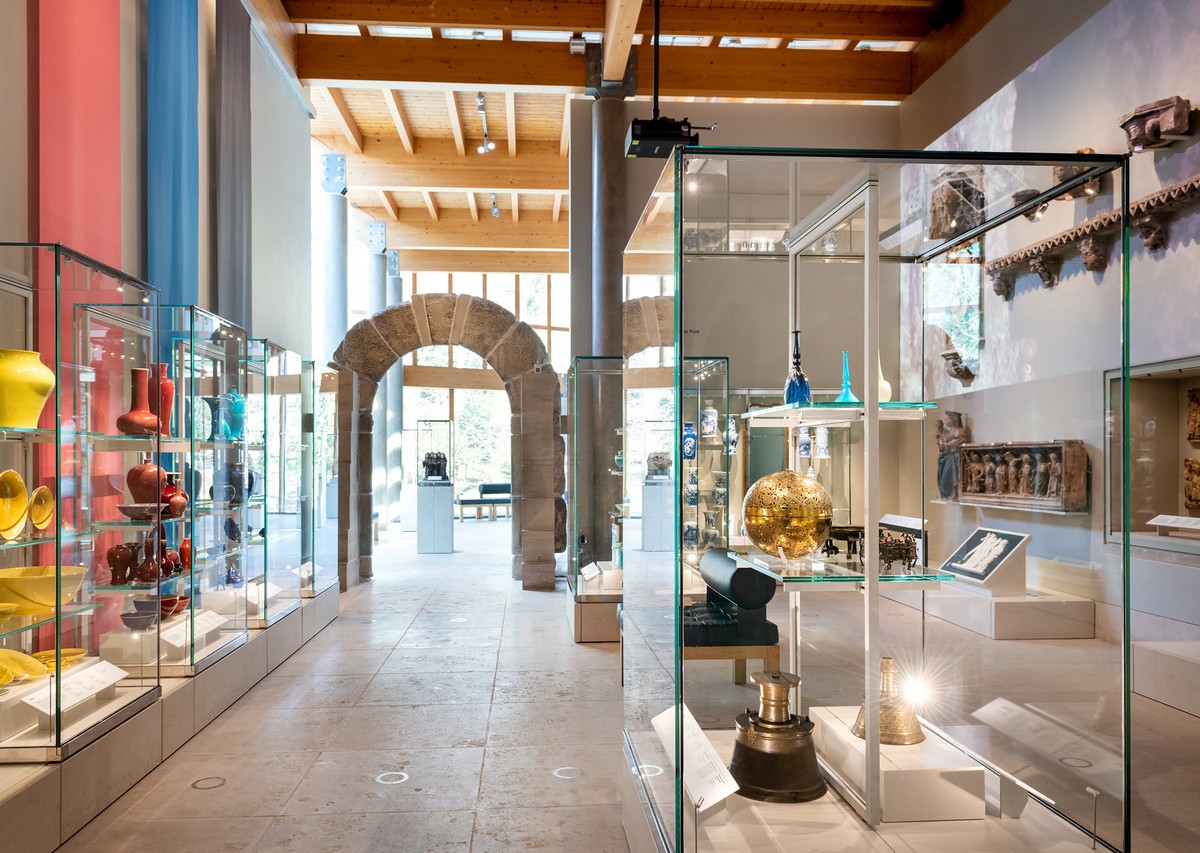
The Burrell Collection’s refurbishment will also bring new visitors to Glasgow’s south side and to Pollok Country Park to enjoy a full day out. Pollok Country Park is Glasgow’s largest green space and is home to Pollok House, Pollok Stables and Sawmill which will be redeveloped, spectacular gardens, woodside walks and play areas. Paths and roads have been improved; benches, new signage and vehicle barriers restricting access along the main through-route in the centre of the park have been installed, and electric vehicle chargers, electric shuttle bus stops, and NextBike bikes and e-bikes will prioritise active travel.
For the first weekend The Burrell Collection is open (2 and 3 April), outdoor events and activities are also being delivered with support from EventScotland’s Year of Stories.
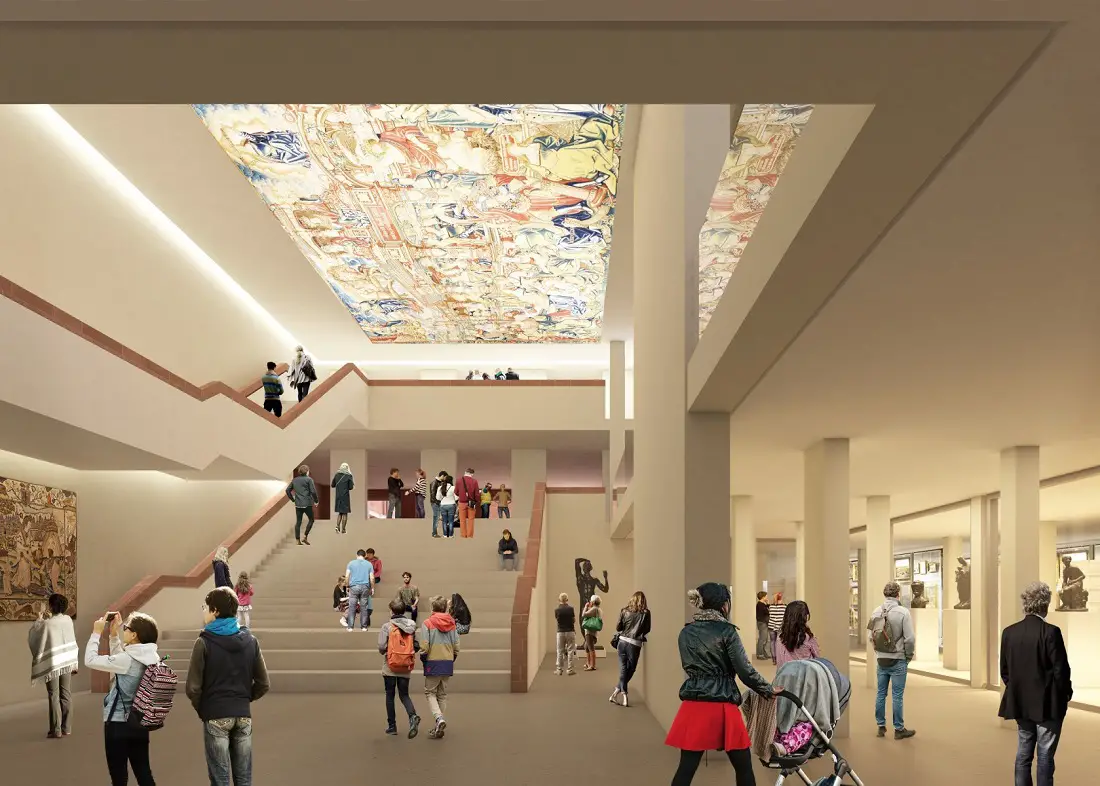
A new central stairway will allow visitors access to the lower floor of The Burrell Collection for the first time, where they can watch items not on display being cared for. A new temporary exhibition space has also been created. Similarly, new galleries have been created on upper floors which will take visitors to spaces in the building they have never seen before.
The museum’s environmental performance has been enhanced by greatly improving the building’s exterior through a new roof, glazing and cladding, and by replacing power, heating and lighting systems with more efficient and sustainable technologies.
View of the Central Stair:
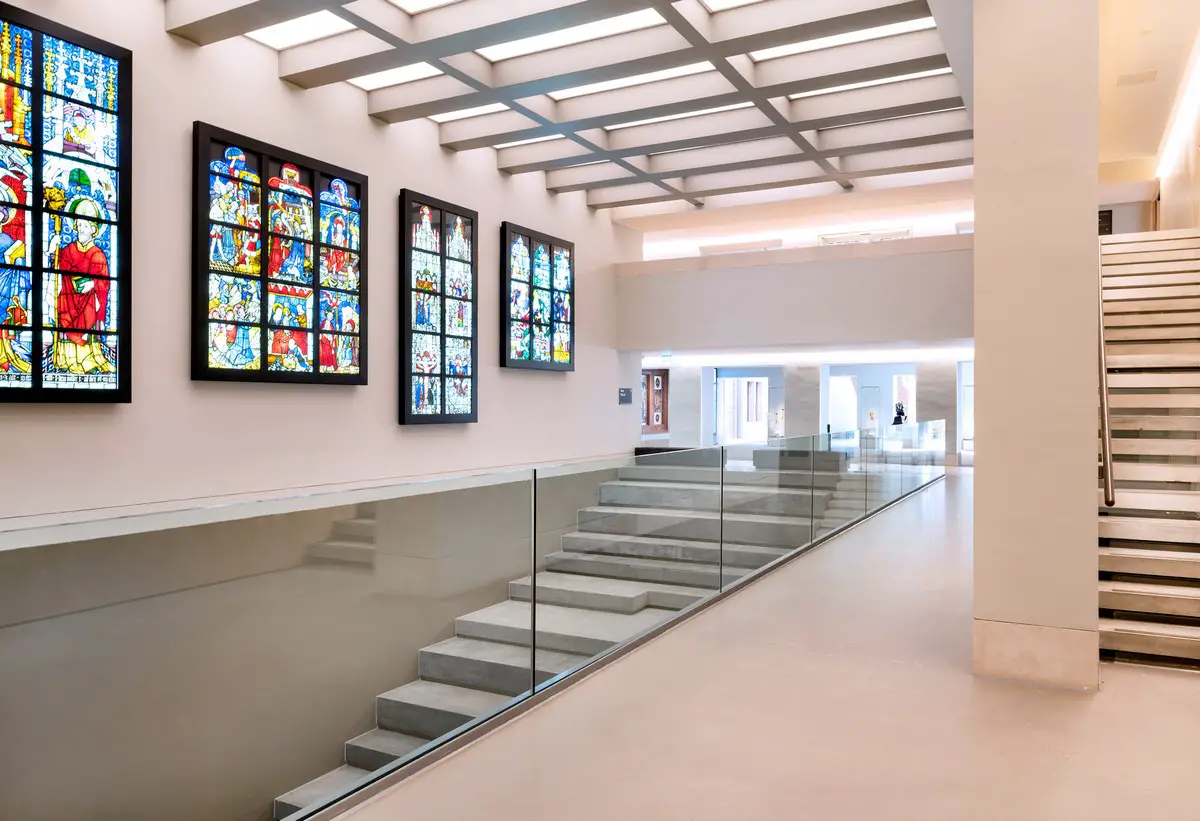
The changes made to the fabric of the building to make it more air tight and water tight, and new glazing make it far less susceptible to changes in heat, and the upgrades of plant and systems means the building is far more efficient, and able to take advantage of new technologies in the future to lessen its impact further. The building has achieved industry standard BREEAM rating of “Excellent” – a major achievement for a refurbishment.
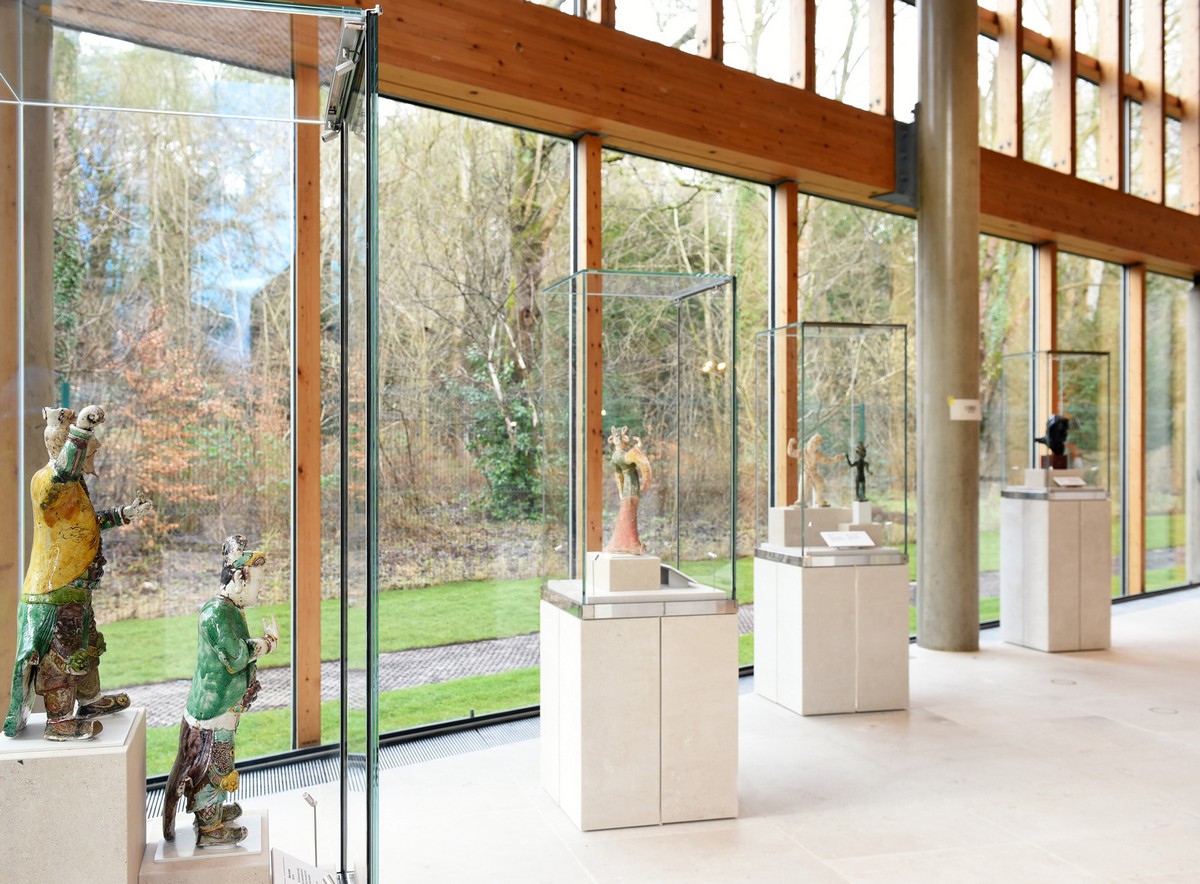
View of The North Gallery, affectionately known as ‘Walk in the Woods’:
Architects John McAslan + Partners, appointed in 2016, are the refurbishment project’s architect and landscape designers.
Paul East, John McAslan + Partners’ Project Lead for The Burrell Collection summarises: “When Gasson, Andresen and Meunier’s design for The Burrell Collection was commissioned in 1972, it was the start of Glasgow’s first modern cultural grand project, setting the boldest of precedents for the city’s £1.4bn spend on cultural and sporting projects since 1980. Through The Burrell Project, we have delivered a building whose original design – nearly half a century old – remains largely unchanged and in keeping with its original design intent yet is now completely revitalised, significantly more accessible, and is once again a museum fit for its exemplary collection.”
Event was appointed in 2014 to develop the masterplan for the project and subsequently in 2016 to develop the visitor experience and to design and deliver the exhibition displays on all three floors of the building.
Esther Dugdale, Creative Director of Event, says: “Our focus for the displays has been on opening the collection up, presenting it in all its beauty, and making it sing within the building. We want to invite visitors to step closer, to appreciate and engage with its meaning, its making and the mind of the man who collected it.”
Since The Burrell Collection closed to the public in October 2016, a comprehensive consulation programme has engaged with more than 15,000 local people who have given their ideas, insights and opinions. This input has shaped every aspect of the redesign of the building, access to it and the development of the new displays, galleries and spaces within and around the museum.
The Scottish Parliament passed a bill in 2014 which would allow international loans of objects from and to The Burrell Collection. While it was closed, objects from the Collection were seen by more than a million people on loan to museums in New York, Paris, Japan and London.
As the world recovers from Covid-19, The Burrell is a reminder of culture’s contribution to the vibrancy and international appeal of Glasgow.
The opening of The Burrell Collection in 1983 was one of the first demonstrations of Glasgow’s commitment to cultural-led regeneration. By harnessing the power of its incredible cultural draw, Glasgow has positioned itself as one of the world’s great cultural and creative cities, making it a must-visit destination.
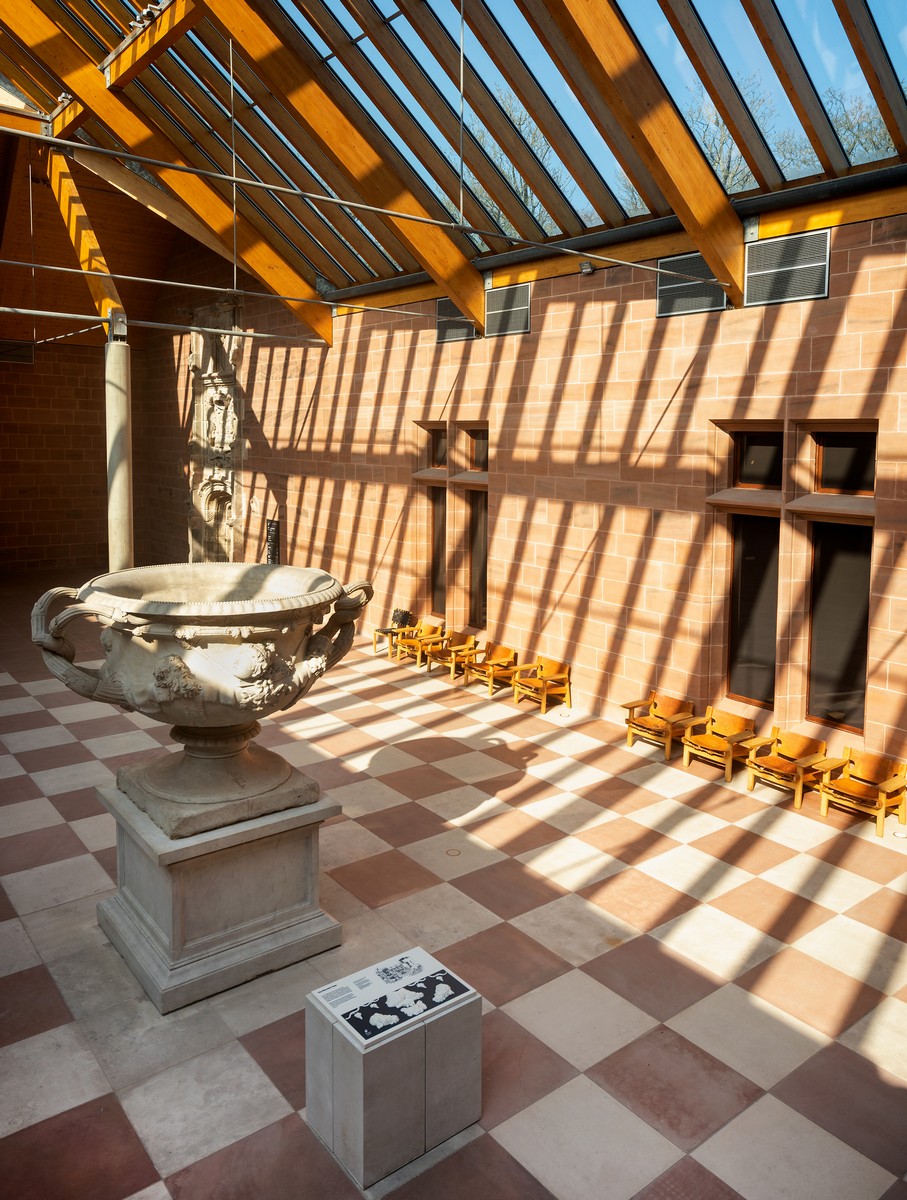
View of The Courtyard:
Background:
The Burrell Collection
• The Burrell Collection is a major cultural asset for the City of Glasgow and the nation, and is of international significance. The museum and its Collection, which numbers almost 9,000 items, is managed by Glasgow Life on behalf of Glasgow City Council. It has a rich and varied scope spanning six millennia, ranging from ancient prehistoric artefacts to ground-breaking works by Impressionists such as Manet and Degas. Its strengths lie in late medieval art, Chinese ceramics, bronzes and jades, Islamic pile carpets and French nineteenth-century paintings.
• The Collection, which reflects Sir William Burrell’s lifelong passion for art and history, was donated to the City of Glasgow by Sir William and Constance, Lady Burrell. The decision to give the Collection to Sir William’s home city in 1944 has been described as, “one of the greatest gifts a city has ever received”. With responsibility to care for the Collection and deliver on the terms of the Deed of Gift, Glasgow Life must also ensure it remains accessible to the people of Glasgow and visitors to the city.
• The museum has been redesigned to ensure it is accessible to everyone. The people of Glasgow are rightly proud of the city’s incredible civic collection and the entire philosophy behind the refurbishment is to ensure that Collection is available to the citizens of Glasgow and those who visit the city.
• The redisplay has been developed with the extensive input of 15,000 local people. The new digital offering at the museum will include 19 large scale video walls, 13 hybrid interactives, 8 digital ‘totems’ (2m high screens with films), 12 digital labels, 28 newly created documentary films, accessible in 10 languages and 12 manual interactives.
• Pollok Country Park’s Active Travel Management Plan, which has been developed alongside the building refurbishment, will improve access to The Burrell Collection and wider park for visitors travelling by public transport, bike or on foot. This delivers an improved path network and associated signage, bike hire and bike racks, an electric shuttle bus, as well as electric car charging points.
• One key aim is to create a ‘green’ museum. This influenced the decision to fully refurbish the exisiting museum, rather than build a new one. A new building would also cost significantly more. The projected cost for an equivalent sized new build is £100 million +VAT.
• A new 1000sq m accessible concourse has been built, linking the main entrances with the car park and bus/coach stop. An accessible path will link the existing play park to the new café terrace and the Collection-themed playscape for early years. Inside, two changing places toilets have been installed, with accessible lifts providing access to all levels of the building.
View of restaurant:
Timeline
1944 Sir William Burrell and Constance, Lady Burrell gift their Collection of 9,000 works of art to the City of Glasgow
1967 Pollok Country Park is gifted to the city by the Stirling-Maxwell family, whose ancestral home is Pollok House
1969 Sir William Burrell Trust agree to proposal for a purpose-built home for the Collection to be constructed in Pollok Country Park
1971 International competition launches to design a home for the Collection, to meet the terms of the Deed of Gift set by Sir William Burrell (1861-1958)
1972 Winning architectural team announced: Barry Gasson, John Meunier and Brit Andresen
1978 Construction works begin on site
1983 The Burrell Collection is officially opened on 21 October by Her Majesty The Queen
1984 The museum welcomes over 1 million visitors in its first year of opening
1988 Glasgow Garden Festival
1990 Glasgow is European City of Culture
1999 Glasgow is UK City of Architecture and Design
The Burrell Collection is widely recognised as having helped bring these and many other accolades to the city, acting as a catalyst for Glasgow’s transformation into a cultural powerhouse
2013 The Burrell Collection becomes a Grade A listed building, acknowledging its significance
2014 Scottish Parliament approves a bill allowing loans to and from The Burrell Collection to be made around the world
2014 Community consultation process begins involving 15,000 local people in order to make the art works relevant for current and future generations
2015 Selected works of art begin an international tour of France, North America and Japan as well as the UK, seen by more than 1 million people
2016 The Burrell closes to the public for a major refurbishment and redisplay
2016 John McAslan + Partners appointed as architect for the refurbishment and redisplay
2017 Kier Construction Scotland appointed as main contractor
2018 Construction works begin on site
2018 A series of temporary exhibitions begins at Kelvingrove Art Gallery and Museum featuring works by artist Joseph Crawhall (1861-1913) and highlights of the Medieval and Chinese Collections
2019 European Commission names Glasgow the ‘UK’s top cultural and creative city’
In spring the pandemic forced work to stop; once it restarted a sequential approach to construction and changing Covid-19 safe working methods led to a revised completion date
2021 Conde Nast names Glasgow the ‘Best UK city break destination’
View of Upper Gallery Stonemasons:
Glasgow Life
Glasgow Life is a charity working for the benefit of the people of Glasgow. We believe everyone deserves a great Glasgow life and we find innovative ways to make this happen across the city’s diverse communities.
Our programmes, experiences and events range from grassroots community activities to large-scale cultural, artistic and sporting events which present Glasgow on an international stage.
Our work is designed to promote inclusion, happiness and health, as well as support the city’s visitor economy, in order to enhance Glasgow’s mental, physical and economic wellbeing.
For more information on our work, see www.burrellcollection.com
Use #GlasgowLife #BurrellCollection
About the National Lottery Heritage Fund
Using money raised by the National Lottery, we inspire, lead and resource the UK’s heritage to create positive and lasting change for people and communities, now and in the future. www.HeritageFund.org.uk.
Follow (at)HeritageFundUK on Twitter, Facebook and Instagram and use #NationalLotteryHeritageFund
30 + 29 Mar 2022
Burrell Museum Renewal
Now open after refurbishment and redisplay, this award-winning building houses a unique collection in a beautiful woodland setting.
Back in 2017 we reported that John Meunier, one of the three architects behind Glasgow’s A-listed burrellcollection.com building had concerns about the renewal plans. He is now emeritus professor of architecture at Arizona State University.
The project was triggered to carry out urgent repairs to the ailing 1983 structure which has been hit by extensive waer leaks through the roof. The closure gave an opportunity to greatly increase the display space on offer as part of these works, allowing 90 per cent of the 9,000 objects to go on display – four times the number which can be put on show currently.
Location: Pollok Country Park, 2060 Pollokshaws Road, Glasgow
7 Jun 2017
Letter from an Original Burrell Architect
John Meunier Questions Burrell Redevelopment
John Meunier, one of the architects behind Glasgow’s A-listed Burrell Museum now emeritus professor of architecture at Arizona State University, has issued an 11th hour plea to John McAslan + Partners to re-think their plans despite approval already having been granted by Glasgow City Council.
The £66m project has been necessitated to carry out urgent repairs to the ailing 1983 structure which has been hit by extensive water ingress through the roof, presenting an opportunity to greatly increase the display space on offer as part of these works, allowing 90 per cent of the 9,000 objects to go on display – four times the number which can be put on show currently.
To achieve this however architect John McAslan proposes significant alterations to the building fabric, principally the main entrance and Hutton Rooms, sparking fears that the buildings status as a 2oth century landmark could be imperiled.
In a letter to the architects John Meunier wrote: “The issue for me is the long term and whether it retains its status as one of the best 20th century works of architecture in Scotland, superbly matching the architecture to the works of art, while continuing to honour the intentions of its progenitor (William Burrell).
“For it to do that a lot more has to be retained, including the extended entry sequence of graduated spaces, and the programmatic requirement of the will that the restored Hutton Rooms be retained.
“There is obviously a lot more to discuss, including the careful insertion of elevators as all three levels come into play, but my main message is to mess around with the basic, experience, logic and composition of the original building as little as possible, and to exercise architectural creativity to meet your new goals in a way that sustains the material and formal language of the original.”
John McAslan + Partners rebuff the approach stating that the changes are ‘required’ to arrest a decline in visitor numbers. Paddy Pugh, director of conservation and planning for the architecture practice, responded: “Beyond repairing/replacing the roofs, facades and building services, the principle architectural changes are designed to improve access into and around the building.”
23 + 20 Apr 2017
Burrell Renewal Planning News
Burrell Redevelopment Wins Planning Permission
John McAslan + Partners receives planning permission for their overhaul of Glasgow’s Burrell Collection.
Redeveloped interior:
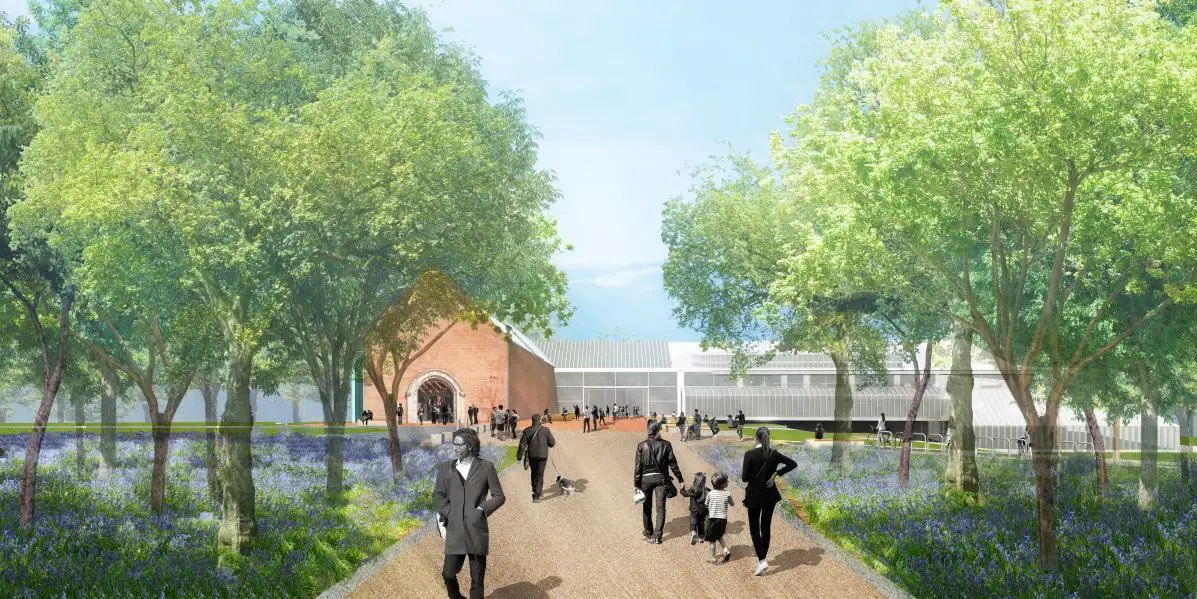
John McAslan + Partners was appointed to develop a masterplan which would enhance the celebrated Burrell Collection, with its spectacular setting in Pollok Park. Completed in 1983, the Burrell’s vast collection of art and artefacts is world-renowned.
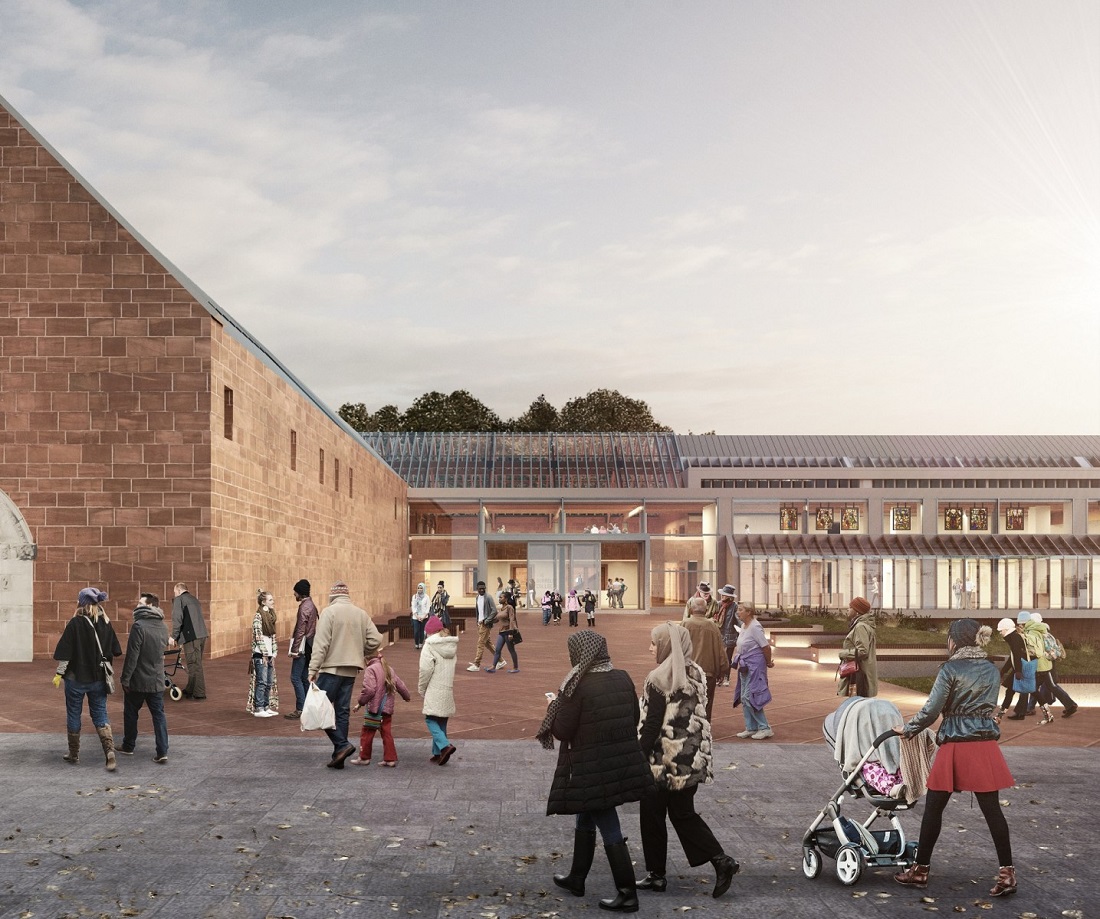
However, in recent years the Museum’s attendances have been declining year on year and the aim of this project was to develop a long-term strategy to address and reverse this position, returning the Burrell to its pre-eminent position as a world-class cultural institution.
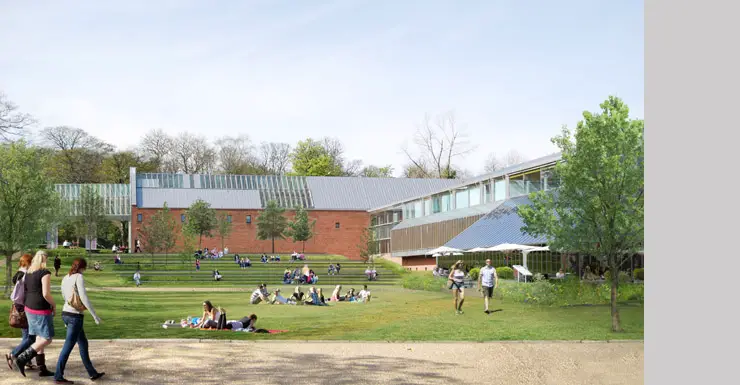
source: www.mcaslan.co.uk
13 Mar 2017
Burrell Collection Refurbishment News
Burrell Collection Refurbishment Planning Submission
As first reported on this page in March 2016, this is a major project for the practice in the city where John grew up.
McAslan + Partners have lodged long-awaited proposals for a major overhaul of the Burrell Gallery in Pollok Country Park, Glasgow, to safeguard its long-term future.
Planning Ref.
17/00514/DC
External fabric repairs and alterations, refurbishment of the Burrell Gallery including surrounding landscape improvements.
The Burrell Collection Pollok Country Park 2060 Pollokshaws Road Glasgow G43 1AT
Design & Access Statement – Executive Summary
The Burrell Gallery sits within Pollok Country Park four miles from the centre of Glasgow. The building was specifically designed to display, conserve and house a collection of some 9,000 objects of art and antiquities gifted to the city by one of its most successful sons, Sir William Burrell. The collection is of national importance and the building, which opened to the public in October 1983, is listed at Category A signalling that is of exceptional architectural and historic interest.
Modern conservation thinking stresses that a building’s importance may go beyond its architectural or historic interest. Significance is a concept first advocated by ICOMOS for the management of World Heritage Sites and now endorsed by the UK’s historic environment sector. It aims to provide a full, rounded understanding of why an historic building is important and to whom. Notwithstanding its architectural triumph, the significance of The Burrell rests primarily in its use as a public, cultural building specifically designed to display a particular collection gifted to the City of Glasgow.
The building is now in need of a major overhaul and refurbishment in order to safeguard its long term future and significance.
Three major issues are evident.
1. In certain areas the external envelope is failing causing serious problems of water and light penetration.
2. All services are worn out.
3. In some regards, particularly access and museological standards, The Burrell no longer meets modern standards or visitor expectations.
This Design and Access Statement accompanies applications for listed building consent and planning permission to address all of these issues and secure the Burrell’s long term future as a major cultural asset for the City. It has been prepared by John McAslan + Partners on behalf of Glasgow Life, custodians for The Burrell.
Also submitted as background information is a Draft Conservation Management Plan, Statement of Significance and outline cost summary.
The proposals have been prepared after close examination of the original architect’s drawings and constructive discussions with the Burrell Trustees, Historic Environment Scotland, Glasgow City Council’s Planning and Conservation Team, The Twentieth Century Society and DoCoMoMo.
Discussions with the original architects have helped us understand the design intent and development for the building. The Burrell Renaissance Board has provided strategic guidance and the Heritage Lottery Fund continue to offer in principle support for the project although its decision on the grant aid will not be made until the autumn.
Design Team for Burrell Renaissance Project:
Gardiner + Theobald: Project Managers
Gardiner + Theobald: Cost Consultant
John McAslan + Partners: Architect
John McAslan + Partners: Conservation Advice
John McAslan + Partners: Landscape Architect
Atelier Ten: MEP Consultant
Atelier Ten: Sustainability Consultant
Atelier Ten: Fire Consultant
David Narro Associates: Structural Engineer
Arup: Facade Consultant
David Bonnett Associates: Access Consultant
Event Communications: Exhibition Designers
Regular, constructive discussions and workshops with Glasgow Life have enabled the design team to prepare proposals which meet the client’s brief in addition to the statutory requirements. We are fully confident that these proposals will safeguard the future of one of Scotland’s most important historic buildings in the cultural use for which it was designed.
source: Burrell Collection Refurbishment Planning Application
4 + 3 Mar 2016
Burrell Museum Renewal News
John McAslan + Partner for Burrell Collection Refurbishment
ARCHITECTS AND DESIGNERS CONFIRMED FOR THE BURRELL COLLECTION
Glasgow City Council’s Executive Committee today confirmed the appointment of Gardiner & Theobald LLP with John McAslan + Partners and Event Communications to take forward the Burrell Collection’s ambitious refurbishment and redisplay plans.
Gardiner & Theobald has been appointed to undertake the Project Management with John McAslan + Partners as Architect and Lead Designer for the refurbishment of the building, whilst Event Communications has been appointed to deliver exhibition and interpretative design across the Burrell’s galleries.
The refurbishment project will see the museum undergo its most comprehensive modernisation since opening to international acclaim in 1983. The building, which is no longer fit for purpose, will be turned into an exemplar of sustainability, transforming it from a building with a large carbon footprint, into an energy efficient, modern museum.
In addition, plans will allow a much greater proportion of the Collection to be displayed. Basement stores, open to the public for the first time, and a new central core will greatly increase access for visitors to the many artworks. Visitors will also benefit from a new learning space, and improved café and retail opportunities, while landscaped terraces will be introduced to link the museum with its parkland setting, providing a venue for events.
More than two-thirds of the fundraising target of £60 million to £66 million has been pledged to date with support from Glasgow City Council, the Heritage Lottery Fund and the UK Government.
A total of 113 suppliers expressed an interest in the tender for the Project Management led Architectural and Building Design Team, with a further 57 suppliers expressing an interest in Exhibition Design Team Services. Council officials carried out a pre-evaulation stage, with Gardiner & Theobald LLP, John McAslan + Partners and Event Communications selected from an impressive shortlist.
Councillor Archie Graham, the Depute Leader of Glasgow City Council and Chair of Glasgow Life, said: “Sir William’s great gift is of huge cultural importance both at home and abroad and we have a moral duty to protect and promote his outstanding legacy. Today’s announcement marks an important milestone for the development of the Burrell Collection, as we work to unlock its great potential. The appointment of world-leading practices in architecture, project management and exhibition design shows, yet again, our commitment to the city’s cultural treasures. In just a few years’ time, Sir William’s passion and lifelong commitment to building his collection will be honoured by being housed in a museum worthy of its unrivalled status.”
Sir Angus Grossart, commented: “The brief is challenging in combining the refurbishment of an iconic building with ambitions to vitalise visitor engagement with the world-class Collection. It is an excellent foundation on which to optimise the Burrell’s potential whilst retaining the character and strengths of the building. The appointments of Gardiner & Theobald LLP, John McAslan + Partners, and Event Communications, promises a new chapter for the Burrell Collection.”
James Robinson, Director of Burrell Renaissance said: “We would like to thank all those who took part in the process. The appointed design teams show a great understanding and confidence in their ability to create innovative solutions that will allow us to open up the Collection whilst maintaining the quality and integrity of the existing building. We are delighted that the appointed design teams have the breadth of expertise to deliver an integrated response at a world-class level.”
David Logue, Senior Partner, Scotland, at Gardiner & Theobald LLP said: “Today’s announcement marks an important milestone for the Burrell Collection and we’re delighted to be a part of it. The proposed solutions will look towards the importance of sustainability and accessibility, whilst speaking to the importance of the Collection’s contents.”
John McAslan, Executive Chairman of John McAslan + Partners commented: “With its distinctive presence and unique blend of artefacts with architecture, we are delighted to be appointed Architect and Lead Designer for this project and to be given the opportunity to work with the Burrell Collection as it becomes an exemplar for a 21st century museum.” And James Alexander, Chief Executive of Event Communications said: “The wide-ranging support the project has received is testament to its national and international significance while its transformative potential is acknowledged across the UK cultural sector. We are thrilled with today’s appointment and look forward to working collaboratively on this unique project.”
The teams will begin developing the scope for the refurbishment and redisplay from April 2016, with building work set to commence from October 2016.
A programme of events and activities leading up to October 2016 will give the public the opportunity to see and engage with treasures from the Collection before refurbishment begins after which an exhibition of works from the Burrell will be on display at Kelvingrove Art Gallery & Museum, Glasgow, allowing continued access to citizens and visitors alike.
Burrell Museum Redevelopment Background
Burrell Collection Refurbishment Design Teams
Burrell Collection Renewal Project Management and Building Design Team
– Gardiner Theobald LLP, Project Management and Quantity Surveyor
– John McAslan + Partners, Architect and Lead Designer
– David Narro Associates, Civil and Structural Engineers
– Atelier Ten, Building Services and Fire Engineers
Gardiner & Theobald LLP are currently working on the Kelvin Hall project and the Mackintosh Restoration project in Glasgow and have a long established track record of working on projects within the arts and heritage sector including the Whitney Museum of American Art, New York (2015); Royal Museum Project at The National Museum of Scotland (2012); Cutty Sark Conservation Project, London (2012); Ashmolean Museum, Oxford, (2009) and Imperial War Museum North, Manchester (2002) to name a few.
John McAslan + Partners’ UK cultural projects include Birmingham Museum and Art Gallery (2014), the Natural History Museum (2013) and the Roundhouse (2006), both in London, and De La Warr Pavilion in Bexhill-on-Sea (2008). The practice’s international cultural projects currently underway include the Cultural Forum and Heritage Quarter Houses, both in Doha, the Museum of Russian Impressionism in Moscow and the Royal British Columbia Museum in Canada. Beyond its work in the cultural sector, the practice is best known for its celebrated transformation of London’s King’s Cross Station, completed in 2012.
Burrell Collection Renewal Exhibition Design Team
– Event Communications, Design and Design Management
– Max Fordham, Electrical Engineers
– David Narro Associates, Structural Engineers
– Greenway Associates, Cost Consultants
– DHA Design Services, Display Lighting
The work of Event Communications within the arts and heritage sector can be seen at locations worldwide including at the Zayed National Museum, Abu Dhabi (2014), Riverside Museum, Glasgow (European Museum of the Year, 2013), Titanic Belfast (2012), National Maritime Museum, Amsterdam (2011), Kelvingrove Art Gallery & Museum (2006) and the Imperial War Museum North, Manchester (2002).
The Burrell Collection – cultural asset
The Burrell Collection is a major cultural asset for the City of Glasgow and the nation, and is of international significance. The largest single collection area is Chinese art with objects from every major period in Chinese history. The Collection also includes significant Late Gothic and Early Renaissance works of art from Northern Europe, with tapestries, stained glass, sculpture and furniture, as well as an excellent collection of French art. Other strong areas of the Collection include Dutch paintings, British portraits, Islamic art, Persian, Caucasian and Indian rugs and carpets, and Near Eastern, Egyptian, Greek and Roman antiquities.
The Collection, which reflects Sir William Burrell’s lifelong passion for art and history, was donated to the City of Glasgow by Sir William and Lady Burrell. The decision to gift the Collection to Sir William’s home city is the largest single gift of art treasures by one man to one city.
From October 2016 works will commence on the refurbishment of the Grade A category building and redisplay of the Burrell Collection, creating a new visitor experience. At present, only some 20 per cent of the exceptional Collection is on display. Refurbishment plans will turn the building into an exemplar of sustainability, transforming it from a building with a large carbon footprint, into an energy efficient, modern museum.
In addition, more than 90 per cent of the 9,000-strong Collection will be redisplayed with basement stores open to the public for the first time, and a new central core greatly increasing access to the many artworks.
29 Feb 2016
Burrell Museum Renewal Architects
Architect for Burrell Collection Refurbishment
John McAslan and Partners has been recommended to progress the renewal of the Burrell Collection museum in Glasgow.
Glasgow City Council’s executive committee is to meet this Thursday to consider the appointment of the practice and Gardiner & Theobald LLP as the Project Management led Architectural and Building Design Team. A design company, Event Communications, will also be recommended to be the museum’s exhibition designers.
The refurbishment, estimated at £60m-£66m, will see the fabric of the building repaired and conserved, rendering the museum a benchmark for accessibility and sustainability. The plans will also allow a much greater proportion of the Collection to be displayed, with the museum’s basement stores remodeled to allow public access for the first time, with capacity for a programme of changing Collection highlights. A new learning centre, improved facilities and landscaping linking the museum to its parkland setting will also deliver a new visitor experience.
A total of 113 suppliers expressed an interest in the tender for the Project Management led Architectural and Building Design Team, with a further 57 suppliers expressing an interest in Exhibition Design Team Services.
Following a pre-evaluation stage, six suppliers submitted a valid tender for Project Management led Architectural and Building Design:
– Buro Four with Lifschutz Davidson Sandilands
– Doig + Smith with Dixon Jones
– Gardiner & Theobald LLP with John McAslan + Partners
– Mace with Reiach and Hall
– Mott MacDonald with Page \ Park Architects
– Turner & Townsend with Hoskins Architects
3 Dec + 25 Nov 2015
Burrell Museum Renewal
Burrell Collection Refurbishment
Glasgow’s Burrell Collection is currently due to close for three years as it undergoes a £66m revamp., reports the Glasgow Evening Times today. The world famous, A-listed building in the city’s south side needs a new roof, new glazing and a major internal refit. Glasgow City Council has already agreed to fund half of the cost of the building refurbishment with the Heritage Lottery Fund pledging a further £15m to the target.
The Renaissance plan will see a completely new roof, a significant reordering of its internal displays, and the opening up of its basement into a new floor, as well as a new outdoor space.
When it re-opens the Burrell museum will be able to display more than 90% of the 9000-strong collection collected by the shipping magnate. It is expected that the museum will close in October 2016 and open again in 2019.
Burrell Museum
Architects: Sir Barry Gasson, Brit Andersson & others
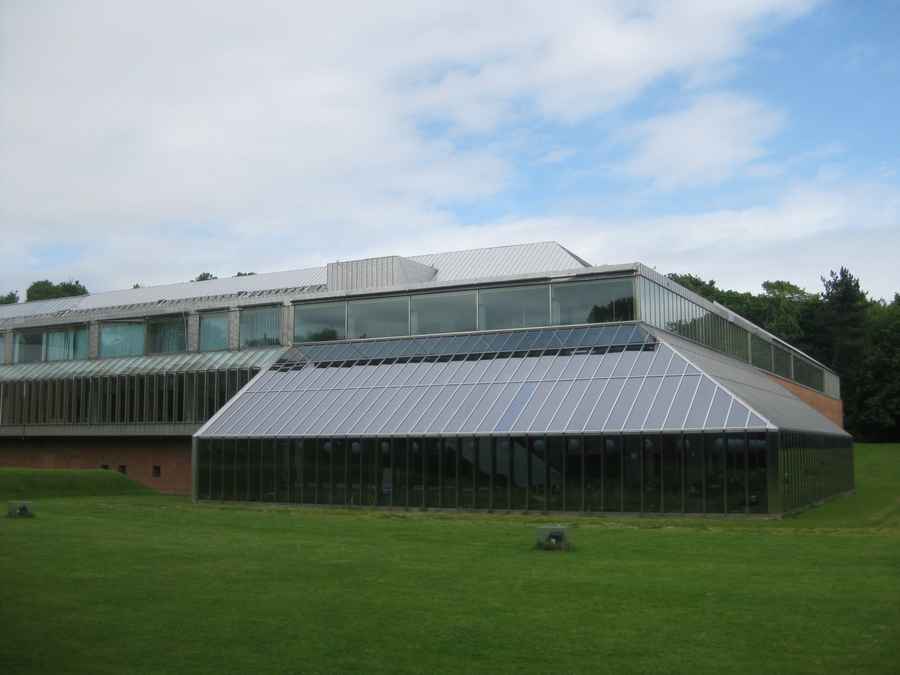
photo © Adrian Welch
Address: 2060 Pollokshaws Rd, Glasgow G43 1AT
Phone: 0141 287 2550
Photos of building exterior from 3 Mar 2011:
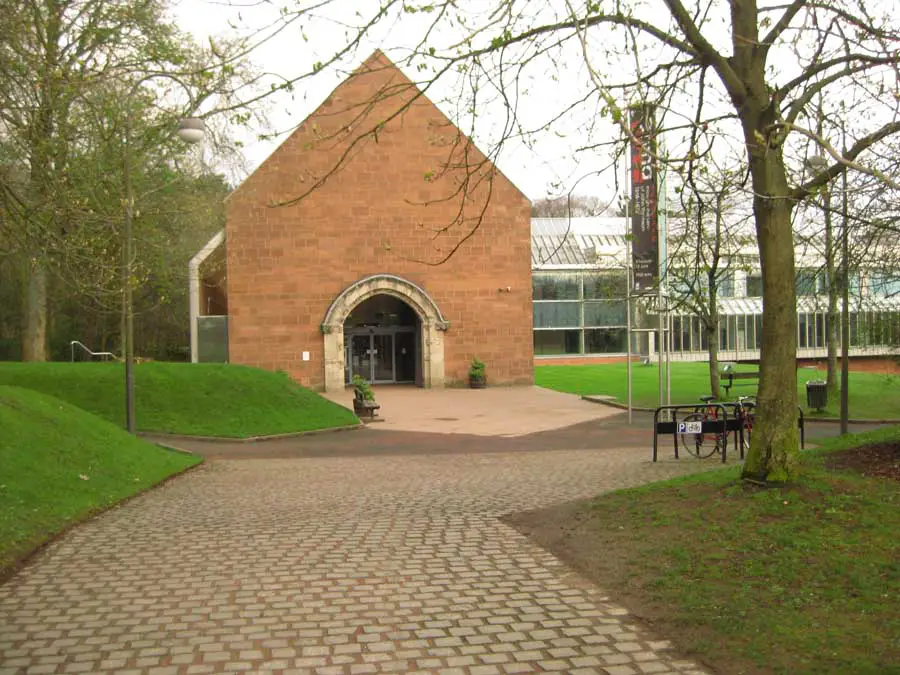
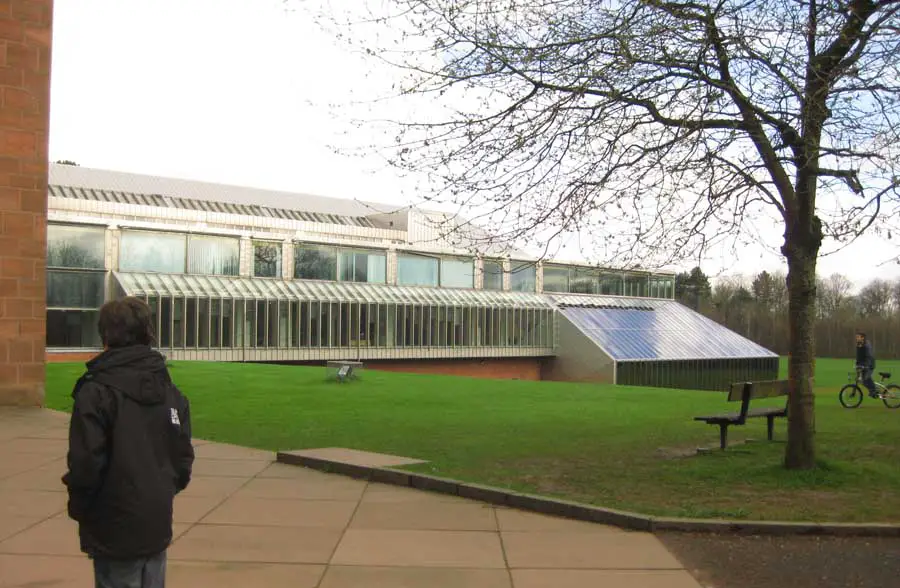
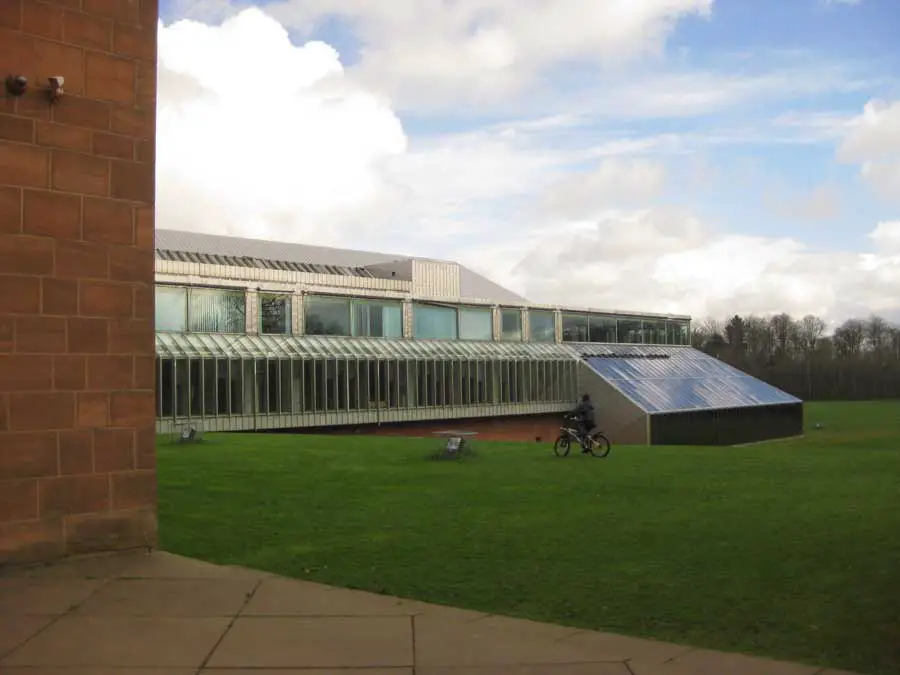
photographs © Isabelle Lomholt
Burrell Collection Photos
Photos of exterior from 3 Mar 2011:
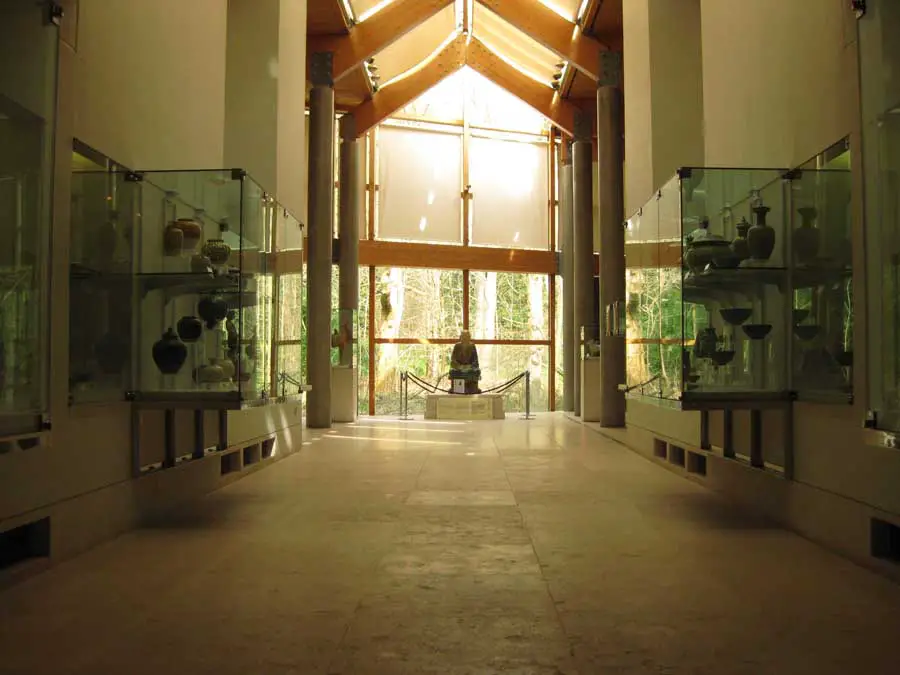
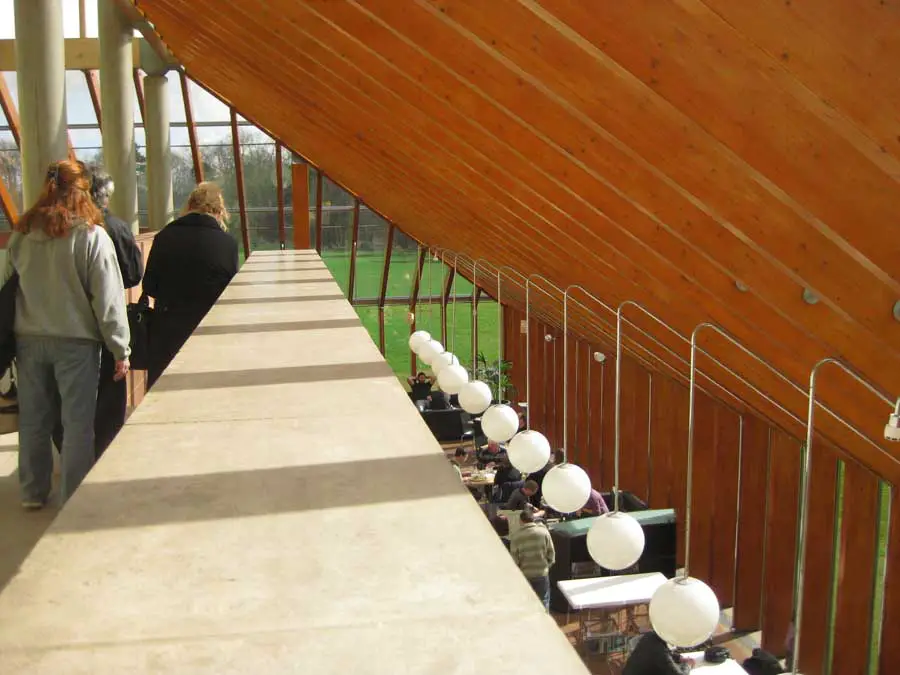
photographs © Adrian Welch
One of Glasgow’s best buildings of the 20th century, this project had a big influence on many architects in the eighties.
Burrell Museum Opening Times (check with The Burrell):
Mon-Thu & Sat 10am-5pm, Fri & Sun 11am-5pm
Address: The Burrell Collection, 2060 Pollokshaws Road, Glasgow, Scotland
Gallery, toilets and the café are wheelchair-accessible and there are disabled parking bays.
Contact The Burrell Collection: 0141 287 2550

photographs © Adrian Welch
The Burrell Collection (The Burrell Museum), Pollok Country Park, Glasgow
Design: Sir Barry Gasson with Brit Andresen
Dates built: 1971; 1978-83
Burrell Museum Architecture
Glasgow’s major attraction, the Burrell Museum, is a Collection amassed by wealthy industrialist Sir William Burrell ship owner and art collector, before it was donated to the city in 1944. After much wrangling over where the collection should be located, it was, in 1963, finally agreed that it should be housed in a purpose-designed Museum building in Pollok Country Park, 5km south of the city centre.

photographs © Adrian Welch
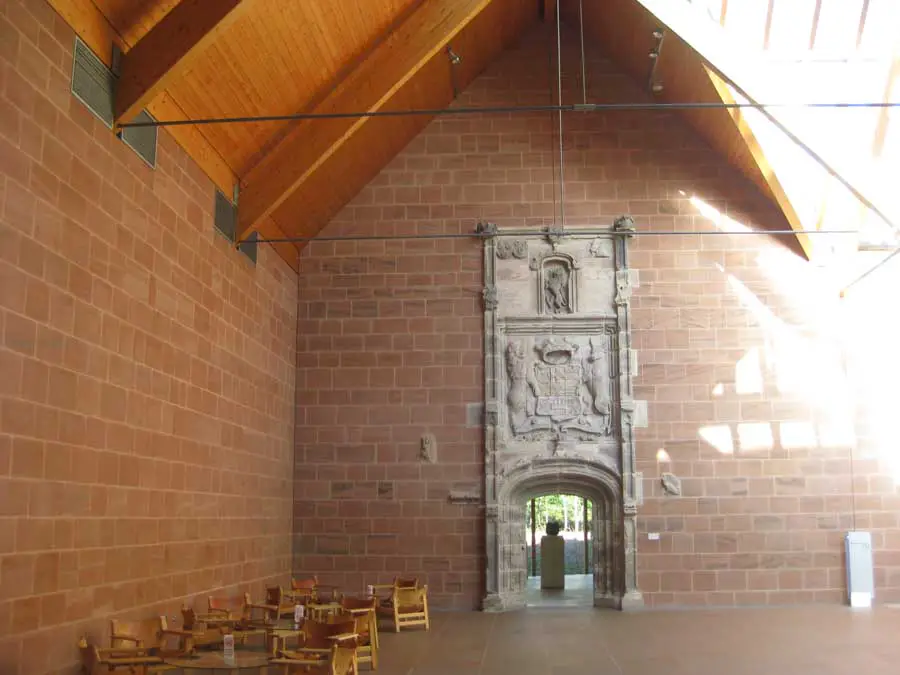
This idiosyncratic collection includes everything from Chinese porcelain and medieval furniture to paintings by Renoir and Cézanne. Carpeted floors maintain the silence to contemplate the beautifully displayed treasures. Carved-stone Romanesque doorways are incorporated into the Burrell Museum’s structure as portals; some galleries are reconstructions of rooms from Hutton Castle, the Burrell residence.
The Burrell Museum was the result of a design competition in 1971. If it had not been run during a postal strike, necessitating an extension of the closing deadline, Barry Gasson’s winning entry (out of 242 entrants, announced 1972) would not have been completed. The initial design for the Burrell Museum is the result of the collaboration between Barry Gasson and Brit Andresen*. Construction of the gallery began in 1978 by Barry Gasson Architects and was completed and opened to the public in 1983.
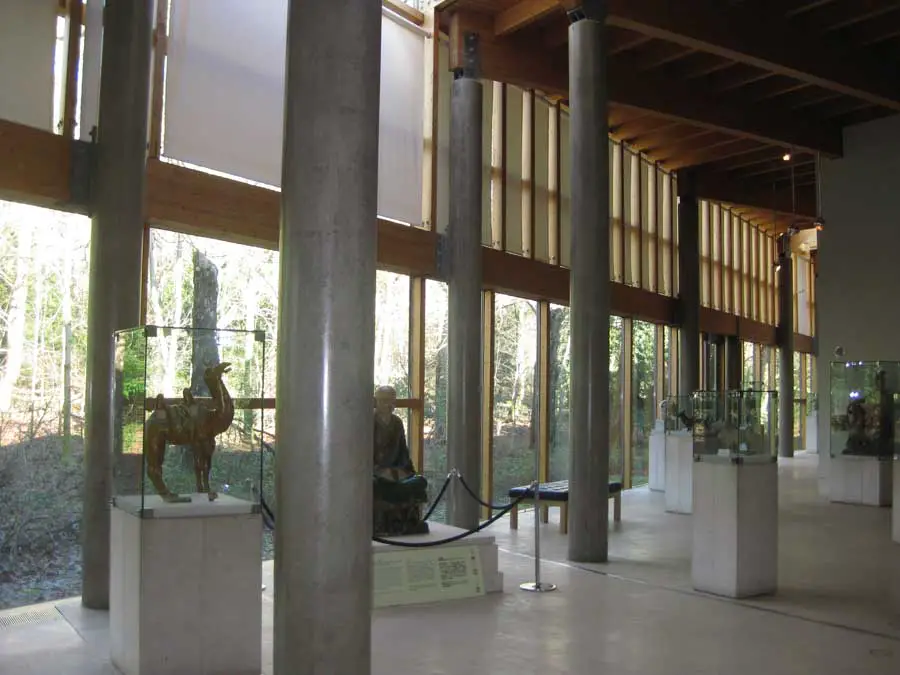
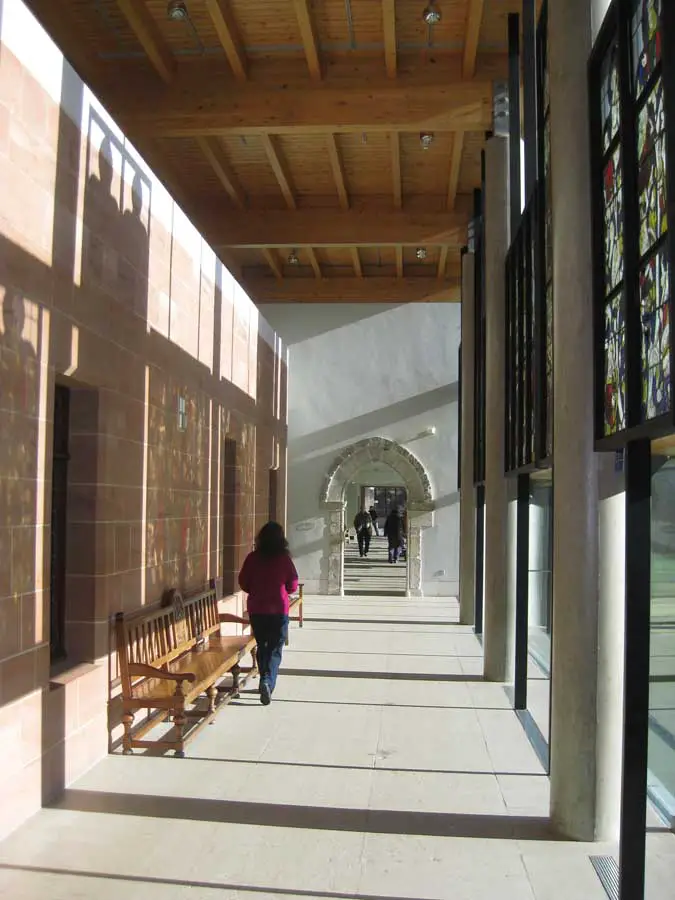
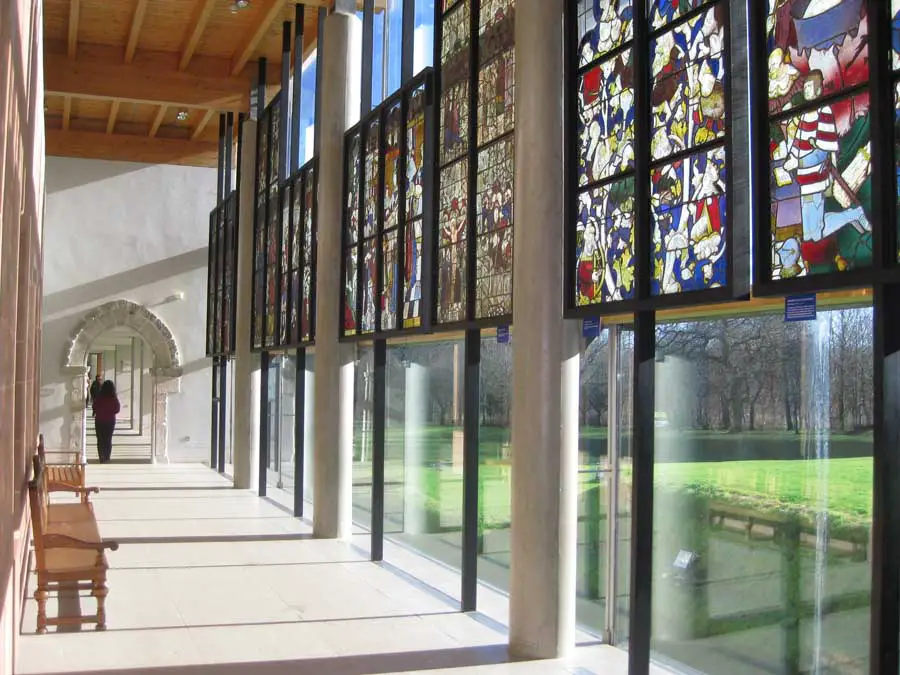
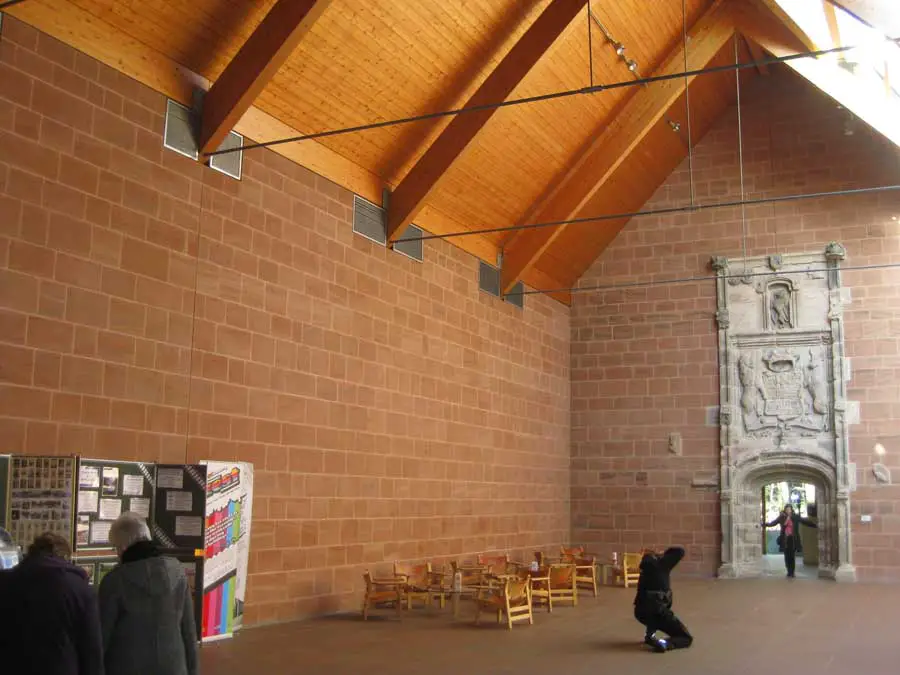
photographs © Adrian Welch
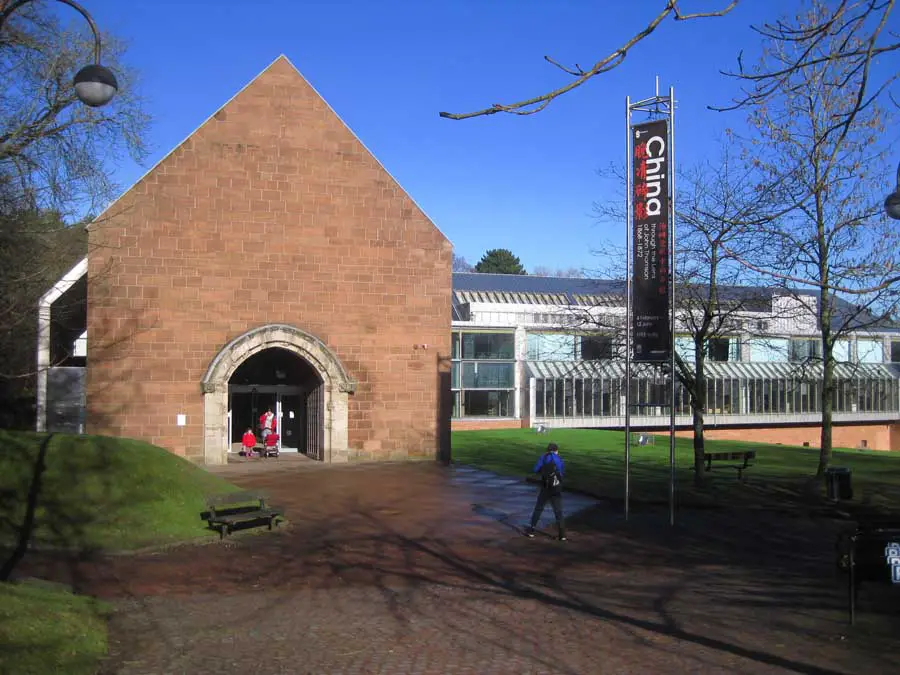
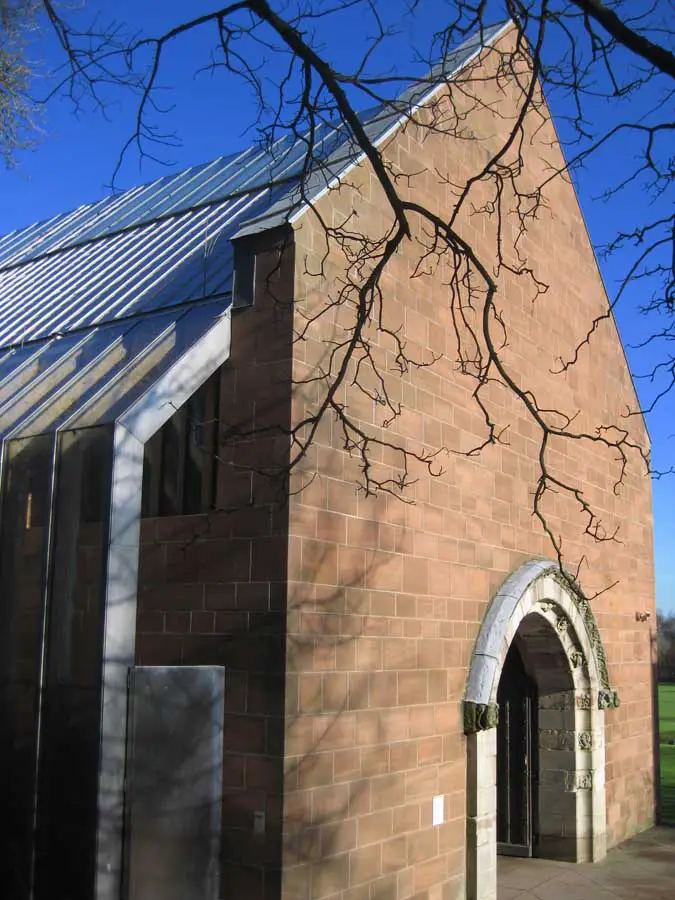
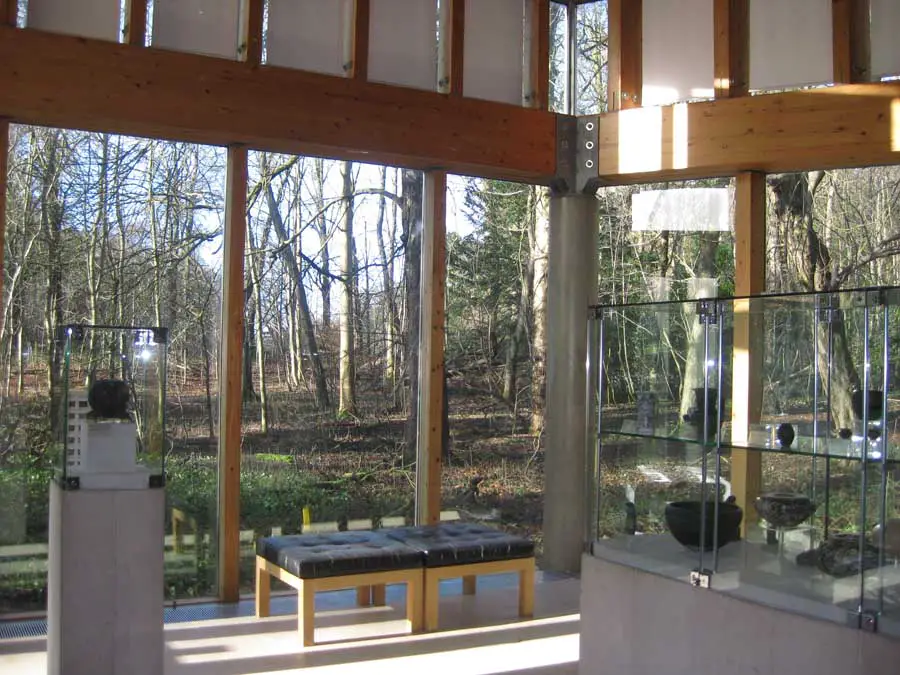
The building forms a huge L-shape, with entry from the south (into one end of the ‘L’ on axis) through a 13-foot high 16th-century archway into the glazed courtyard of the gallery. The Burrell Collection is formed of huge unadorned facades of ashlared Locharbriggs red sandstone, peeled away in zones for glazing. The windows are not expressed: instead the glass folds with the eaves and forms a smooth envelope supported on rational steel and timber portal structures at close centres – there is nothing light about this project. This makes the building seem sombre amongst the trees, and even where the lawns open out, the landscape is controlled into terraces.
Thus the unarticulated building and the formal merciless grass temper the original site’s irregularities and create a powerful, rationalist whole. There is no doubting the Burrell Museum’s formal power, but the lack of interaction with nature, between inside and out, makes the Burrell a difficult building to swallow.
Views from south and east:
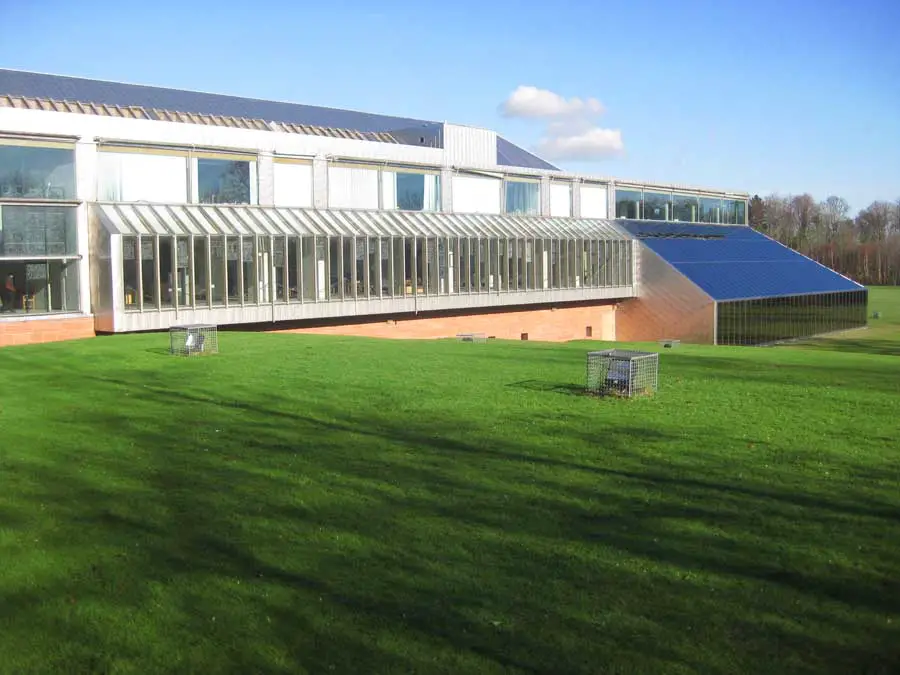

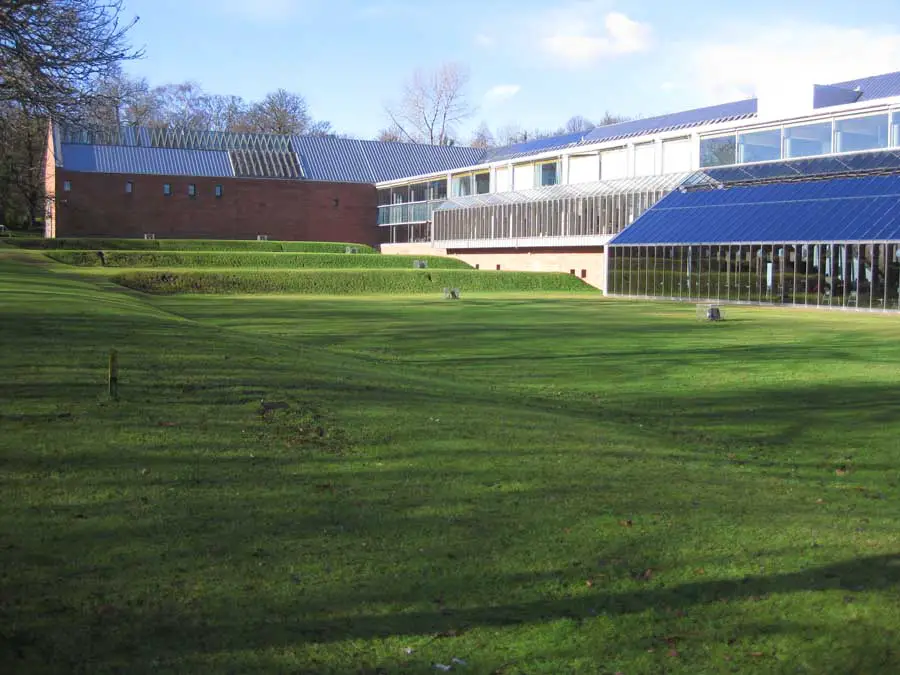
photographs © Adrian Welch
The entrance to the collection itself is the Hornby portico, a 26-feet high English Renaissance doorway which weighs 26 tons. The Burrell Museum incorporates reproductions of three rooms from Hutton Castle, near Berwick-on-Tweed, where Sir William and Lady Burrell moved in 1927. These are the drawing room, hall, and dining room, each furnished in the original manner and with some original woodwork. The building has storage for the many items from the collection not on display, a restaurant, lecture theatre, children’s activities space, library, photographic studio, and living quarters for visiting scholars.
The £21m Burrell Museum and its collection of around 8,000 works of art put Glasgow on the international cultural map. Some have claimed that the collection contributed significantly to Glasgow’s European City of Culture Award in 1990.
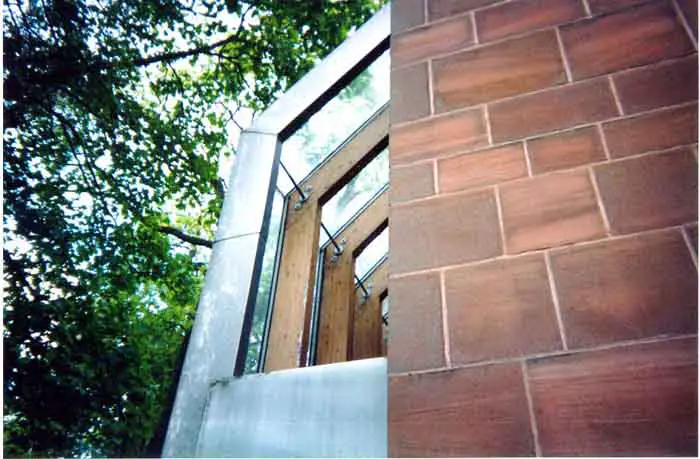
Burrell Museum images © Adrian Welch, 2000
*Gasson, Meunier and Anderson were all from Cambridge University School of Architecture. Barry Gasson and Brit Andresen were teaching architecture together at Cambridge from 1970-83, and designed Stage One of the competition for the Burrell Museum Competition. Barry Gasson and John Meunier were in partnership at that time but John Meunier was not involved in the design.
Barry Gasson, now an OBE, was the young team leader and seems to be unlocateable overseas, notably since the problems with the roof leaking occurred. Gasson, was a graduate of Birmingham School of Architecture. After a year in private practice Barry was awarded an English Speaking Union Fellowship to Columbia University in New York for two years. This was followed by two years in the Park Avenue architectural practice of Philip Johnson where projects he worked on included a ballet theatre for the Lincoln Centre, an extension to the New York Museum of Modern Art, and laboratories for Yale University.
Six months before the museum was due to open Gasson received the Royal Scottish Academy Gold Medal for Architecture for his design of the Burrell Museum. Brit Andresen is Architect and Associate Professor and Reader, Architecture Department, University of Queensland and was the RAIA (Royal Australian Institute of Architects) 2002 Gold Medal winner. John Meunier went on to the US – most recently to Arizona State University in 1987 to be Dean of the College of Architecture and Environmental Design. Previously he was Director of the School of Architecture and Interior Design at the University of Cincinnati.
Following the selection of the design for the Burrell Collection Stage Two competition John Meunier joined the design team and assisted the development of the project. After winning the competition (1972) Gasson and Meunier Architects in association with Brit Andresen worked on the project until the partnership between Gasson and Meunier was dissolved (1974). John Meunier travelled to the USA. After working on the project from 1972 to 1977 the project was shelved at a time of economic down-turn and Brit Andresen travelled to Australia. The museum project was started up again some years later and completed by Barry Gasson Architects.
Barry Gasson’s whereabouts are now unknown: if he reads this maybe he will let us know.
The Burrell Collection: +44 (0)141 287 2550
Architecture in Strathclyde
Go Ape Burrell controversy – proposals
Comments / photos for the Burrell Collection Glasgow – major 20th Century Museum in Scotland renewal design by John McAslan + Partners page welcome.