Kelvingrove Museum Glasgow, Building + Architect, Photo, Date, Project

Gallery & Museum, Glasgow, Scotland

Kelvingrove Museum: Glasgow


Built: 1901
Refurbished: 2006


Kelvingrove Museum : further details

Normal opening hours at Kelvingrove Art Gallery & Museum are 10am - 5pm Monday to Thursday and Saturday, and 11am - 5pm Friday and Sunday

Admission to Kelvingrove Art Gallery & Museum is free

All Kelvingrove Art Gallery photographs © David Barbour / BDP


Kelvingrove Museum Building - PR from Building Design Partnership Jul 2006

Kelvingrove Museum : RIAS Andrew Doolan Award for Architecture 2006 shortlist

KELVINGROVE NEW CENTURY PROJECT

Architects + Architectural Lighting Engineers: BDP (Building Design Partnership)
Author: Keith Stephen (Architect Associate)
Project Managers + Cost Consultants: Capita Symonds
Engineers: Halcrow Group
Mechanical & Electrical Engineers: Hulley and Kirkwood
Contractor: HBG


“Conservation involves change”. The relevance of this apparent contradiction is very significant when put into the context of the Kelvingrove New Century Project. Being the most visited museum outside London the spatial requirements for displaying artwork have not significantly changed since the opening of the Category ‘A’ listed building in 1901. The layout of the galleries configured symmetrically around the East and West Courts and the Central Hall could not be simpler. However, during the last 100 years there have been a myriad of changes that have, to a greater or lesser extent, put demands on a building that it was not originally designed to accommodate. The science of conservation, the art of display, closed controlled environments, flexible building services, integrated natural and artificial lighting and controls, the Disability Discrimination Act, Building Standards, IT, interpretation, expectations, are all issues that would influence the design of a new museum today. However, prior to closing for its ‘make-over’ the standard of services in Kelvingrove was at best inadequate.


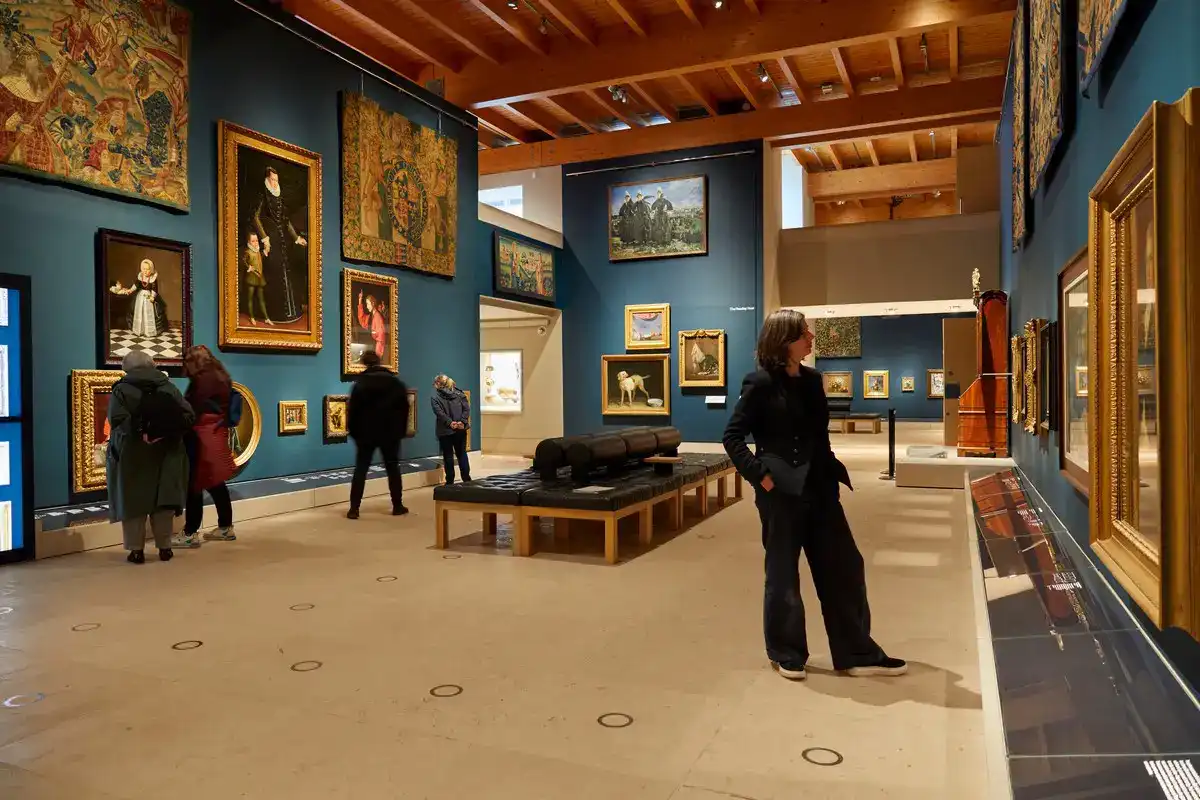
In meeting the aspirations of the brief 35% more gallery space had to be found to accommodate the 50% more objects on display - without building an extension! This could only be achieved by converting the former storage at lower ground level into galleries and ancillary accommodation which, in turn, also released valuable areas on the Upper Ground and First floors for new gallery space. This new public level at Lower Ground gives, for the first time, the disabled, parent child and the infirm direct access into the building at grade without the need to negotiate the two imposing stepped approaches at the north and south entrances. Internally, new public lifts and stairs also improved circulation and orientation.


The four lightwells were covered over to provide much needed space for toilets, service lifts, service risers, and services distribution. Galleries had their floors lifted and carefully replaced and wall and cornice plaster was raggled and lovingly restored in order to accommodate a flexible grid of power, data, security and lighting services. Leaking single glazed rooflights were replaced with thermally efficient double glazed units above a bank of remote controlled blinds and new laylight glazing complete with diffuse and UV filter layers. The integration of large roof mounted air handling units - necessary to raise the quality of the environmental conditions, was one of the many sensitive issues that required detailed Planning and Listed Building Consent. Ironically, the improved environmental conditions meant that secondary glazing was even more important in order to combat the damaging effects of running condensation during winter.


However, before embarking on this project it was clear that Glasgow City Council had already decided that these changes were necessary if the building was to fulfil its function and to continue as a working art gallery and museum for future generations. To do nothing would have seen the deterioration and ultimately the demise of Glasgow’s most loved building.


Glasgow City Council - Renovation Building PR

Over 200 of the finest pieces from the Kelvingrove Art Gallery went on display at the McLellan Galleries until late 2005 as an exhibition entitled Art Treasures of Kelvingrove. The rest of the near 200,000 pieces from Kelvingrove Art Gallery were taken to The Open Museum.


Kelvingrove Art Gallery & Museum - New Building PR: 25 Feb 2003


Gallery of Modern Art Glasgow

Kelvin Bridge, Glasgow

Kelvingrove Art Gallery & Museum
Greenpeace Forest Crime Unit halted work at Kelvingrove Art Gallery & Museum on 6 Sep 2004 for apparently using merbau in its refurbishment, demanding that it be replaced with timber certified by the Forest Stewardship Council (FSC) as being from legal and sustainable sources. Greenpeace researchers had uncovered contractors using merbau timber from South East Asian rainforests, home to several endangered species including the orang-utan. Glasgow Council officials ordered contractors to stop work replacing hardwood floors during the Lottery funded refurbishment of Kelvingrove art gallery and museum, after nearly 100 Greenpeace activists invaded the site to expose the use of endangered rainforest timber.

Kelvingrove Glasgow : Building Design Partnership


Glasgow : back to index

Glasgow Gallery of Modern Art

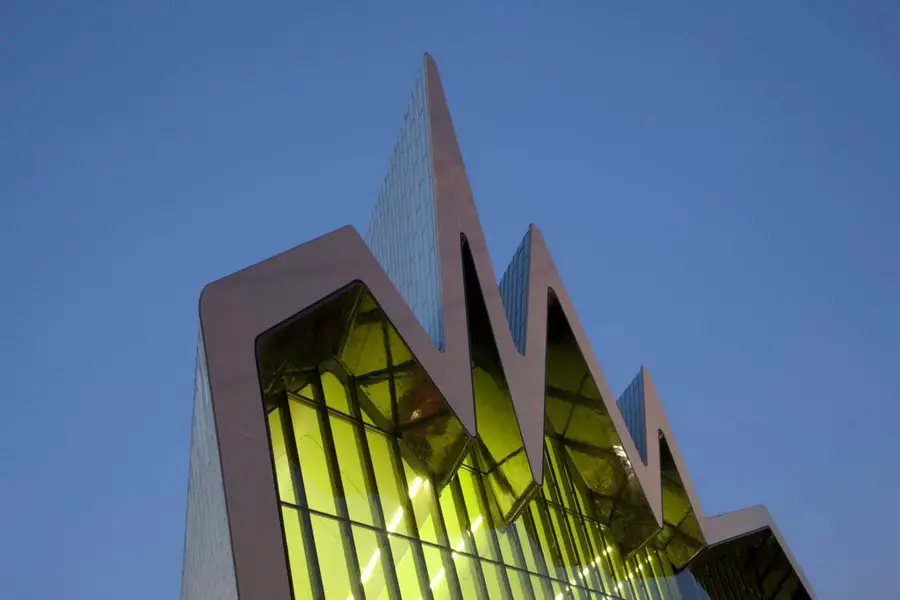
Kelvingrove Museum Building by Zaha Hadid

Kelvingrove Glasgow : Scottish Design Awards 2007 - Listed Building Re-use Shortlist: Building Design Partnership - Kelvingrove New Century Project

Kelvingrove Museum : Gulbenkian Prize 2007 shortlist

Comments / photos for the Kelvingrove Gallery Architecture page welcome:
info@glasgowarchitecture.co.uk


Kelvingrove Museum Glasgow Building - page: adrian welch / isabelle lomholt